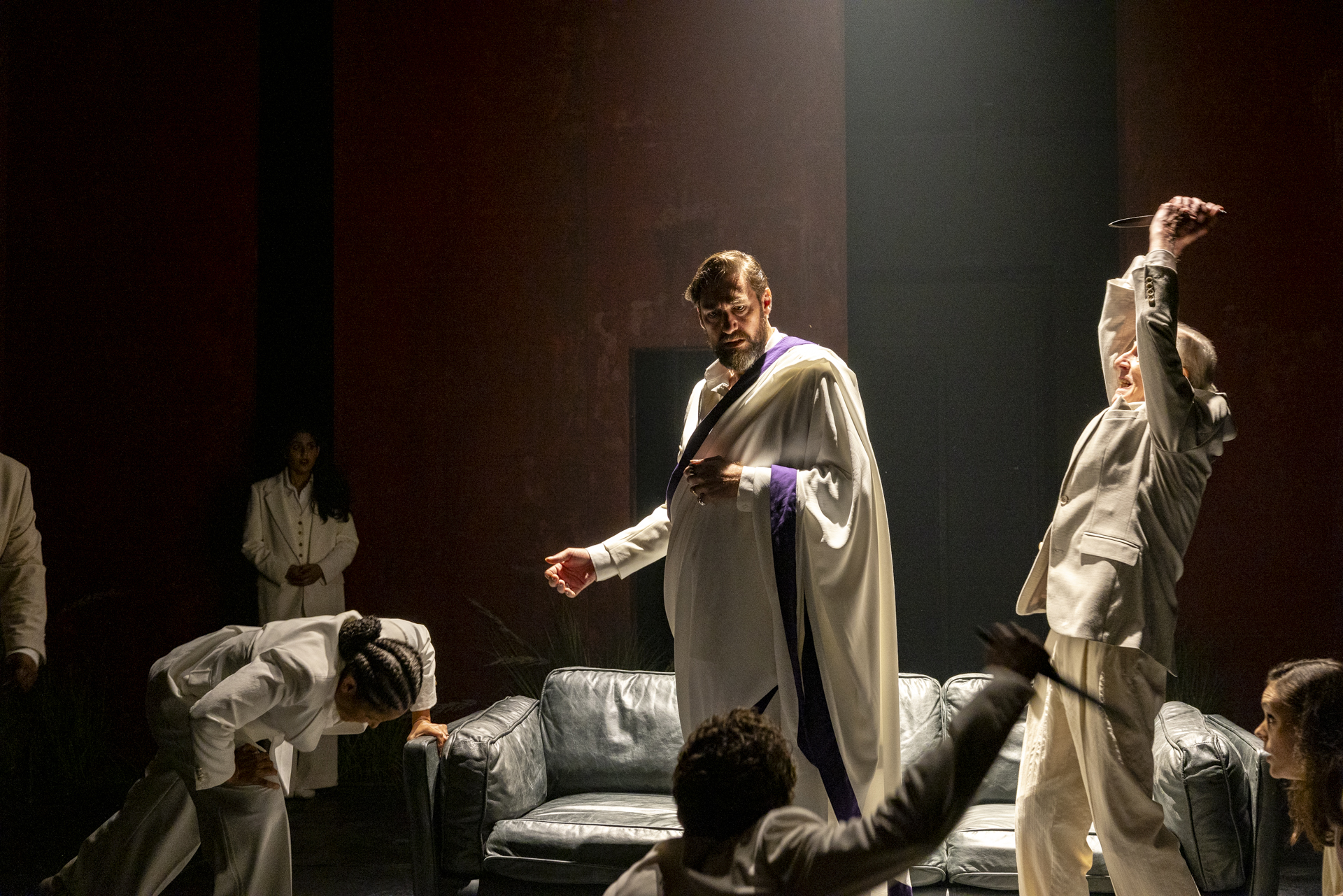
Bell Shakespeare launches its 2026 season with a stunning tour de force.
Directed by Peter Evans, this production leans into the power of Shakespeare’s text and the tenacity of its cast, resulting in a show that is intellectually engaging and theatrically satisfying.
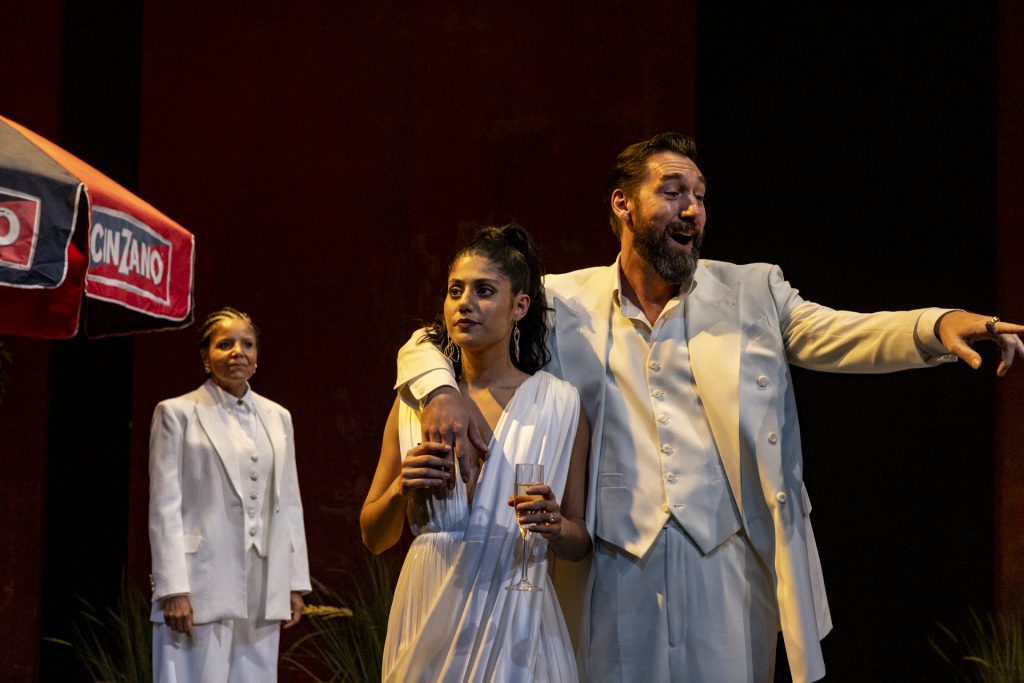
Julius Caesar traces the political upheaval surrounding the assassination of the Roman leader. Yet, in contrast to its name, each member of the cast manage to stand out. Peter Carroll as Casca, the first to stab Caesar, delivers an inventive and layered performance that captures the humanity and the gravitas the play demands. He brings nuance and wit to his role, finding unexpected shades of comedy where originally there were none. His presence on stage carries authority without being overwhelming. Mark Leonard Winter as Mark Antony is engaging, charismatic, and dynamically physical. His famous funeral oration is delivered with a riveting mix of sincerity and calculation, tightening its grip on both the Roman crowd and the theatre audience. Brigid Zengeni as Brutus is cold but honourable, and Septimus Caton‘s Julius Caesar carries the pomp and narcissism of a tyrant.
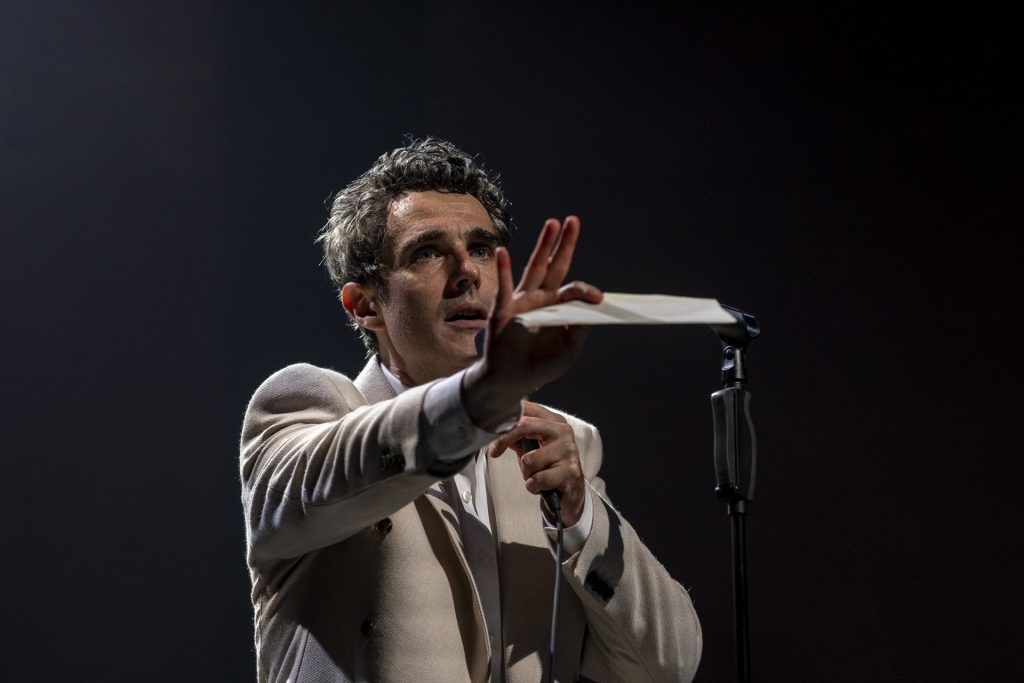
Evans’ direction demonstrates deep respect for Shakespeare’s language, allowing the rhythms and rhetoric of the text to take centre stage. The production trusts the script and its performers, which ultimately pays off: the audience is invited to lean into the moral dilemmas at the heart of the play, from ambition to power to civil war. However, the commitment to textual completeness leads to occasional lulls. Some of the longer political exchanges after the intermission are drawn out, making the action too sedate. These moments slow the momentum, derailing the production’s clarity and impact
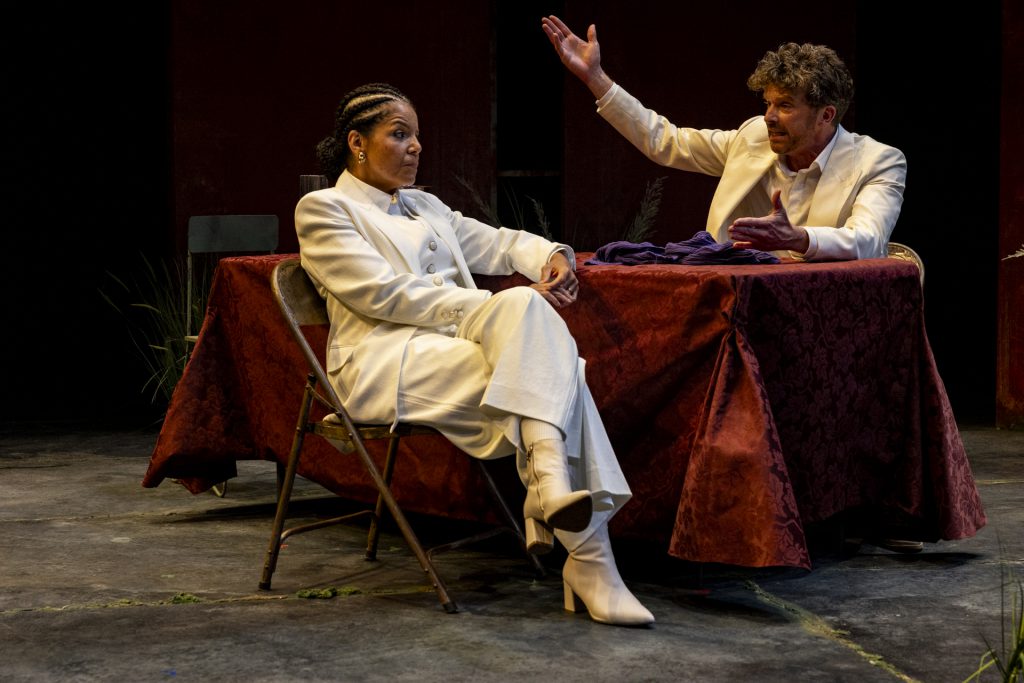
Where Evans’ vision truly shines is the show’s staging and design. Evans’ set design is striking in its versatility, using inventive set pieces that allow the drama to unfold cinematically. Scenes shift quickly and are assisted by helpful projections describing the place or time. These place the focus on the actors and the text, and the actors use the space to let Shakespeare’s drama thrive.
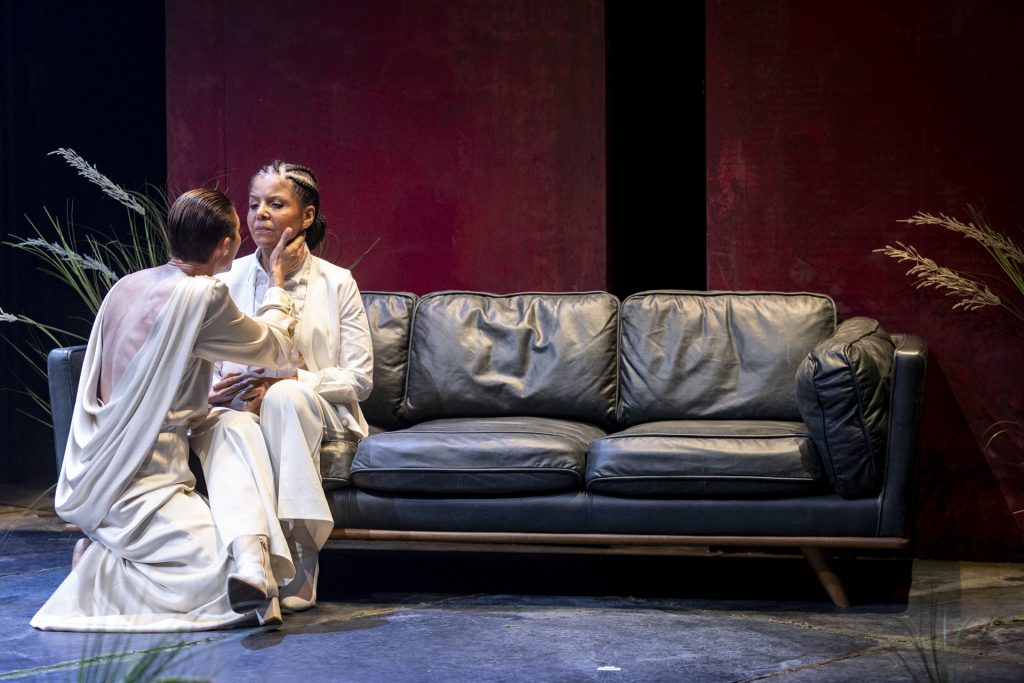
What gives this production its charge is how it foregrounds the play’s themes and allows them to breathe through performance. Questions of political ambition, loyalty, public persuasion, and the fragility of democratic institutions sit at the heart of Julius Caesar, and here they are embodied vividly. The conspirators’ moral certainty, Brutus’ tortured idealism, and the shifting allegiances of the Roman crowd are rendered powerfully, showing how easily noble intentions can tip into catastrophe. Nowhere is this more apparent than in the rhetorical battle that follows Caesar’s death: the power of language – who controls it, and how it sways the public – is dramatised with thrilling immediacy. Through its committed performances and crisp storytelling, the production reminds us that Shakespeare’s exploration of populism, political theatre, and the volatility of public opinion is uncannily contemporary.
Ultimately, Julius Caesar is more than a historical tragedy; it is a vivid reminder of how power shifts and rhetoric shapes public opinion. With imaginative direction and standout performances, Bell Shakespeare’s production is a fantastic season opener.