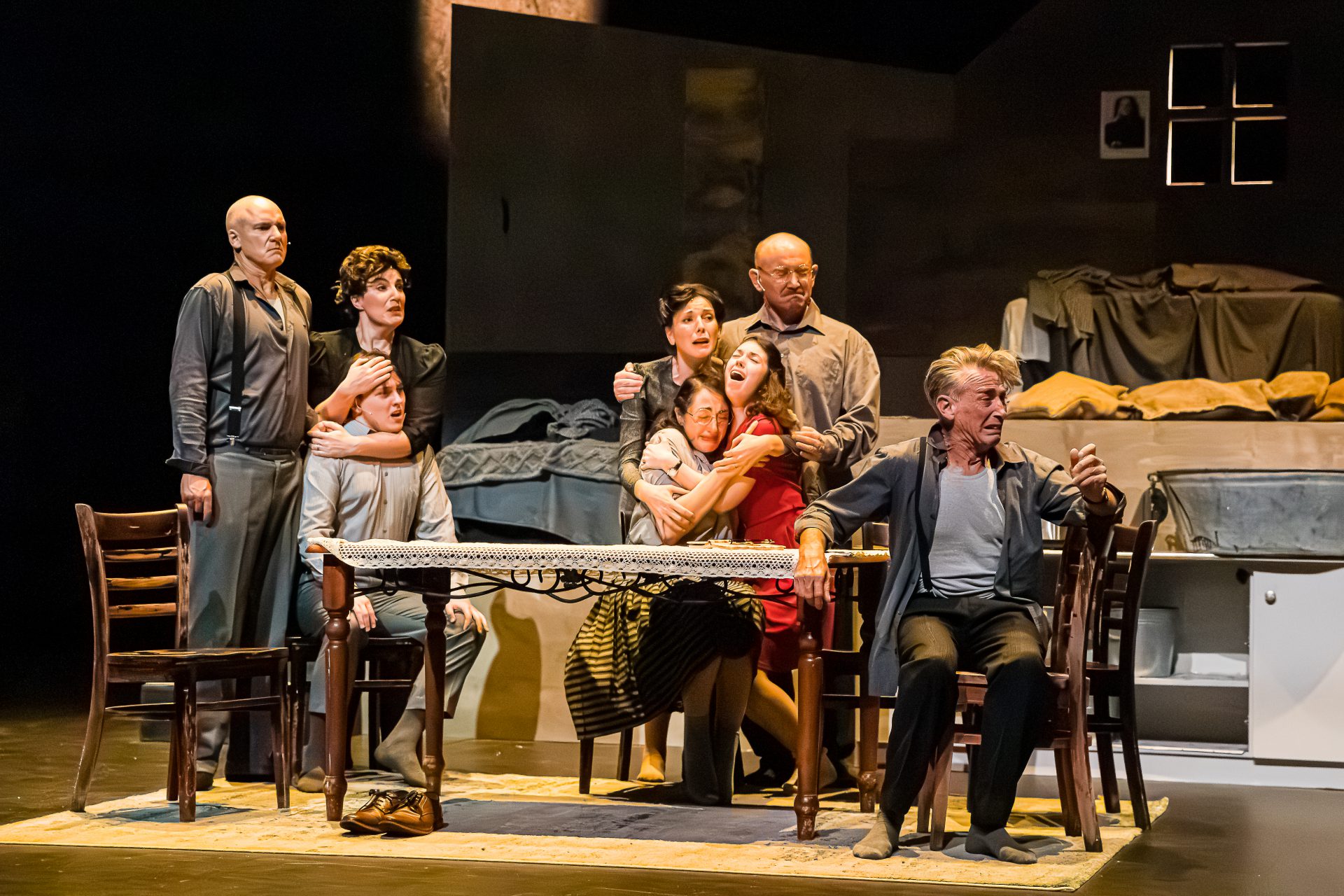
Walking in, the setting and the stage were a scene of contrast.
The large and ostentatiously gaudy Baroque State Theatre and, on its stage, a simple small plain set of grey and brown. This was to be a play of contrasts – humanity and inhumanity, light and darkness, the internal and external – creating a compelling and salient production.
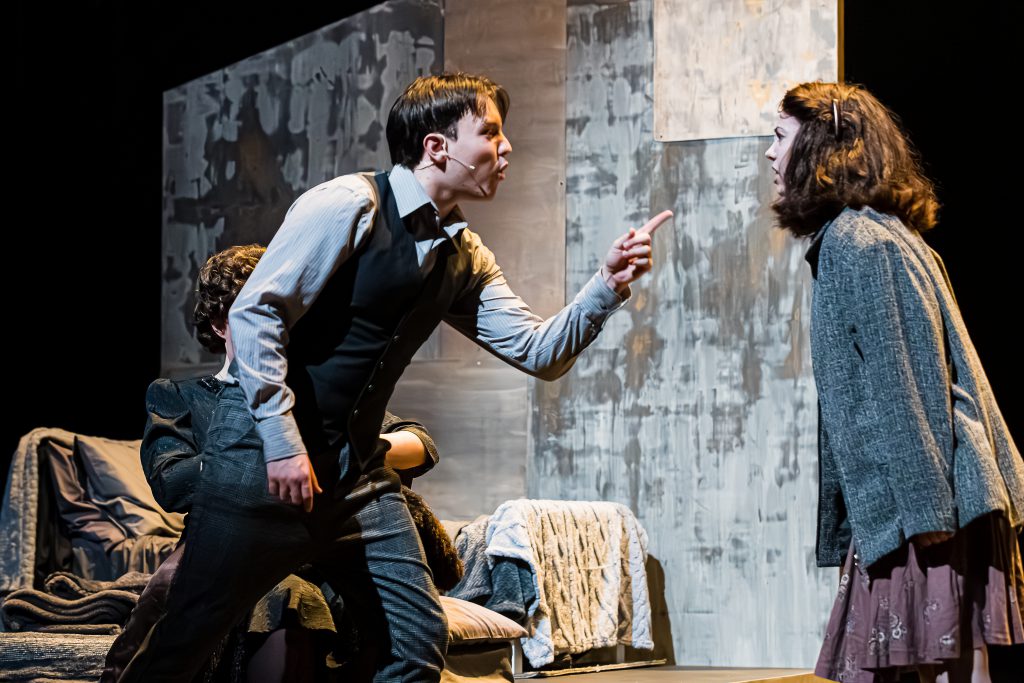
The play begins with Otto Frank (Phil Bedworth) surveying the modest attic, as the sole survivor amongst his family and those who had lived there for over two years. Consumed by grief at the immense loss, he demands that Miep Gies (Grace Tolich), who assisted the Franks during their hiding, burn everything. Miep then presents Mr Frank with the diary of his youngest daughter, Anne Frank (Chloe-Jean Vincent). The play then revisits its recorded entries with a sense of looming inevitability.
The set, designed by Drew Anthony (also director and producer), was superb. It captured the intimate claustrophobia of the very modest and plain dwelling inhabited by eight people. In the centre, a white tablecloth had a silent but powerful presence, breaking the monotony of browns and greys. There was good use of depth and height to convey the existence of separate rooms while remaining highly compact and tight. Where sets are often either elaborate or a sole table and chair, this one struck a thoughtful balance.
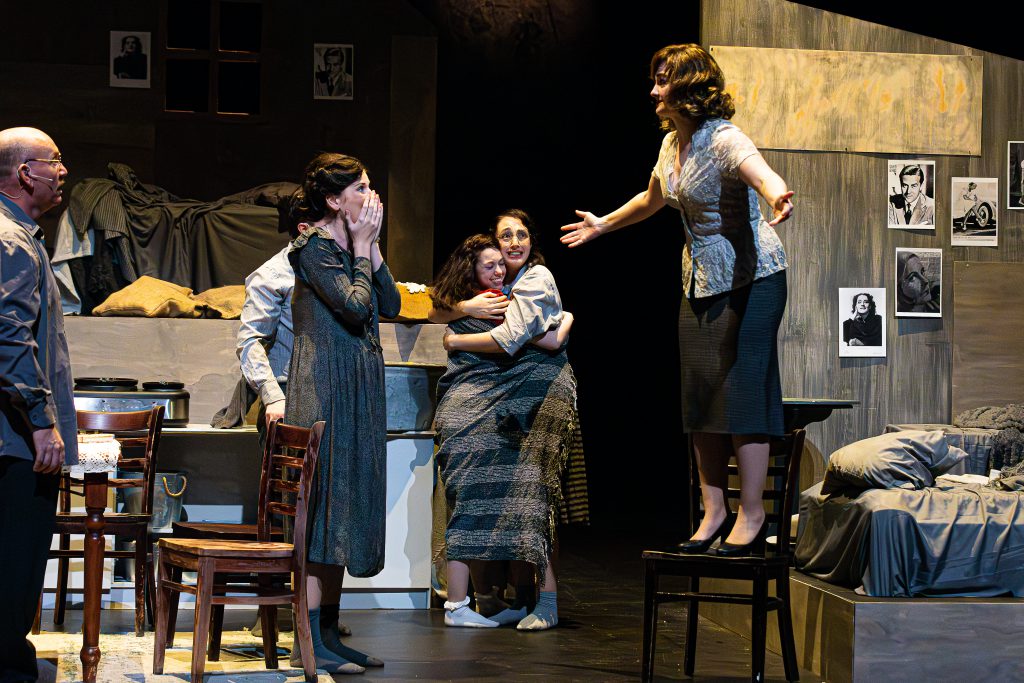
This play was exceptionally cast across vastly different characters and was also a study in contrasts. An organic and energetic Anne contrasted with the brooding Peter Van Daan (Nathan Hampson), her humble sister Margot (Emma Smith), and the stilted Jan Dussel (Jamie Jewell). The uncontained Putti (Matt Dyktynski) and Petronella Van Daan (Asha Cornelia Cluer) and the contained Otto and Edith Frank (Holly Easterbrook). The younger Miep Gies and the older Mr Kraler (Kingsley Judd).
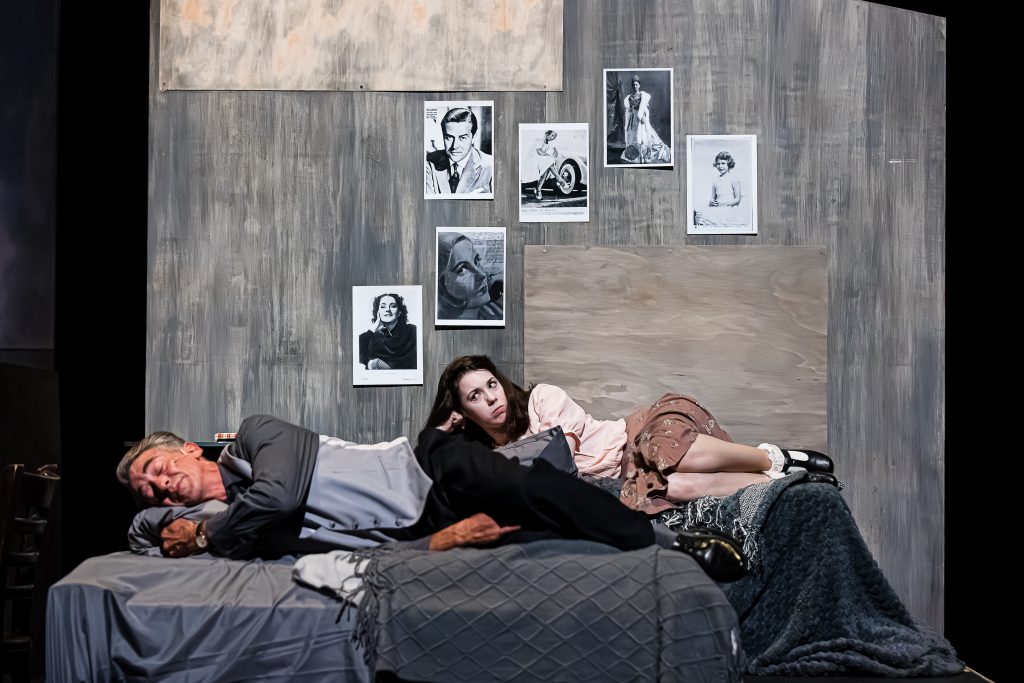
In spite of the modesty of the set, the production values were very high, with excellent lighting, designed by Jason Bovaird, to accentuate the tensions between the internal and external. Similarly, the sound, designed by Jason Gibbs, brought that sense of danger, the constant spectre of the outside world imposing itself upon the characters.
At once specific and universal, this play is a powerful piece. While it belongs to a specific time, the play also belongs to our time through the humanity that permeates it.