My connection to Flamenco began long before I understood that it would become my life’s work.
My family comes from Granada in southern Spain, where Flamenco was part of our family tradition. My grandmother danced as a hobby, and I had an uncle who loved to sing. Because I spent part of my childhood in Spain, I grew up surrounded by its music, rhythms and spirit. My family instilled in me a deep love for Flamenco, not simply as a dance form, but as a way of expressing who we are and where we come from.
I began formal Flamenco training at the age of nine. What started as a childhood connection quickly became my passion. In 1993, I moved to Spain to immerse myself fully in Flamenco, studying and performing in Granada and later Madrid. I trained with influential artists including La Mariquilla and Manolete and performed in the historic tablaos of Granada’s Sacromonte, before continuing my development at Madrid’s renowned Amor de Dios studios.
Over the years, Flamenco has taken me to theatres, tablaos and festivals across Spain, Europe, the United Kingdom, the United States, Russia, Argentina and Japan. I have had the privilege of working alongside extraordinary artists, including Eva Yerbabuena, Manolo Marín and Rafael Amargo. These experiences taught me that Flamenco is a living art form: deeply rooted in tradition, yet constantly evolving through every artist who enters into conversation with it.
For me, Flamenco is a language through which I can explore identity, memory, migration and belonging. I am particularly interested in telling stories that connect my Spanish heritage with my life in Australia. My work often considers what it means to carry a cultural tradition across countries and generations, and how that tradition can remain authentic while responding to contemporary life.
Through Compañía Pepa Molina, based in Western Sydney, I have continued to develop a distinctly contemporary Australian Flamenco voice. Works including Bush Bailando, Perceptions, FlamencoBITS and A Taste of Spain have allowed me to bring Flamenco into dialogue with new places, artists, communities and ideas.
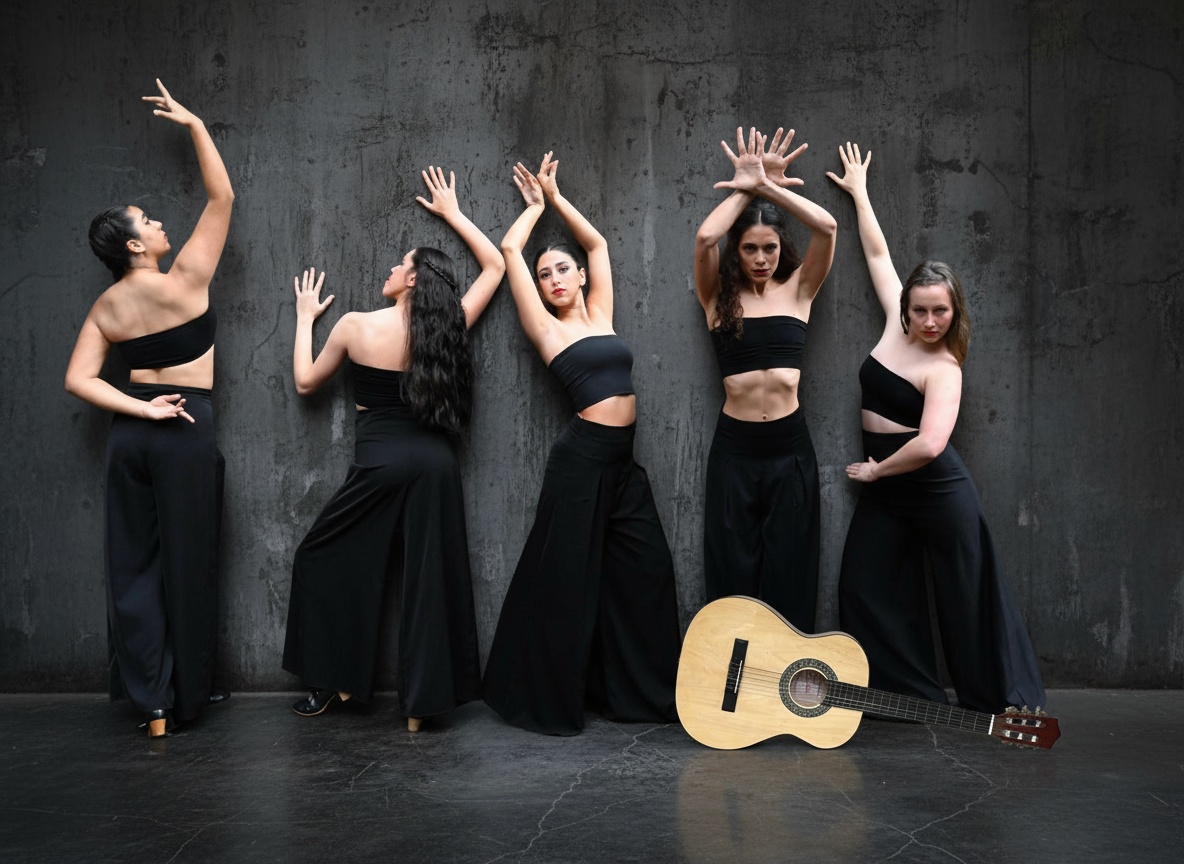
My latest work, Strike a Chord, explores the powerful relationship between Flamenco guitar and dance. Traditionally, Flamenco is built around a conversation between song, music and movement. In this work, we remove the singer and bring the guitar and dance into sharper focus, allowing them to meet as equal creative voices.
Strike a Chord is about listening, responding and finding connection. Sometimes the guitar leads; sometimes the dancer challenges or interrupts it. At other moments, they move together as if sharing a single pulse. I hope audiences experience not only the virtuosity and passion of Flamenco, but also its intimacy – the sense that every rhythm, gesture and silence is part of a conversation.
Ultimately, the work asks how tradition can inspire something new without losing the memory, emotion and history held within it.
Strike a Chord runs from September 15-19 as part of the Sydney Fringe Festival. Tickets are available here.