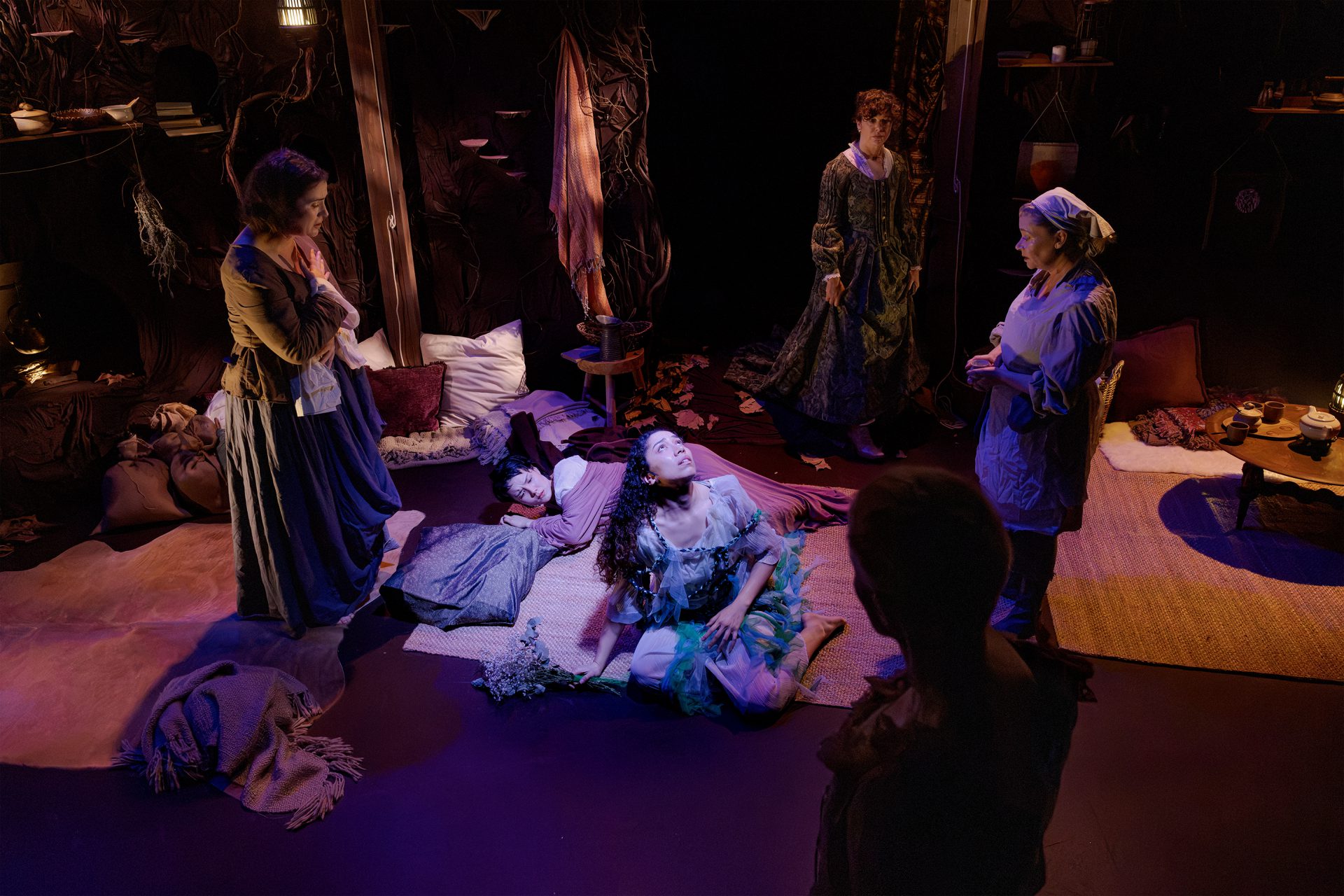
Harmonius, Heroic, and Hellion.
Written by Emma Wright and presented by New Ghosts Theatre Company, Harlots explores the lives of Shakespeare’s wronged female characters, drawing from The Winter’s Tale, Much Ado about Nothing, A Midsummer’s Night Dream, and Hamlet.
Directed by Janine Watson, Harlots delves into the themes of injustice, struggle, and power, creating a captivating and immersive experience that holds your attention right through to the script’s final words.
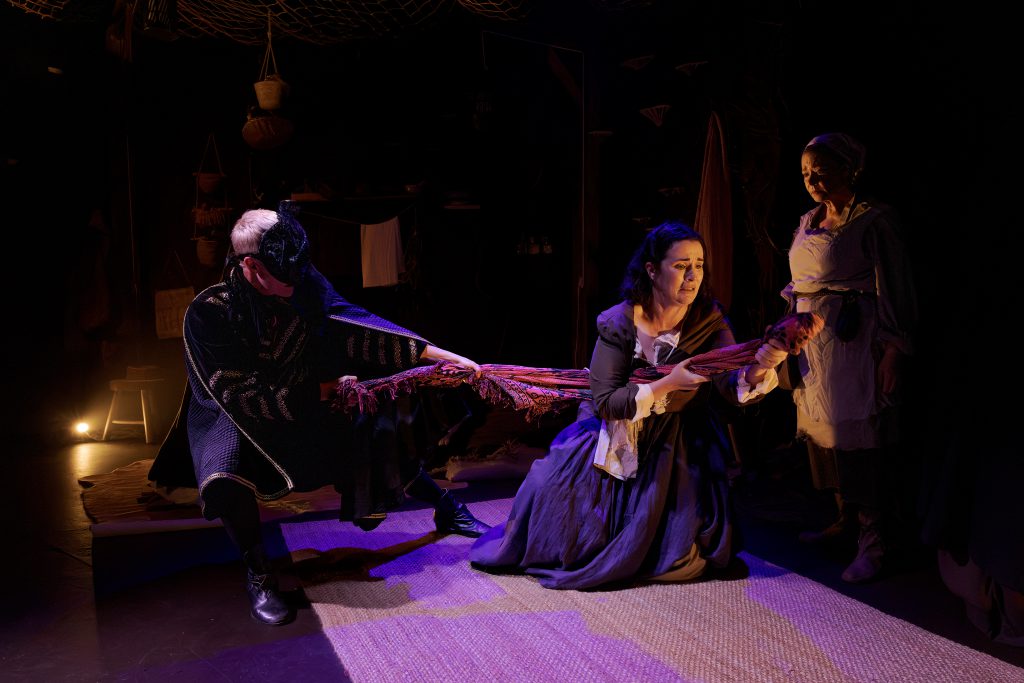
Hidden away and rescued from a society that has betrayed and condemned them, Hermione (Megan O’Connell), Hero (Madeline Li) and Helena (Ella Prince) live within an underground commune. Each woman carries the weight of a painful past, marked by mistreatment and false accusations. Under Paulina’s (Hannah Waterman) watchful care, the commune offers a place where their pasts are confronted, identities can be reclaimed, and explores what survival truly entails. Each heroine’s differing temperaments are united by a shared uncertainty as to what the future holds. Despite the safety their sanctuary provides, they remain suspended between life and death, hesitant about the world that once wronged them.
The cast deliver compelling performances. Li conveys the fear, pain, and earnestness of Hero well, creating a vulnerability that felt both genuine and touching. O’Connell demonstrates versatility as Hermione, balancing the character’s calmness, pain, and exhaustion with moments of humour that land effortlessly. Prince brings an entirely different energy to both Helena and King Leontes; crude, bold, and unapologetically certain, she commands the stage with both defiance and frustration. In contrast, Waterman’s depiction of Paulina provides warmth and tenderness, making her feel like both a source of stability and protection to the commune. The cast’s performances complement one another while allowing each character to retain their own distinct personality and emotional weight.
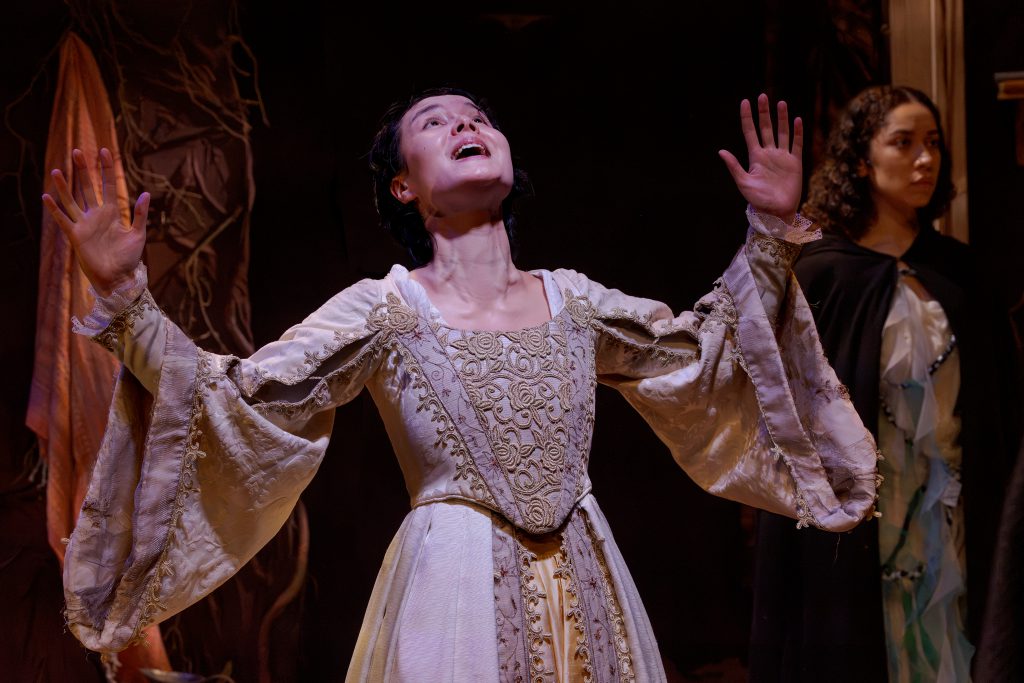
The set and lighting (Kate Beere and Luna Yuet Yee Ng) are warm and cosy, creating an intimate atmosphere. The lighting does however shift to a striking neon colour whenever Ophelia (Ana Ika) appeared, giving her presence an otherworldly quality. This would make such moments feel both magical and haunting, as if she’s watching over the women. The costumes (Aloma Barnes Siraswar) are equally impressive, with their intricate detailing and beautiful designs contributing to the visual richness of the production.
The story is at times difficult to follow and felt somewhat disjointed. Whilst such complexity echoes the intricate and confusing narratives associated with Shakespeare, it makes it difficult to discern what exactly was happening. The characters’ comments and interactions leave it unclear as to whether they are alive, dead, or occupying a space in between. By the final scene, the pieces begin to fit together.
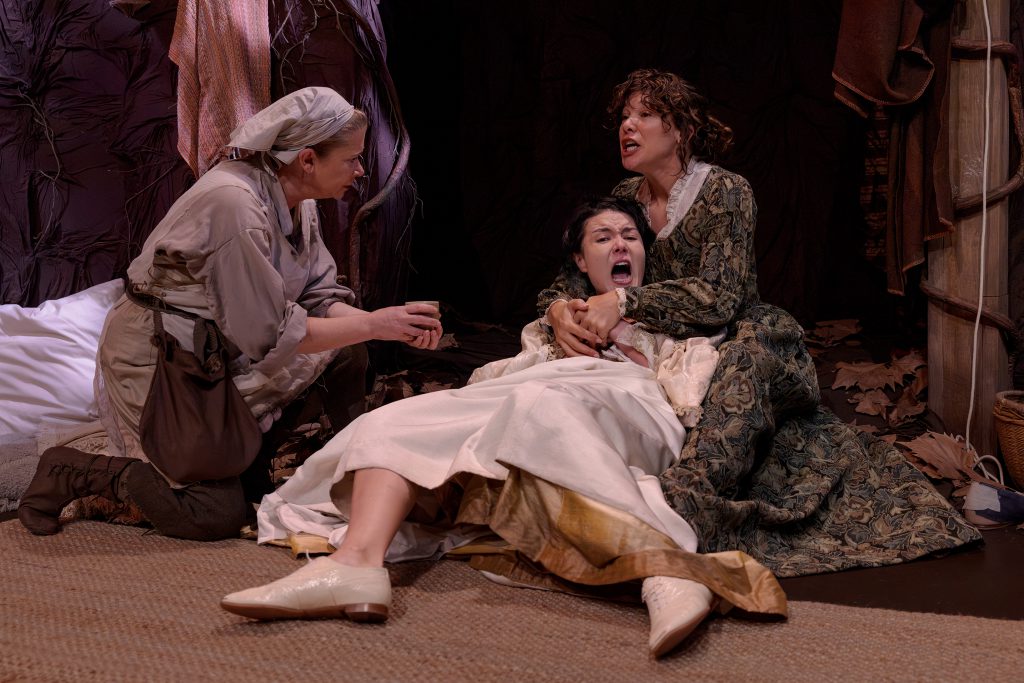
Despite these moments of uncertainty, Wright and Watson ultimately do justice to Shakespeare’s characters, offering a fresh perspective on their experiences and quirks beyond the confines of their original plays. Harlots places these women at the centre of their own narratives, emphasising the importance of solidarity and resistance against social injustice. In doing so, it creates a powerful conversation about the ways women have historically been condemned and misunderstood, providing an opportunity to reclaim their identities beyond the narratives imposed upon them.
Harlots is an emotional, compelling, and just production. Though its complex storyline occasionally obscures its message, the brilliant performances and visual design make it a worthwhile experience. It invites the audience to consider the women behind certain stories and what those stories truly are.