Small forces for grand designs.
Each Australian Haydn Ensemble performance is a reflection of its namesake – genial, spirited and eminently accessible.
Haydn’s “Oxford” made its antipodean showing in Bowral’s Memorial Hall, after a stint in Berry and before an appearance in Sydney’s Neilson.
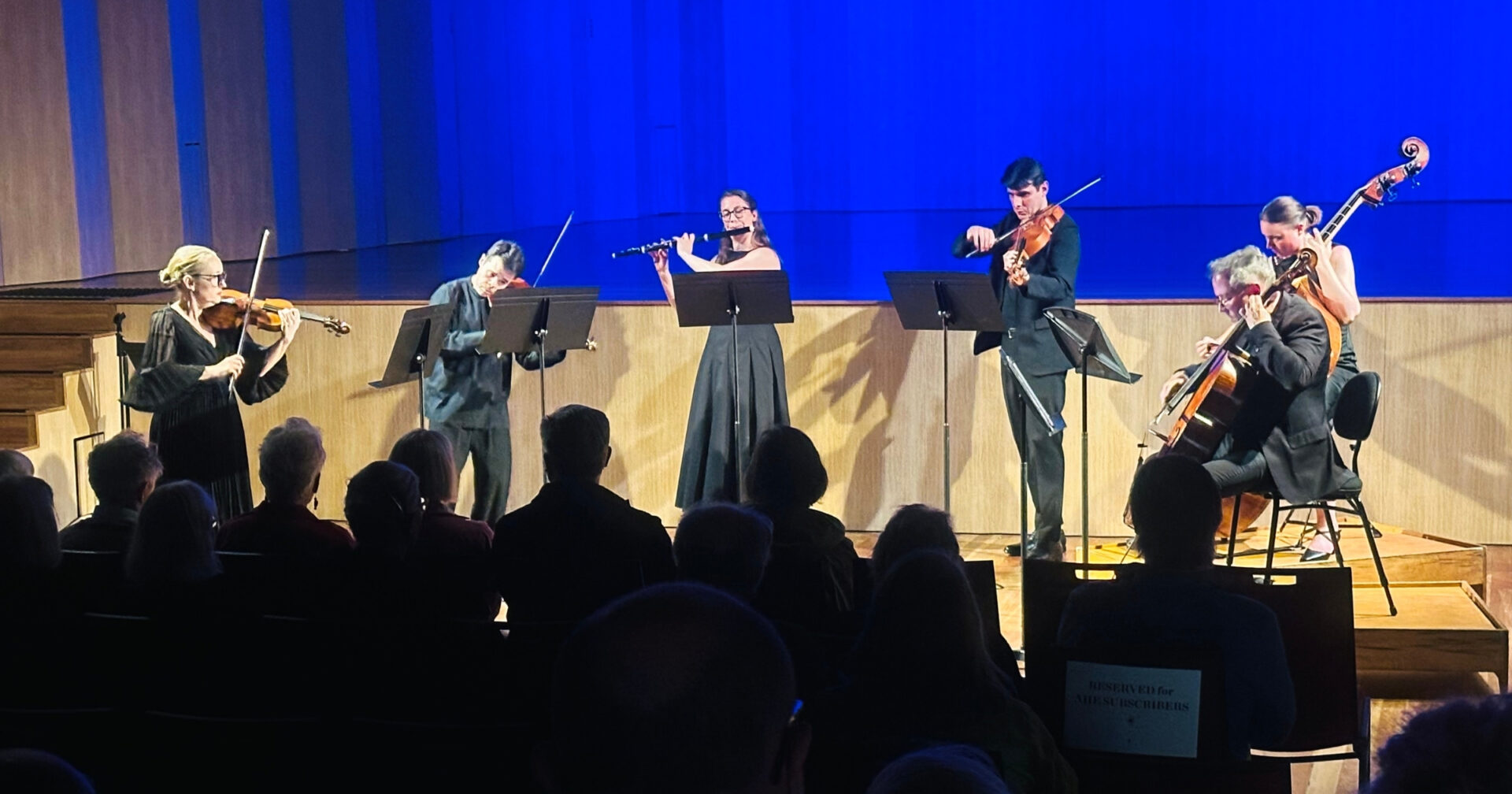
It featured some of Haydn’s typically grand symphonies, but according to Johann Peter Salomon’s subtle chamber arrangements. Six period-instrument players took on three of the composer’s grandest symphonies: No. 92 in G, the Oxford; No. 95 in C minor; and, after a 20-minute interval, No. 103 in E flat, the Drumroll.
Though quieter, in these arrangements the flute (performed deftly as always by Mikaela Oberg) and viola (performed by Rafael Font) take on extra melody and colour.
Strictly speaking, the Oxford is not a London symphony. It was first performed in Paris, and Haydn reused it in 1791 when Oxford University awarded him an honorary doctorate. Skye McIntosh on first violin set the tone in the gentle Adagio introduction. Her quiet, singing line moved naturally into the bright Allegro. In the finale she played the “scurrying staccato melody” that Haydn throws through “all manner of comic indignities”, and her playing was light and quick-witted.
Oberg assumes the burden of what originally was the entire wind section. In the slow movement’s stormy middle section, Oberg’s flute stood in for the whole wind section, with a woody, warm tone that never sounded thin or reedy.
In the finale’s giddying chromatic episodes, Daniel Yeadon on cello and Pippa Macmillan on bass held the harmony steady while Matthew Greco on violin and Font on viola carried the inner parts that make Haydn’s counterpoint work.
That said, in some parts this is a piece that struggles to be interesting. Some of it seemed destined for home consumption and Salomon, ever the businessman, secured the rights to all twelve symphonies to capitalise on a booming market among the middle-class for such domestic divertimenti.
On the other hand, No. 95 stands out boldly among the London symphonies. It is in a minor key and has no slow introduction, which risked disappointing the connoisseurs. Salomon’s own collection included Haydn’s autograph manuscript of this symphony. Its finale is as gloriously contrapuntal as the last movement of Mozart’s Jupiter.
One highlight was Yeadon’s cello solo in the trio of the Menuetto which, by smiling genially upon its audience, belied its difficulty.
In the C minor opening, McIntosh and Greco delivered the “stormy and passionate moments” with sharp, biting attack, while in the fugal finale, Font’s viola entries came through clearly, which is exactly where this scoring shows off its transparency. When the music turns to C major, Oberg’s flute wafted above the strings and caught the sun-drenched mood of the finale. This is Haydn at his most saturnine.
After a short interval came the “Drumroll”. The obvious question was how to play the famous opening drumroll, sans timpani. The answer was a hairpin chord, starting soft, swelling and then dying away, played with exciting tremolo bowing. McIntosh let us in on the joke.
Haydn wrote a florid violin part into the second movement, as a tribute to Salomon himself. McIntosh’s playing was elegant and well judged in its ornamentation, a fitting tribute to the violinist who commissioned the work.
These arrangements are not pale imitations. With the assistance of a fine ensemble, they brought out much of Haydn’s wit and surprise.