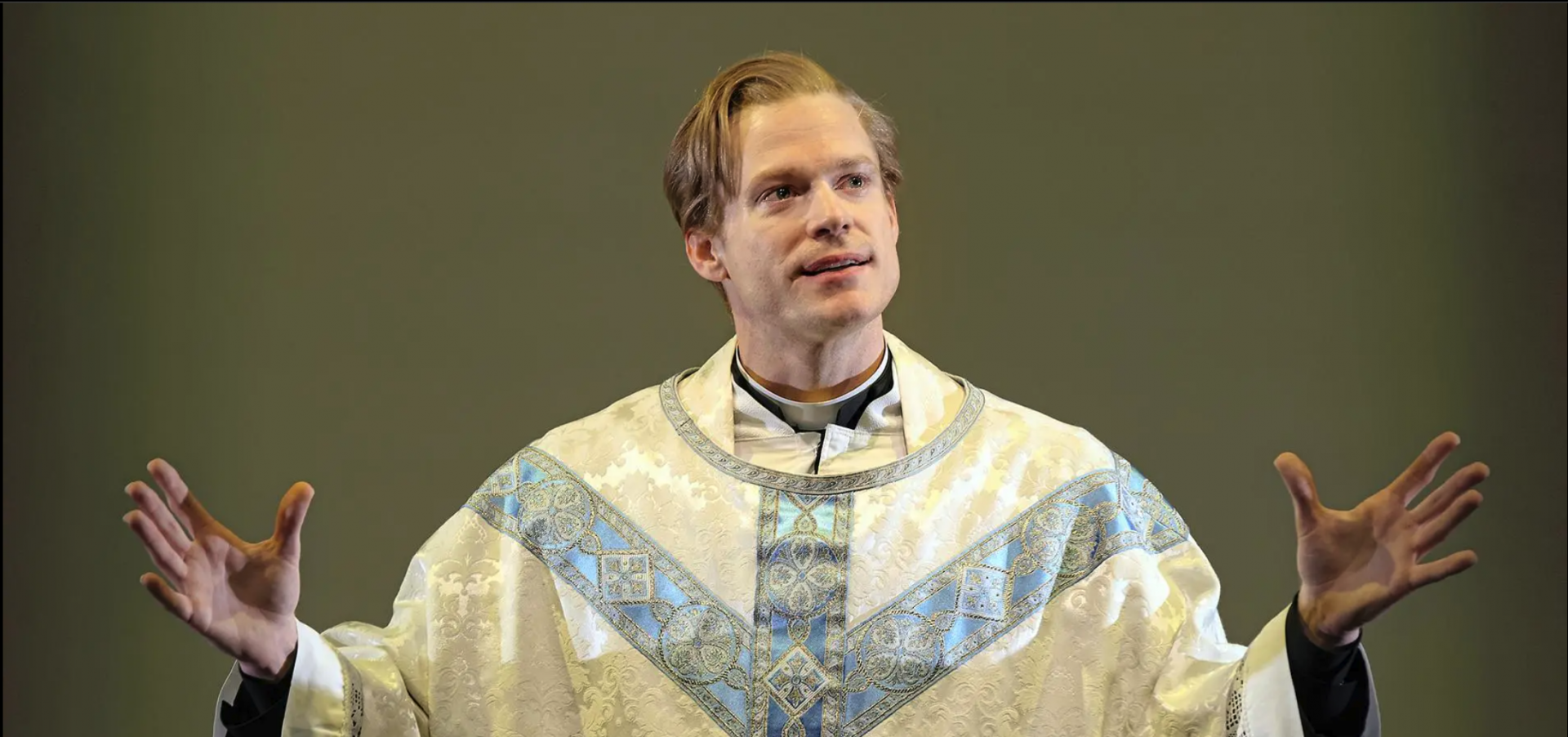
A play that raises countless questions and offers delightfully few answers.
When a charismatic Catholic priest is accused of inappropriate conduct with a young Black schoolboy, whose side does one take? Doubt: A Parable, written by John Patrick Shanley and produced by Sydney Theatre Company, is an engrossing critique of power, order, and character. Directed by Marion Potts, its powerhouse cast deliver a show that is deeply confronting and wonderfully ambiguous.
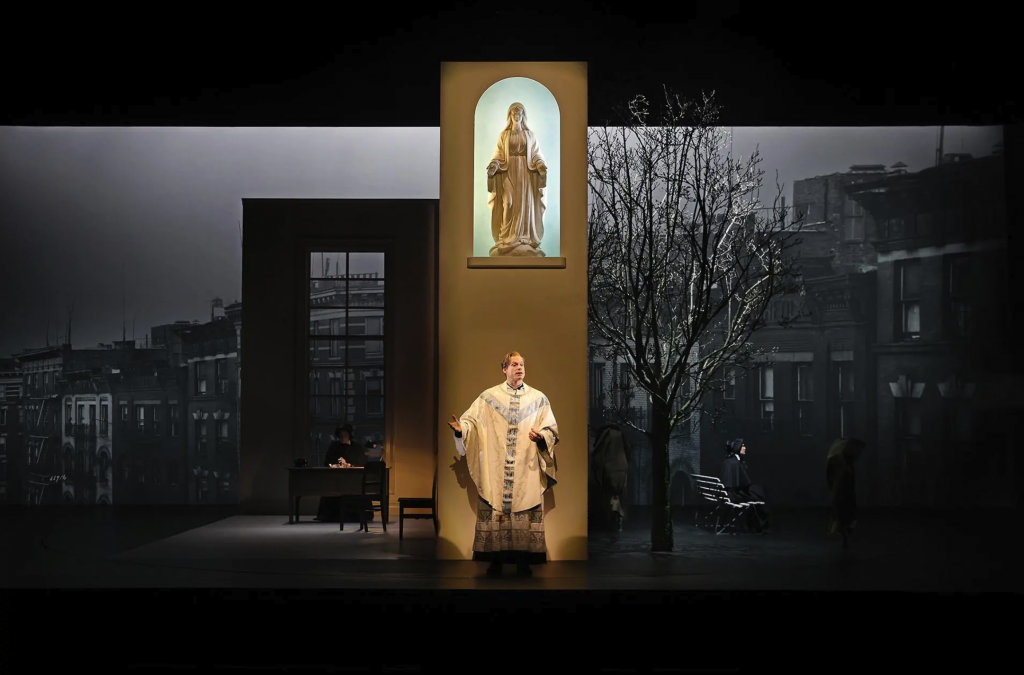
Doubt: A Parable is set in 1960s America and centres around Father Flynn (Sam Reid), the priest of a Catholic school in The Bronx. Following a private session with Donald Muller, an altar boy and the school’s only Black pupil, Flynn draws the suspicion of the school’s headmistress Sister Aloysius (Pamela Rabe). What ensues is a dangerous inquiry into what occurred in that private session and Flynn’s word against Aloysius’.
As Aloysius pushes further and Flynn becomes increasingly defensive, both character’s virtues, the morality of their actions, and the ethics of the social structures they inhabit come under scrutiny.
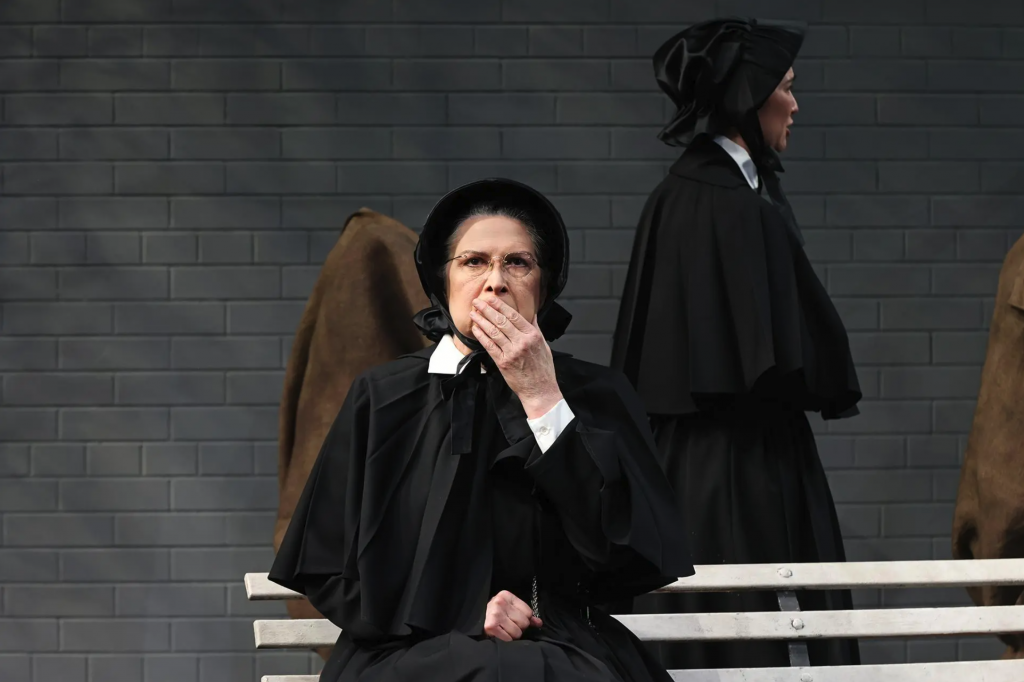
Shanley’s writing is grounded in obscurity. It needs the audience to question everything, from the truth of each character’s words to the nature of their intentions. It must also leave the audience questioning their interpretation of the script’s events. Potts’ direction mostly delivers these. Though initially marred by slow pacing, the show comes to tick with tension. Every interaction builds this, and the set (Bob Cousins) – a small office and garden on a rotating platform in the centre of the Roslyn Packer Theatre stage – enforces it, letting viewers focus on and critique each character’s most minute actions. This is a show designed to obfuscate, and Potts ultimately achieves that.
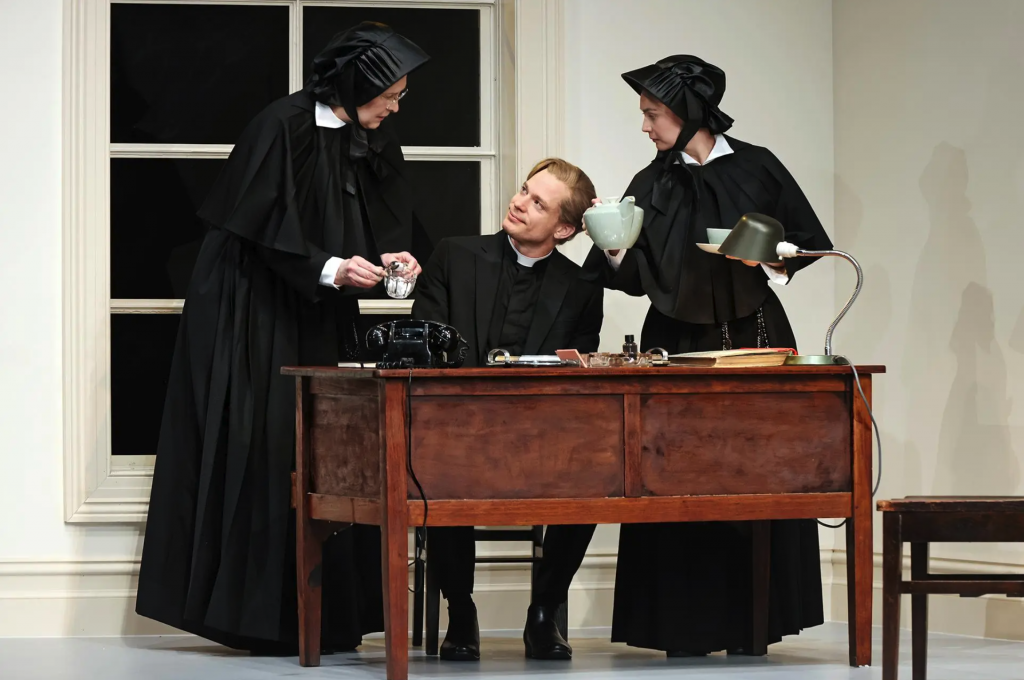
Performances from Rabe and Reid are strong. Rabe lends her great range to Sister Aloysius, turning the Sister’s conservatism into much-needed comic relief while showcasing her steely but sympathetic attitude. Reid brings the charm necessary for Father Flynn, expertly displaying his warm persona in captivating monologues delivered to the audience. In his scenes with Rabe, Reid replaces that warmth with a calculating, supercilious nature, creating fantastic chemistry with her.
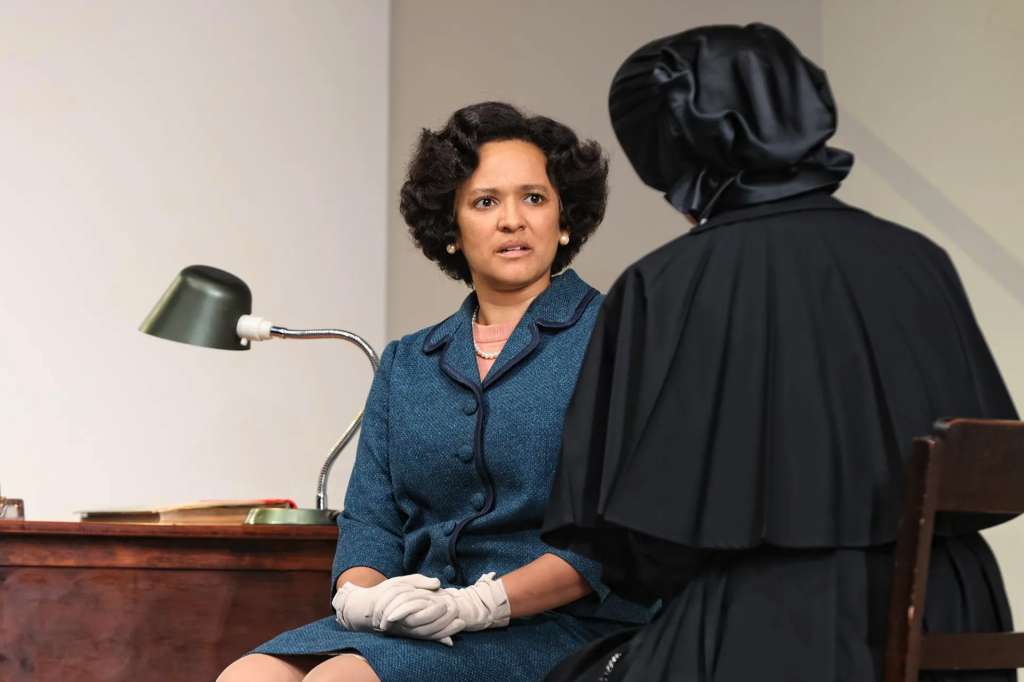
Shannen Alyce Quan gives a nice but limited performance as Sister James, limited mainly because the script confines her to glazing Father Flynn nonstop. Zindzi Okenyo as Mrs Muller dominates her one scene. Her performance is the play’s key turning point; in a few words, she brilliantly transforms the plot’s direction.
The production shines best, though, because it leaves audiences guessing. By never revealing what happened between Father Flynn and Donald, and prohibiting the truth from coming to light, the impact of doubt is revealed. It is easy to blame the system or those in power for causing such doubt and its impacts. Shanley’s script and Potts’ direction do this, but both invite audiences to look deeper, and to observe how people, power, and ‘the system’ interact. By spreading culpability between those three forces, what might have been black and white is now grey – and regardless of what each viewer might decide about Father Flynn, the show offers a much more universal conclusion: that doubt changes, doubt plagues, and doubt corrupts.
Ultimately, Doubt: A Parable achieves its vision. Thanks to its direction, it leaves audiences questioning the power structures they see. The cast perform well enough to expand that line of questioning to the play’s flawed characters, and as a whole the production takes it a step further. And it’s the questions that are left unresolved which make this production resonant.