Is a ‘level playing field’ ever really level?
The Australian premiere of Fair Play by Ella Road at the Old Fitz tackles that question head on.
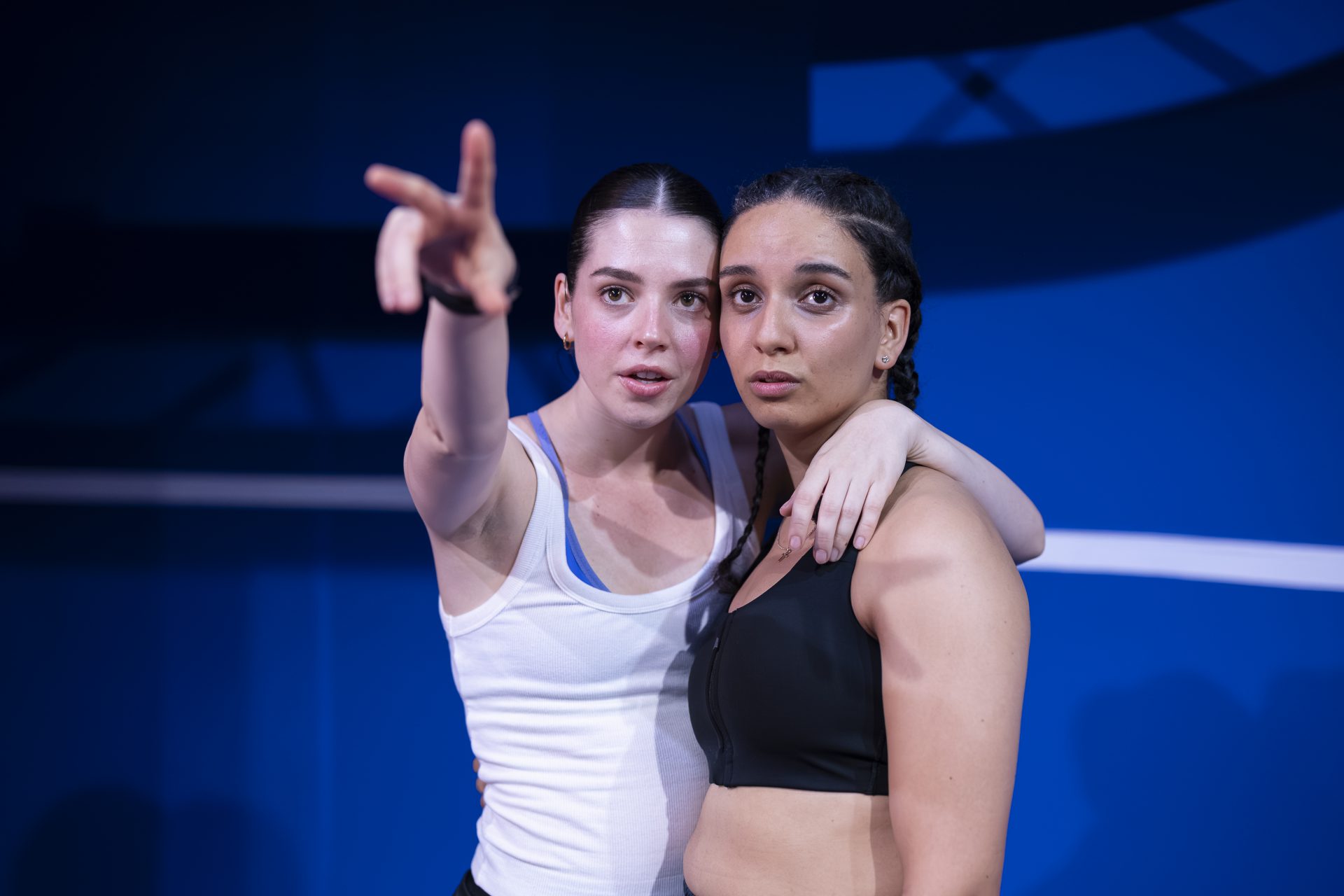
Under the direction of Emma Whitehead, this gripping two-hander follows a pair of young 800m runners Sophie (Elodie Westhoff) and Ann (Rachel Crossan), whose friendship grows alongside their competitive ambitions, until they are faced with the cost of success.
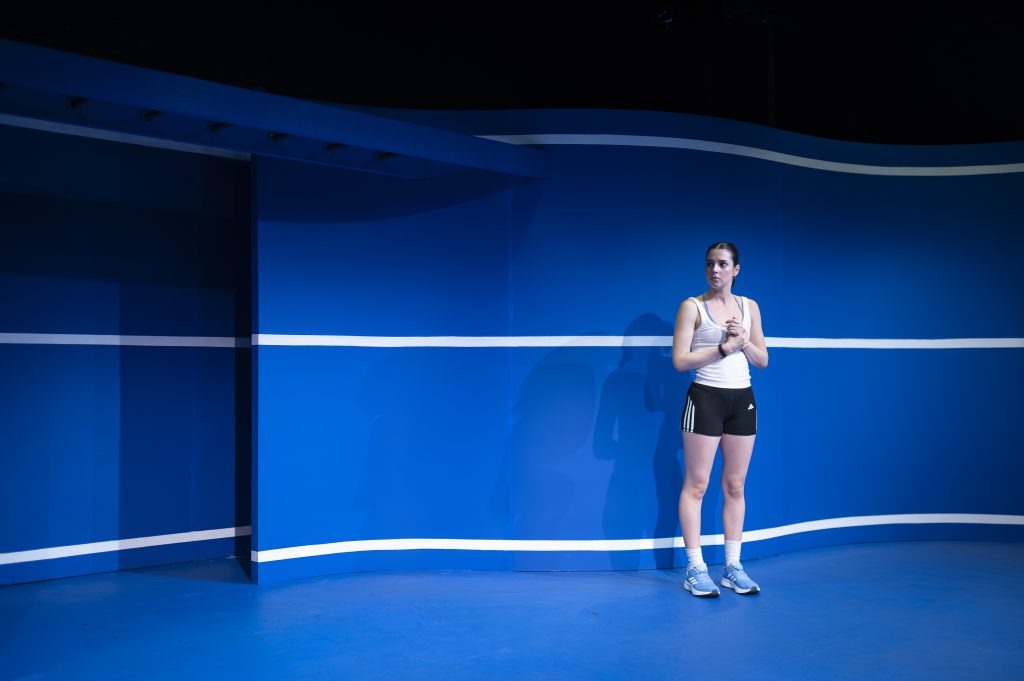
Visually, Lost Thought’s production is immediately striking. The sleek, blue set designed by Kate Beere evokes the geometry of an athletics track, transforming the stage into a stylised competitive arena. Lighting design by EJ Zielinski enhances this world with projections of stopwatches that pulse across the stage, reinforcing the play’s fixation on measurement and performance. The sound design and composition by Mitch Brown and Osibi Akerejola inject the show with propulsive energy, and the inclusion of the song ‘Proud’ by Heather Small served as an uplifting motif.
The show is anchored by two powerhouse performances. Crossan’s Ann is quick-witted, funny and sincere. Her performance becomes deeply affecting as the stakes escalate, particularly during a compelling speech that interrogates why women must so often exist in relation to men.
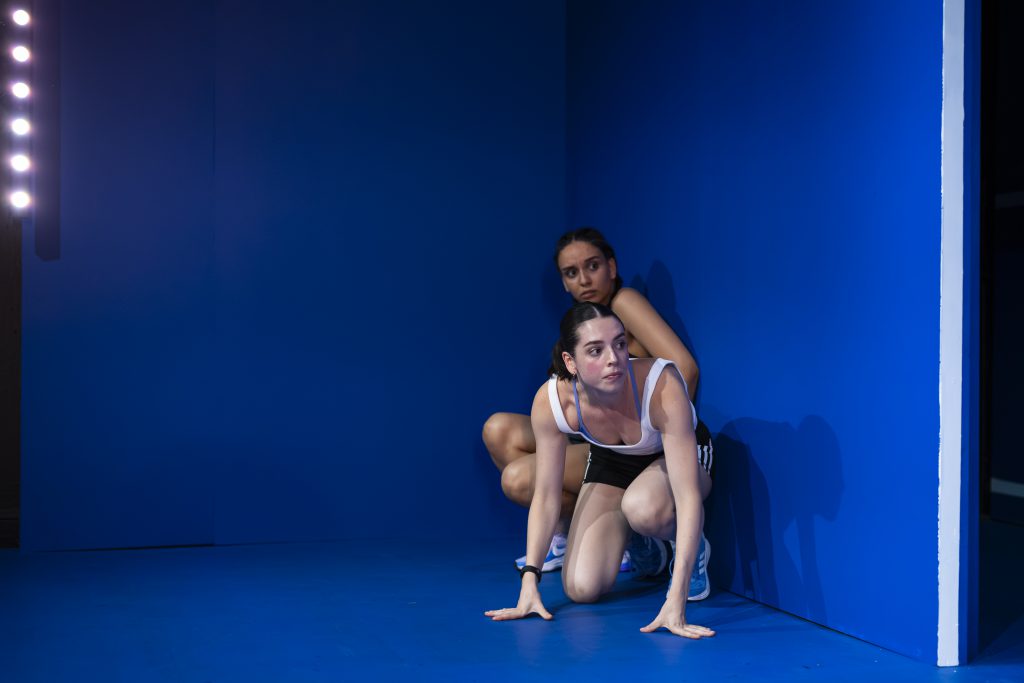
Westhoff delivers a poised, energetic portrayal of Sophie, gradually revealing layers of vulnerability that become especially poignant in the play’s final moments. Both actors navigate the tenderness of a friendship blossoming beautifully, while also sustaining the high-intensity physical choreography (by Cassidy McDermott-Smith) with convincing athleticism. At times the direction feels slightly presentational, when dialogue is delivered to the audience rather than more candidly between the characters, occasionally diminishing the authentic connection between them. Nonetheless, Crossan and Westhoff undeniably demonstrate impressive stage presence, accents, and nuance in their relationship throughout.

The production also takes time to find its footing. The opening half hour moves through rapid, abrupt scenes that feel largely inconsequential, with unnecessary transitions in between. These fragmented moments outline the beginning of Ann and Sophie’s relationship but create a jagged rhythm that makes it difficult to fully settle into the story. As the play progresses however, the scenes become longer and grittier, allowing the audience to properly engage with the characters and the ethical questions at the play’s core.
Those questions crystallise when Ann is randomly selected for medical testing at an international competition, where the results reveal what officials deem an “unfair” hormonal advantage. What follows is the play’s most gripping debate, exposing the contradictions of elite sport: a system built on countless unspoken physical advantages (height, physiology, genetics) that nevertheless scrutinises women’s bodies with particular intensity. The play also widens its lens to questions of race and class: Ann, who is of Nigerian heritage, has fought her way into elite sport through relentless effort and faith (her ‘mustard seed’), while Sophie’s privileged upbringing means her opportunities have always fallen on fertile ground.
Fair Play provides no easy resolution, leaving audiences to ponder the gravity of contradictions between fairness and empathy. Lost Thought’s production ultimately excels at tackling such topical conversations, propelled by emotionally-charged, insightful performances, that linger well beyond the finish line.