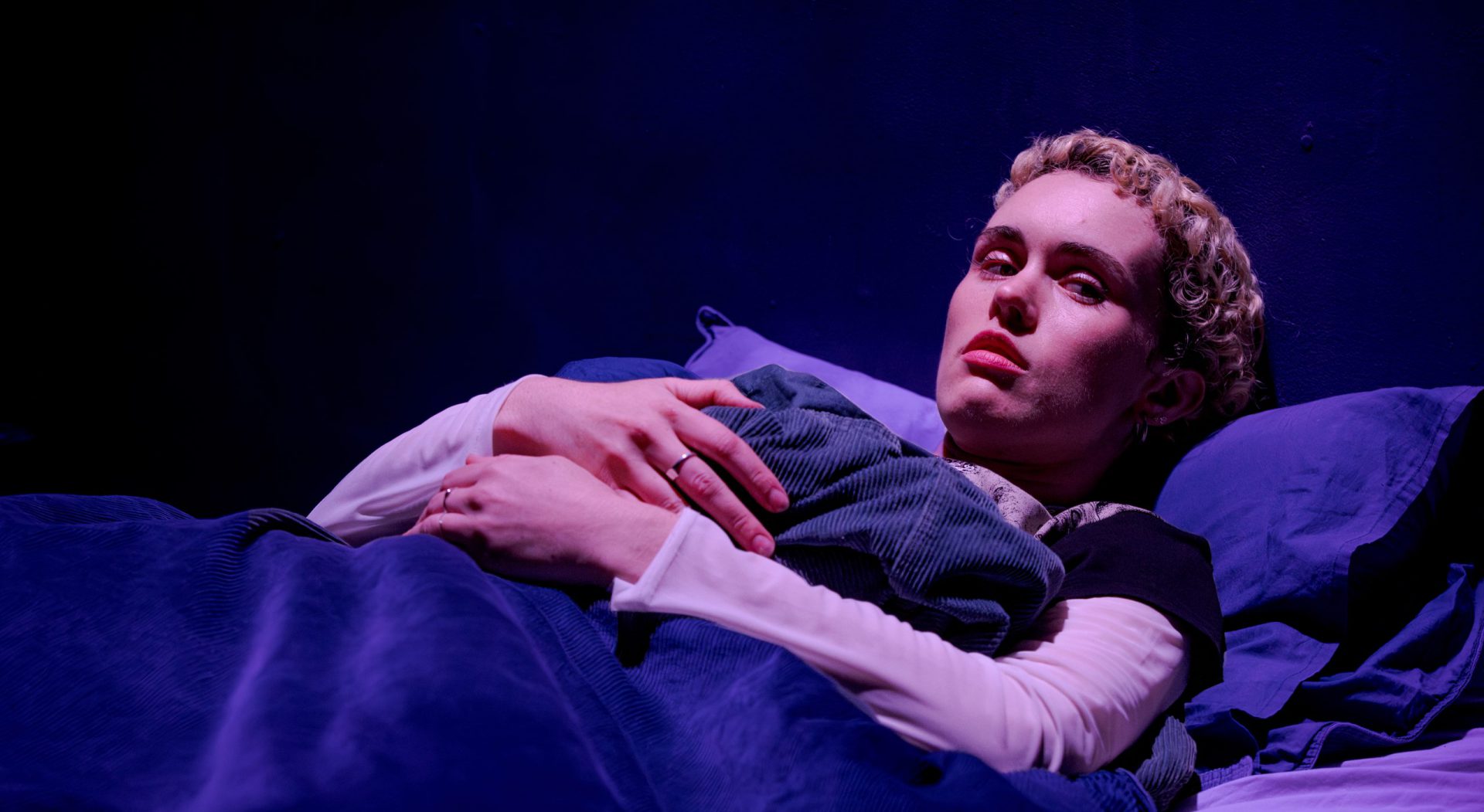
Gia Ophelia, written by Grace Wilson and directed by Jo Bradley, is a compelling one-woman play that interrogates the uneasy intersection of ambition, fertility, and societal expectations facing women.
Starring Annie Stafford, the production draws sharp parallels between the modern woman and the only two female characters in Shakespeare’s Hamlet – Ophelia and Gertrude.
The audience enters KXT to find Gia (Stafford) moodily absorbed in a copy of Hamlet, surrounded by the many interpretations of the classic – reflecting the character’s intense dedication to the Bard. The staging, with the audiences seated on opposite sides, creates an immediate sense of exposure. This intimate configuration heightens the play’s emotional volatility, intensifying moments of confrontation and vulnerability.
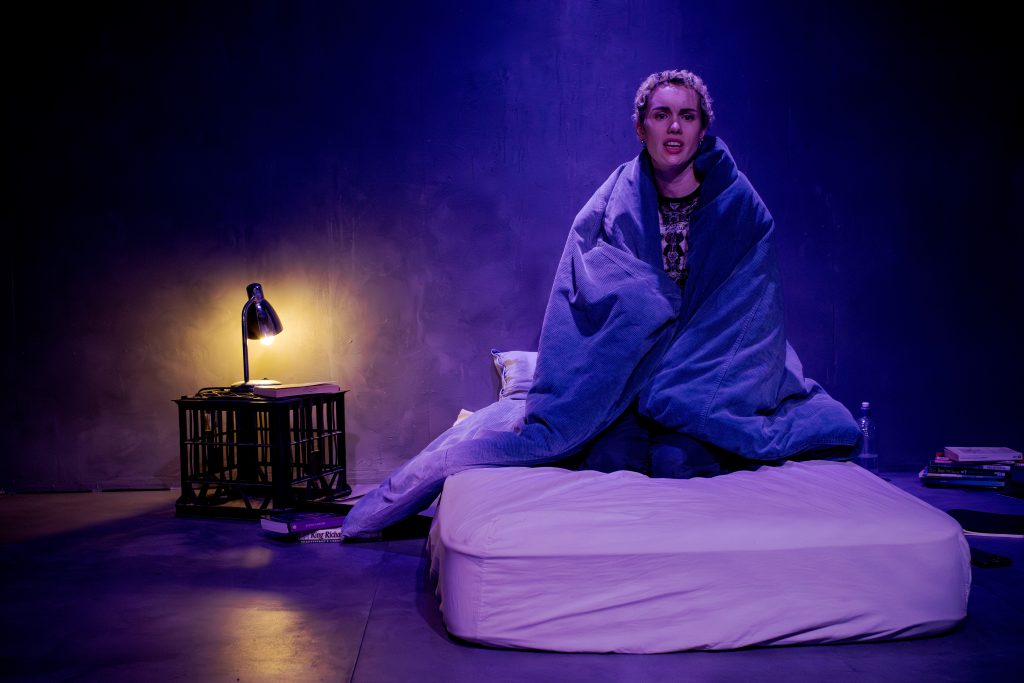
Grace Wilson’s writing is naturalistic and relatable, encouraging audiences to relate to Gia as she shares her story. Whilst Ophelia is used as a motif, the story remains clear and accessible even for audiences without deep familiarity with Hamlet and Shakespeare. The narrative is engaging, leading audiences to reflect on the dichotomy of ‘family vs career’ in a novel and nuanced way, highlighting the ageism and sexism that women (particularly in their late 20s/early thirties) experience. The work feels both intellectually engaged and emotionally resonant – particularly for those navigating the strange period of being simultaneously ‘too young’ and ‘too old’.

At the centre of it all is Stafford ‘s absolutely stellar performance. In both emotional depth and comic precision, she is magnetic. Supported by Holly Nesbitt’s lighting design along with the superb staging, Stafford expertly presents to both sides of the audience, ensuring all can see and feel her layers of dry humour, grief and angst. The narrative offers moments of melancholy and nostalgia, punctuated by comedic moments, best captured by the yoga retreat scenes where Stafford embodies multiple characters to add humour and light into an otherwise sombre production. In vulnerable moments, Stafford resists melodrama and grounds Gia’s anxieties and fragility with Wilson’s resonant script.
Ultimately, Gia Ophelia succeeds as a timely reflection on the expectations of women today. Neither certain nor settled, Gia exists in the reality many women live – where ambition, biology and social norms collide. Through Wilson’s incisive writing and Stafford’s nuanced performance, the production presses audiences to sit with that tension over resolution. Gia Ophelia recognises the complexity of contemporary womanhood with validation for those navigating its pressures.