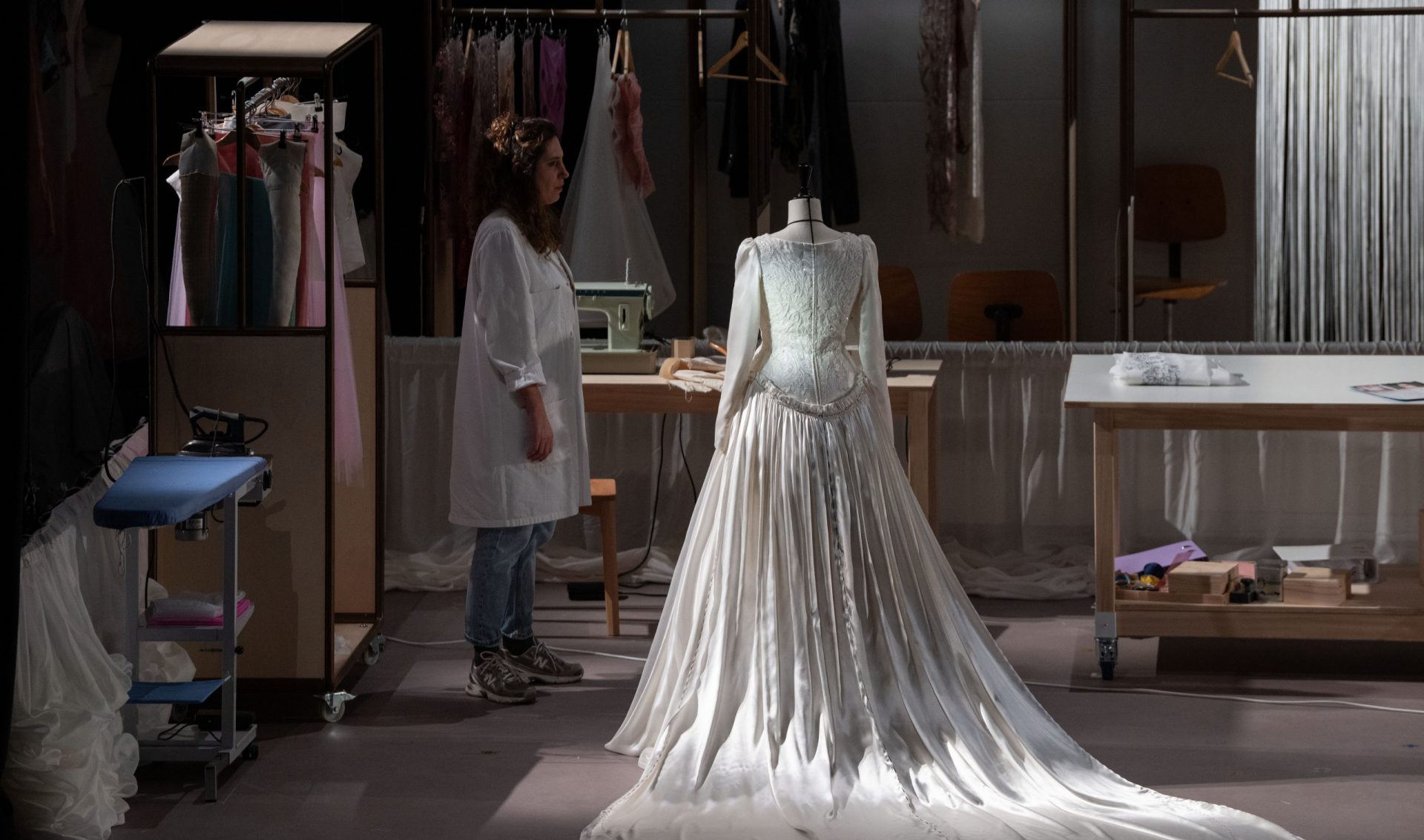
Caroline Guiela Nguyen’s LACRIMA, playing at the Roslyn Packer Theatre as part of Sydney Festival 2026, is a work of enormous scope.
Performed in four languages, set in three countries, and running at three hours without interval, Nguyen’s story about the making of one dress delves into themes of colonialism, domestic violence, family neglect, high fashion, and extreme labour. It weaves a strong thread over audiences as it does so, leaving a profound effect – even when some of its threads beg to be followed further.
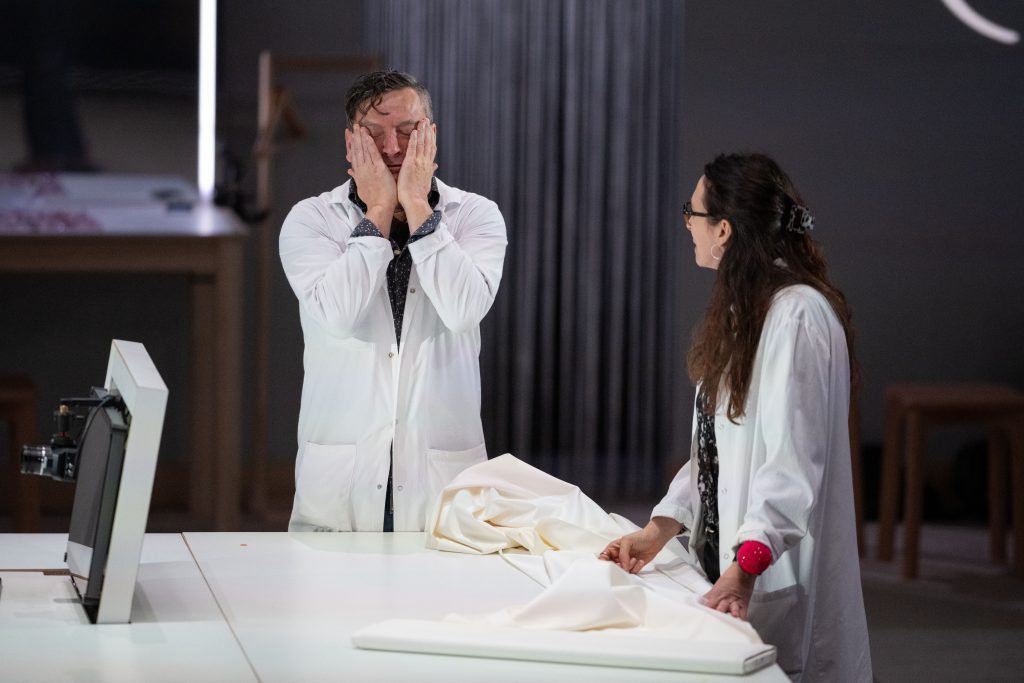
In LACRIMA the princess of England is set to be married. To match the affair, the Royal Commons engages three fashion houses to make her wedding dress. In Paris, an atelier prepares the gown; in Normandy, lacemakers restore and prepare an historic veil; and in Mumbai, embroiders copy that veil in a design featuring 230,000 pearls. With little time it is an immense and stressful task, complicated by the deeply fractured personal lives of the designers.
What the play offers in insight is profound. LACRIMA illuminates the intensity of embroidery and the punishing demands of the high fashion industry with unique specificity. It exposes a system built on extreme labour, colonial legacies and extravagant creative expectations, revealing how these pressures harm not only workers’ bodies and lives but also the natural environment that sustains the industry. The suffering embedded in beauty is made unmistakably visible.
From the outset, the production announces its greatest strength: the stunning video capture, which functions not as decoration but as dramaturgy. Courtesy video specialist Jérémie Scheidler, multiple cameras are placed cleverly across the stage, designed by Alice Duchange. They broadcast videos onto a screen above the set, which provides close-ups of performers, live feeds of video calls, and carefully composed images. These videos draw us into atelier rooms, family home interiors, and moments of confession and collapse with a closeness that only ‘cine-theatre’ can achieve. It is immersive without being intrusive, and consistently beautiful.
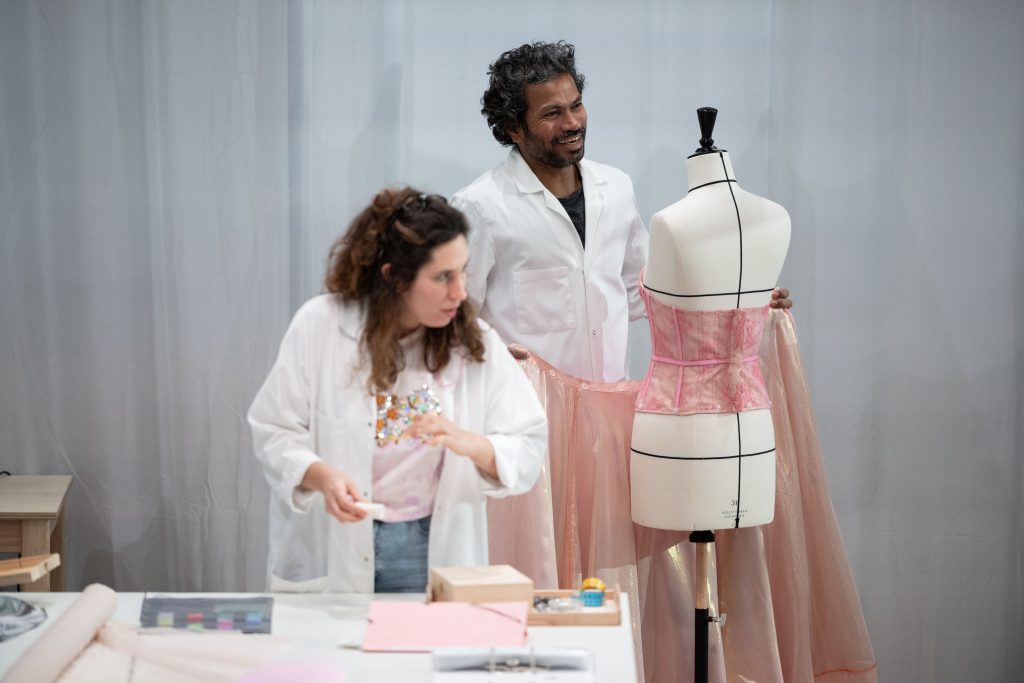
The performances anchoring LACRIMA’s worlds are enthralling. Vasanth Selvam switches between two characters – a snooty, bizarrely-accented English fashion designer and struggling Mumbai business owner – with a smoothness that feels organic rather than theatrical. His shifts in physicality and emotional temperature are precise, allowing the audience to track his multiple roles without confusion or strain. Maud Le Grevellec brings steely intelligence and aching vulnerability to Marion, the leader of the Parisian atelier. As Marion, Le Grevellec embodies the tension between artistic excellence and human cost – her authority hard-earned, but her personal damage tragic and recognisable. Opposite her, Dan Artus plays Marion’s husband with passionate resentment, making their marital fracture (a driving point of the play’s drama) engrossing.
Nguyen’s writing is beautiful in its clarity, compassion and detail, and her direction is impressively fluid. Despite the density of material and the high number of narratives, she keeps the play’s various threads legible, guiding the audience through temporal shifts and geographical jumps with confidence. Of particular note is her exploration of the physical harms of embroidery, which she reveals caused blindness, arthritis, and apnoea. That the play sustains engagement for three hours without interval is no small feat; the pacing is measured and the emotional stakes carefully calibrated.
That said, LACRIMA occasionally gestures toward stories it does not fully unfold. A family trauma separate to Marion’s and a subplot involving an elderly Mumbai embroider are intriguingly introduced but rather rushed. Given the richness of the world Nguyen creates, these threads feel underwritten, subject to more dominant storylines.
Ultimately, LACRIMA is a work of ambition, empathy and meticulous craft. Its unfinished strands do little to diminish its power. Instead, they remind us of the scale of Nguyen’s vision. A deeply affecting, visually stunning piece of theatre, it lingers like fine stitching on the skin.