A powerful, intelligent production.
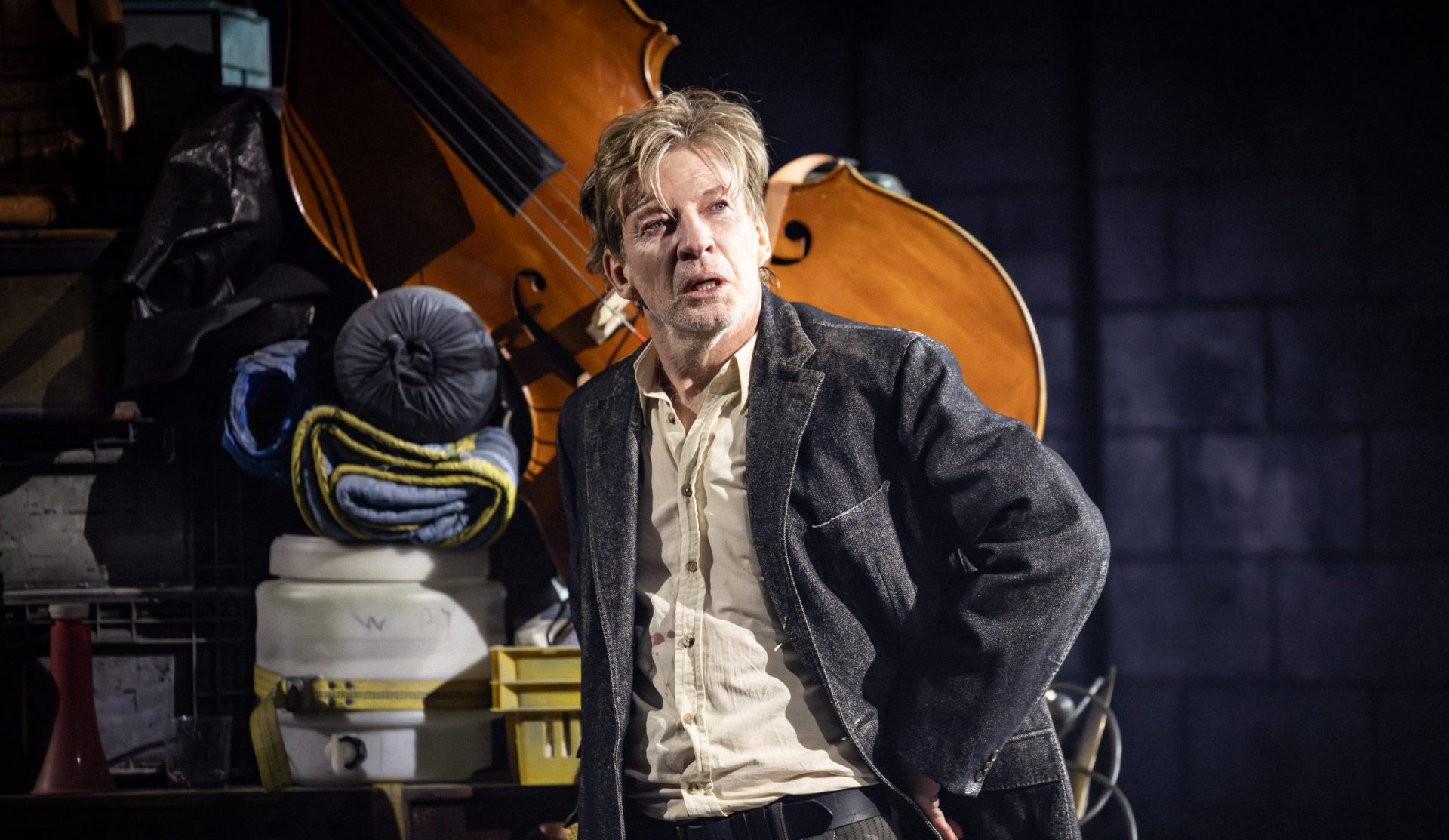
An Iliad, produced by Sydney Theatre Company, is a gripping retelling of one of humanity’s oldest stories. Vividly brought to life by David Wenham, who is matched (and at times exceeded) by musician Helen Svoboda, it is a production of considerable force.
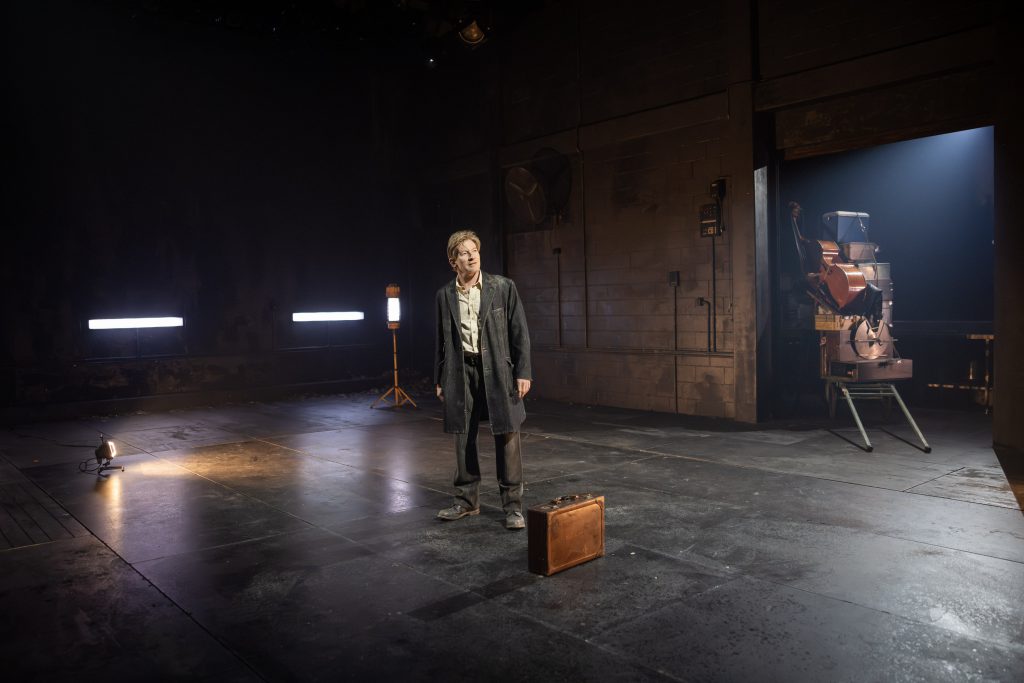
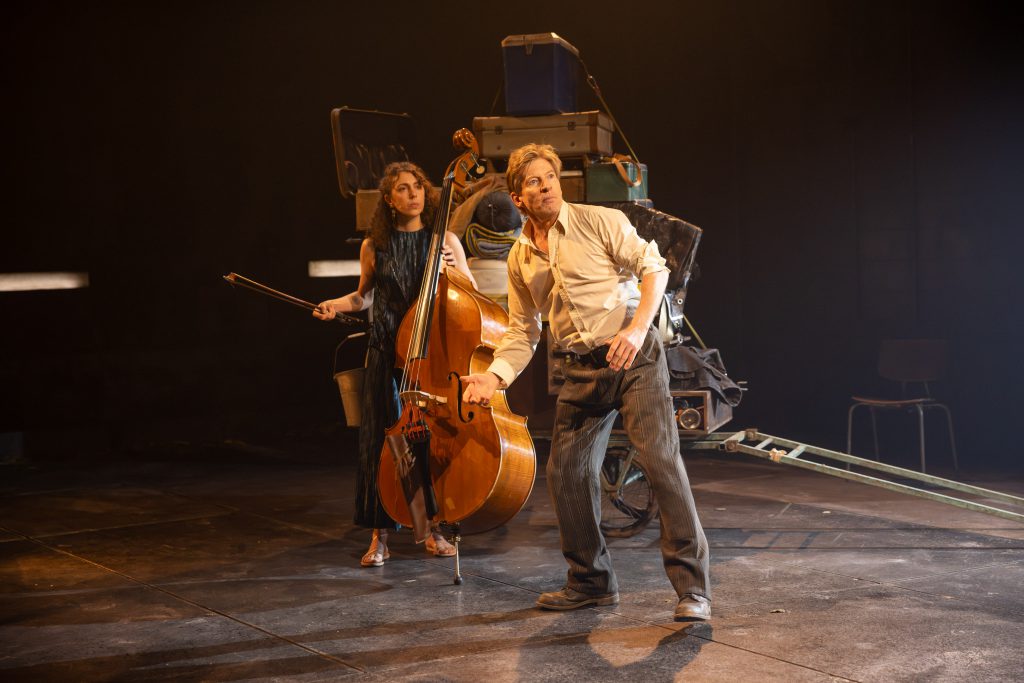
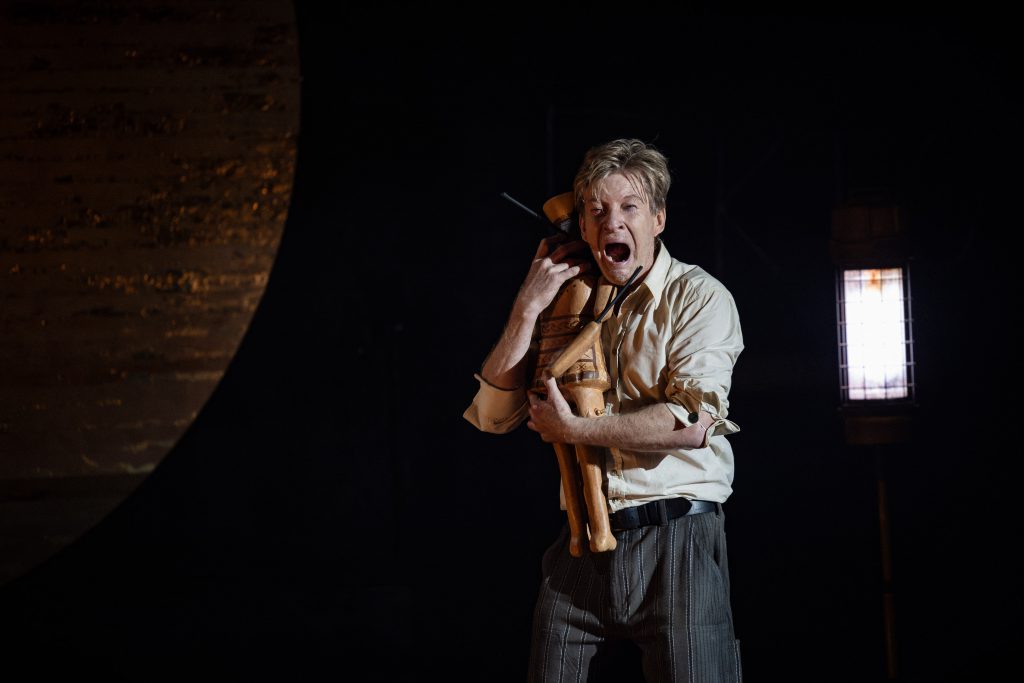
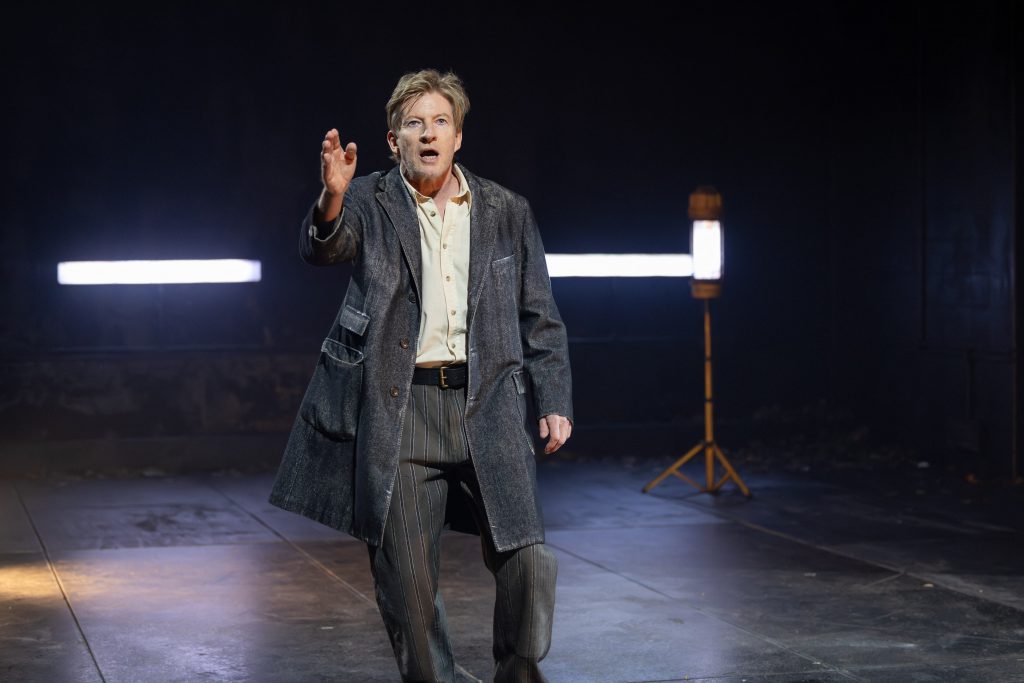
An Iliad is directed by Damien Ryan and adopts the adaptation of the Greek poem by Lisa Peterson and Denis O’Hare. In their script, there is The Poet (Wenham); a travelling storyteller forced to recount the Trojan War until humankind overcomes its penchant for destruction. He carries with him his storytelling aids: a doll, a double bass, a spear, several stones. He also carries Svoboda, a musician. And from the moment the Poet enters the stage, his performance never lets up.
Wenham commands the stage. Tasked with being a narrator, fighter, witness, comedian and mourner (often within the span of a few minutes), Wenham meets those demands with assurance. His dry humour and timing keeps the audience engaged and is underlined by a wonderful generosity. There is a sense that he is telling this story with us, rather than to us.
Svoboda’s performance is captivating. Her presence gives the show pulse and unpredictability, as she deftly glides between playing the double bass, engaging with Wenham, and singing. She injects fresh currents of energy, creating moments of tension, surprise and release. Most notably, her interplay lets An Iliad offer a respite from Wenham’s recitation. The contrast between his seasoned gravitas and her physical and tonal agility proves effective.
Ryan’s attempts to modernise Homer’s poem are often sharp. The show’s references to Australiana – such as the towns of Wollongong and Yeroa to contextualise Ancient Greek cities, or a young soldier’s shattered dreams to attend Monash University – refresh the content. What such modernisation succeeds in doing is conveying the cyclical nature of conflict. An Iliad insists that humanity keeps replaying the same violence, with the same effect of devastation, destruction, and little gain. A lengthy listing of humanity’s worst conflicts since the Trojan War, the show’s most memorable moment, lands with depressing clarity. From that moment, it’s not just the Poet who is stuck in a cycle, but society.
Peterson and O’Hare’s adaptation waxes and wanes according to its rhythm. There are stretches where the energy surges, with battle scenes and furious invocations of gods and men, and times where the energy slows, with more meditative passages on grief and exhaustion. This is both a virtue and a minor frustration. When the rhythm fastens, the production is electrifying. When it slackens, this disappears. Despite what could be ascertained from this, some more consistent pacing would have been preferable.
Ultimately, An Iliad succeeds because it does not treat Homer as a museum piece. It is a living text, full of blood, wit and warning. Wenham’s engagement with the audience and Ryan’s direction ensures the story remains immediate, while Svoboda’s dynamism keeps the production theatrically alive. If the script’s rhythms occasionally ebb more than they flow, they nonetheless create an experience of real scale and resonance.