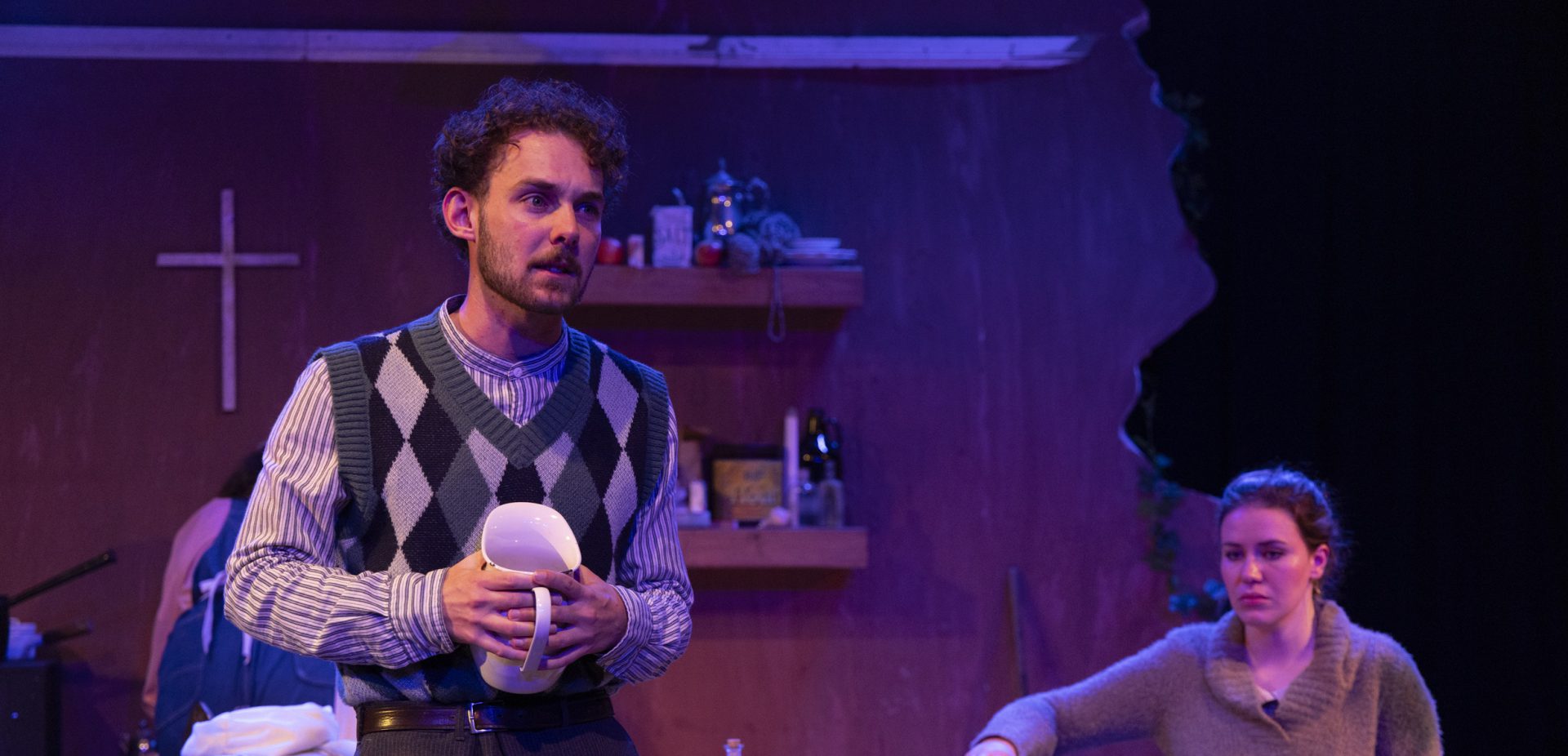
Without energy, this dance is more static than celebratory.
Dancing at Lughnasa, playing at New Theatre and directed by Isabella Milkovitsch, describes itself as a story of spirit and resilience. Semi-autobiographical and set in 1930s Ireland, it falls short in its pursuit of these – held back by paucity of action and any real urgency.
The play, written by Brian Friel, looks back on a summer in rural Ireland in 1936. Narrated by Michael (Patrick Holman), he recalls living with his mother and four aunts, whose lives revolve around their home and routines. That summer carries disruptions, including the return of their brother Jack from missionary duties in Africa and visits from Michael’s father Gerry. Facing financial and lifestyle pressures, Michael’s sisters try to find joy, most often by breaking into dance.
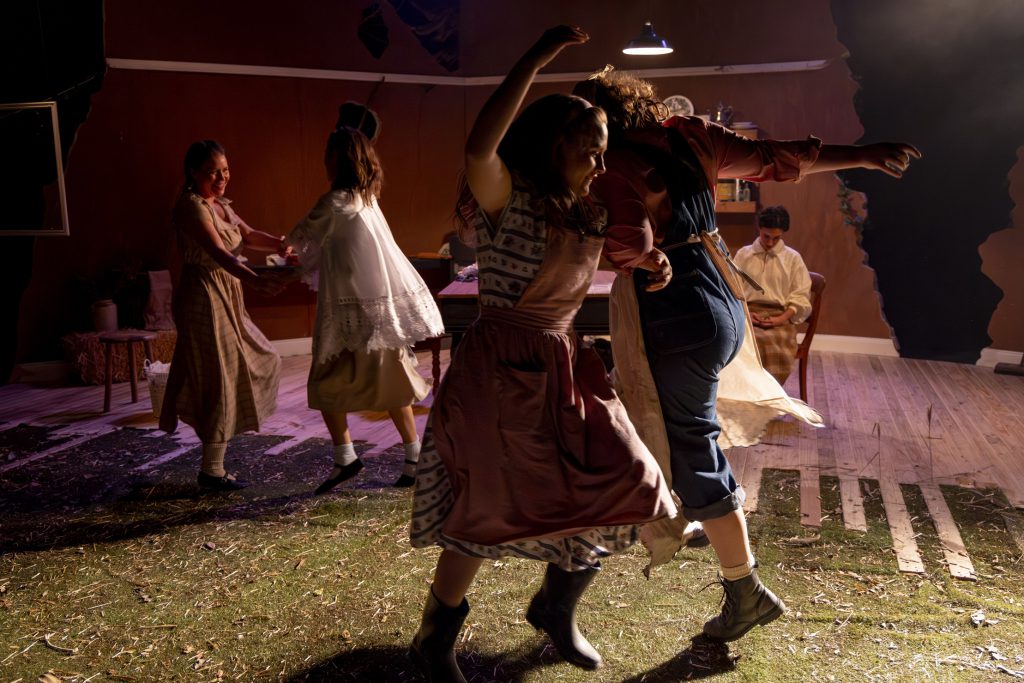
The set (Max Shaw) is rich. It brings to life the vibe of 1930s Ireland and the warmth of a rural family home. The weathered wooden floors, modest furnishings, and minor details draws the audience in to the play’s world. It is quite thoughtfully constructed. It also offers space for various settings (both indoor and outdoor) and dance sequences, charmingly choreographed by Avalon Ormiston.
The cast’s accent work is commendable. Courtesy accent coach Benjamin Purser, the Irish voices are consistently strong. Despite some occasional drops, the performers demonstrate a clear commitment to authenticity, and for the most part, their voices feel grounded. This helps sustain the setting effectively.
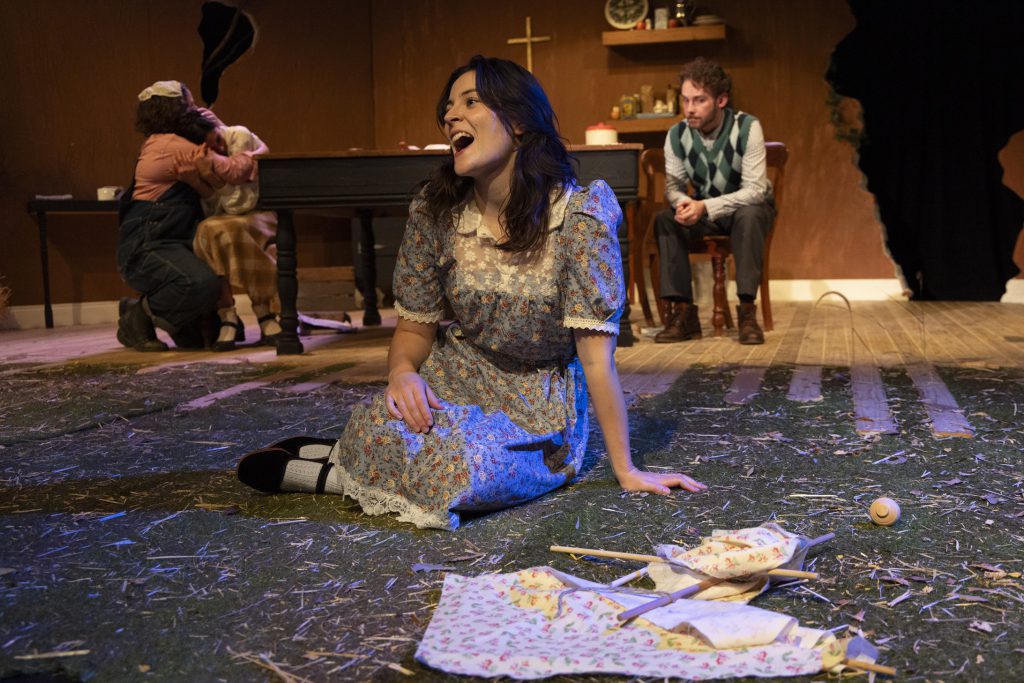
However, the show’s pacing and energy cause issues. Friel’s script is dialogue heavy and relies on an undercurrent of tension to maintain audience engagement. In this production, such urgency is not present. Scenes feel slow as the cast move through their lines, with limited respites for dance numbers. The dive into several subplots is not enough to overcome an overall stillness such lack of energy generates
This is compounded by a limited dynamism in the performances. While individually competent, there is little collective momentum, nor a sense of escalation or impactful impending change. Those traits are essential parts of the script and required much more grounding. The result is a production that feels more reflective than immediate, more observed than experienced.
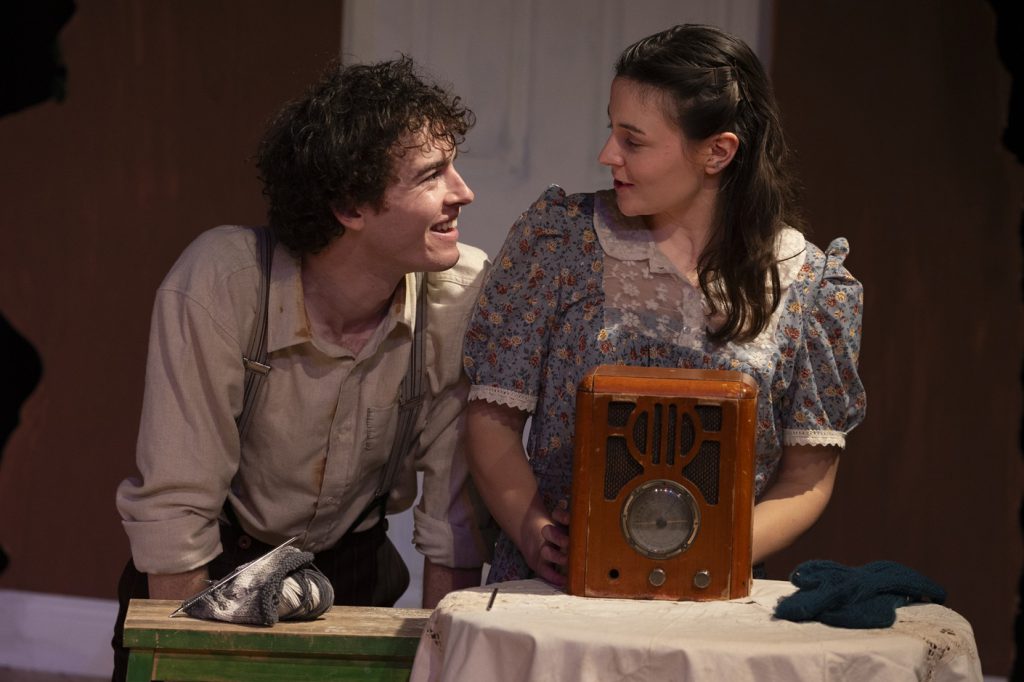
Ultimately, Dancing at Lughnasa falls short. Without urgency or drive, it struggles to enliven the story it wants to tell. An aesthetic set and entertaining movement do not overcome this. For those drawn to the play’s lyrical qualities, there are things to appreciate, but it will leave others wanting a more vital, urgent experience.