As someone unfamiliar with the Hitchcock film or Frederick Knott’s original play, Dial M for Murder was excitingly new to me, and Ensemble’s production, adapted by Jeffrey Hatcher and directed by Mark Kilmurry, did not disappoint in delivering a thrilling ride from start to finish.
After discovering his wife Margot’s affair with crime novelist Maxine Hadley (originally Max), Tony Wendice constructs a meticulous murder plot to secure her handsome inheritance—until of course, the plan begins to unravel.
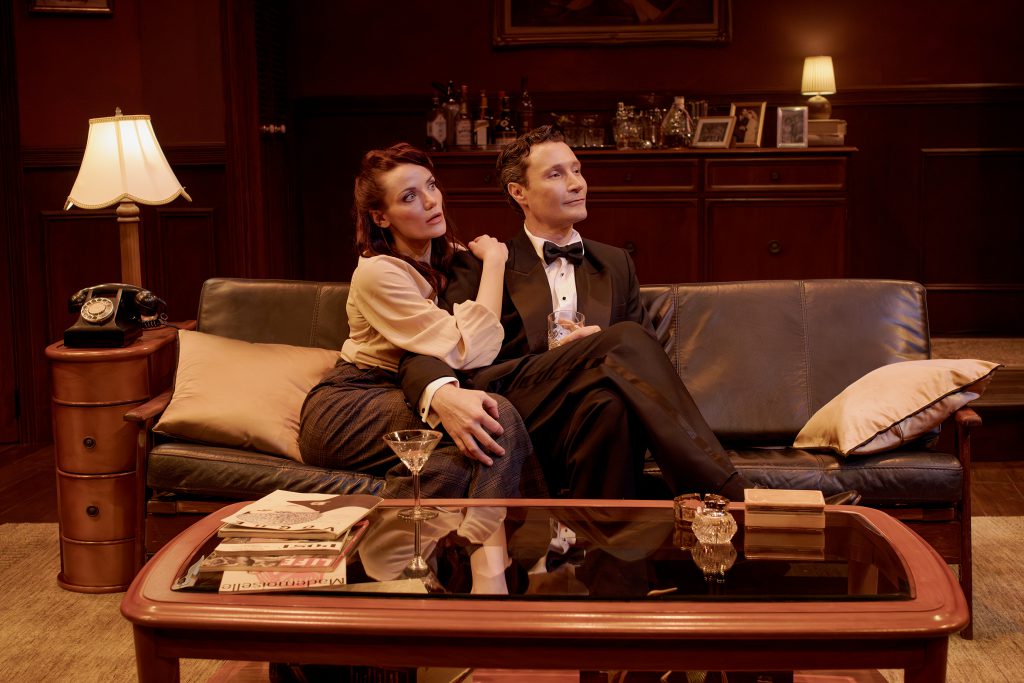
Without spoiling the plot, the story bubbles with all the classic ingredients of a murder mystery like blackmail, bribery, fingerprints, twists, and untimely mishaps. But it isn’t quite a traditional ‘whodunnit’ as the formula is cleverly inverted. Kilmurry’s expert direction amplifies both suspense and irony, crafting performances that honour the demands of the genre while avoiding caricature. Each character feels grounded and nuanced, drawing us into the unfolding drama with unwavering intrigue.
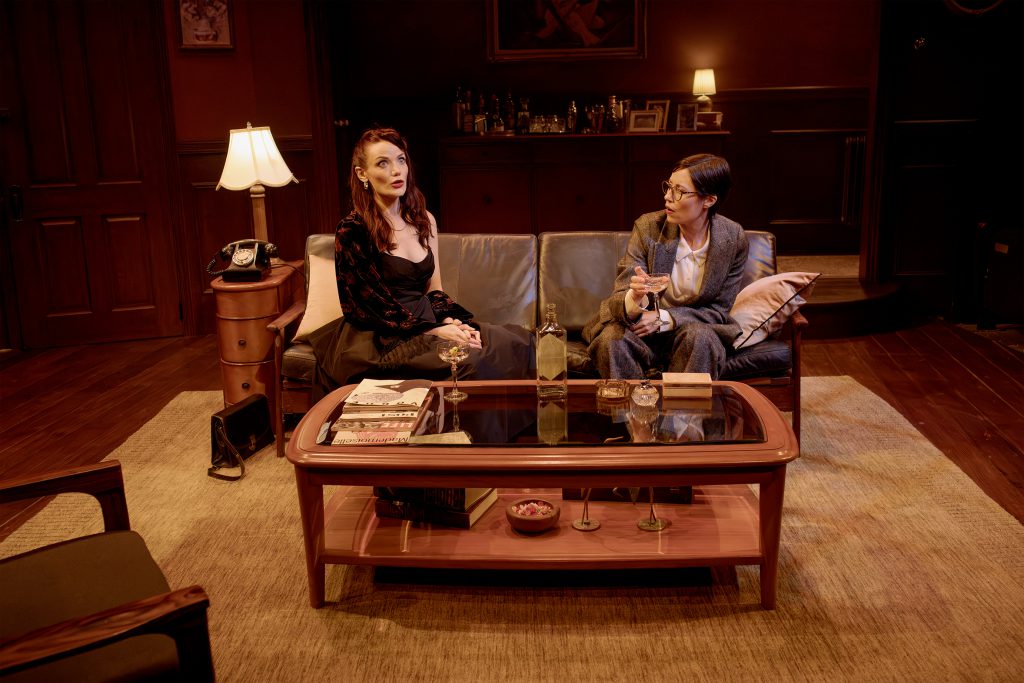
The play grips its audience from the very beginning, when Margot (Anna Samson) and Maxine (Madeleine Jones) discuss the five motives for murder: money, fear, jealousy, revenge, and protection. Hatcher’s reimagining of Max as Maxine gives the story a fresh sense of urgency, heightening the emotional stakes that the characters face as women in a same-sex relationship in the 1950s.
Samson’s Margot is poised yet vulnerable, played with an impressive realness that anchors the complexities of the wealthy socialite. A masterclass in dual personalities, Garth Holcombe embodies the slippery charm and conniving menace of Tony Wendice beautifully. As Inspector Hubbard, Kenneth Moraleda brings subtle humour and sharp timing, with expressive reactions that never feel overplayed. David Soncin’s Captain Lesgate, both threatening and morally conflicted, embodies a man whose desperation makes his choices alarmingly believable.
For me it was Madeleine Jones as Maxine Hadley who stole the show. Nailing the New York accent, Jones’ presence was magnetic, layering Maxine with wit, agency and heart that cut through the polite facades of 1950s respectability.
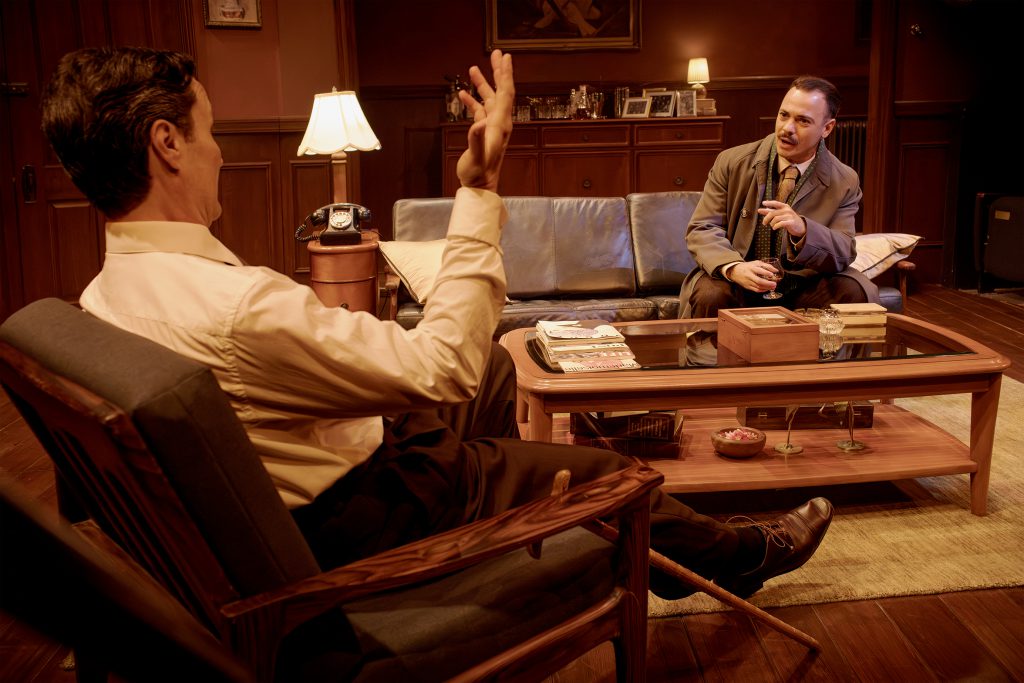
Nick Fry’s set and costume design excel at transporting us to a refined 1950s noir world. The living room of Tony and Margot’s London flat is rendered with remarkable period detail. Madeleine Picard’s evocative sound design underscores the tension, simmering beneath the surface and adding a playful edge to the genre’s big reveal moments. Lighting by Matt Cox intensifies the drama, especially during the central murder scene, where shadows and flashes of lightning sharpen the stakes. Together, the production’s technical elements establish a richly atmospheric period mood: suggestive, tense, and immersive without ever overdoing it.
Murder mystery plays rarely shock us anymore, as the genre’s conventions are so familiar that twists are almost expected. However, I was impressed with how Ensemble’s production of Dial M for Murder remarkably transcended that inevitability by breathing life into the characters so that every turn of the plot is grounded in genuine emotional stakes. While the show offers all the stylish pleasures of a classic thriller, it also captivates with performances so textured that every ‘expected’ twist feels newly perilous.