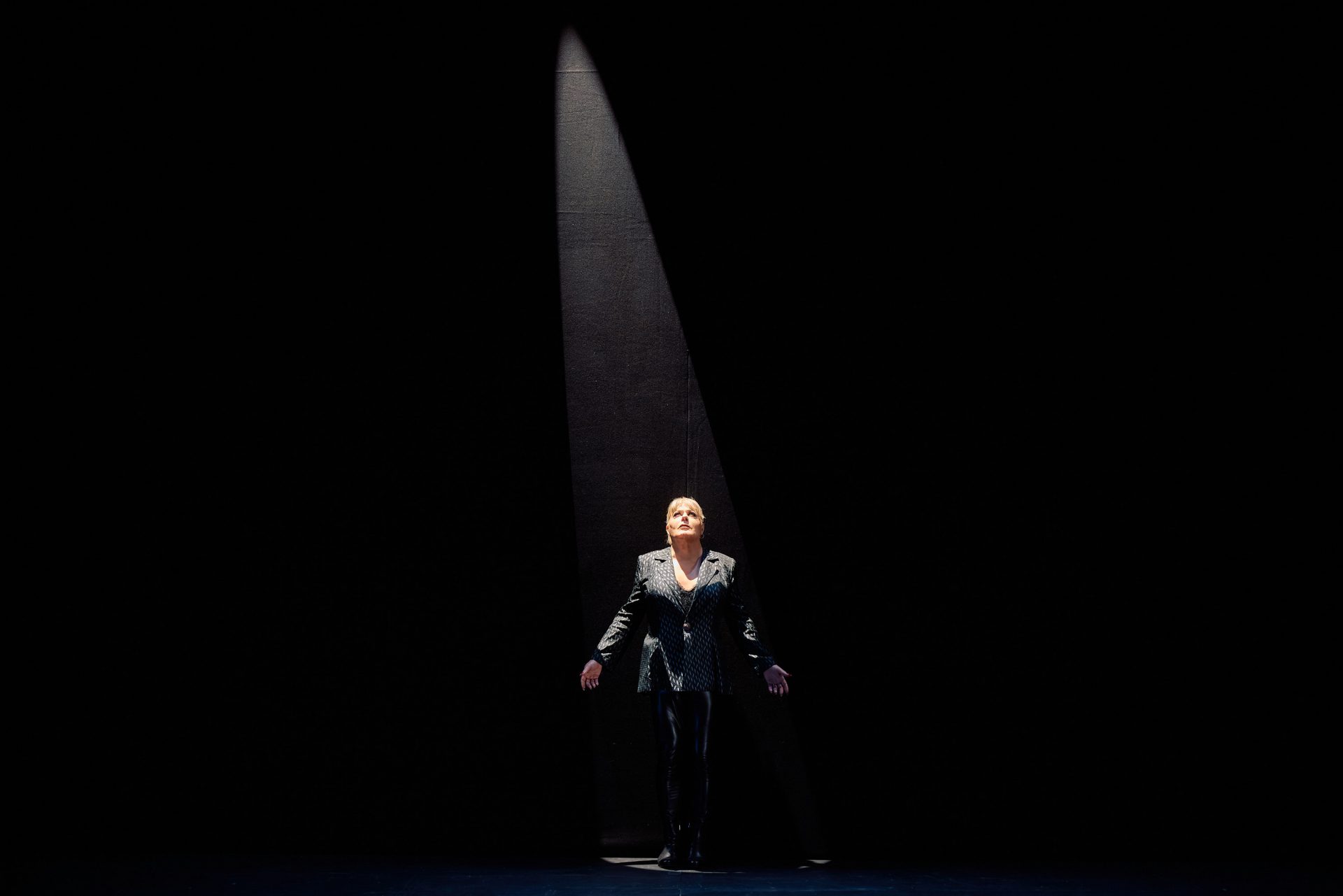
A commendable but inhibited performance.
Izzard: The Tragedy of Hamlet is an ambitious retelling of the Shakespearean tragedy by virtuoso Eddie Izzard, directed by Selina Cadell and playing at the Sydney Opera House. Izzard’s one-person show, where she alone plays all twenty three of the play’s characters on an empty stage, brings to light the beauty of Shakespearean verse. However, its ambition comes at the cost of narrative clarity, pacing, and dramatic action.
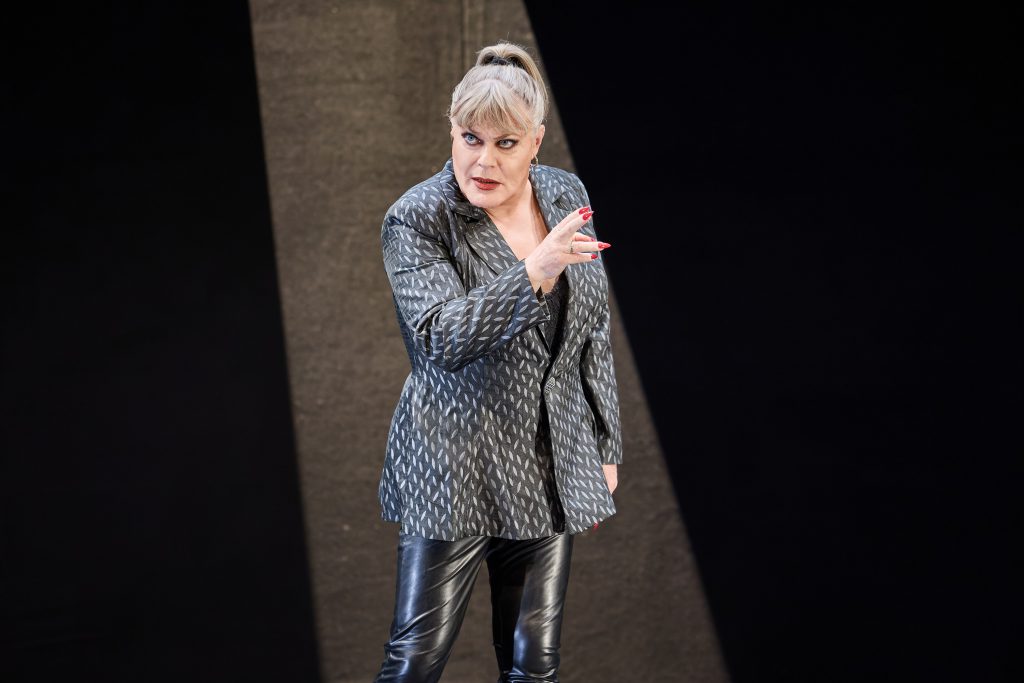
From the moment Izzard enters the stage, she controls it. It is a notable feat to recite the monologues and soliloquies of one character in Hamlet with force, let alone all of them. And yet Izzard mostly manages to do that. She gives audiences an abridged version of the play – running just over 2 hours – and throughout it she performs with great inflections, endowments, and movement. Though it takes some time to adjust to her performance, with scene and character changes quite abrupt and generating awkward silence while Izzard resets, once one gets in to the groove of things it is usually entertaining.
What Izzard manages to do well is focus on Shakespeare. With no set pieces, props, costumes, or fellow cast, the beauty of Shakespearean language is on full display. Izzard tones down her acting to let the audience ruminate on each of the Bard’s words. The richness of his writing and the vivid world it creates is allowed to brew in the minds of the beholders, because there is nothing to detract from it. In that way it is Hamlet at its textual purest.
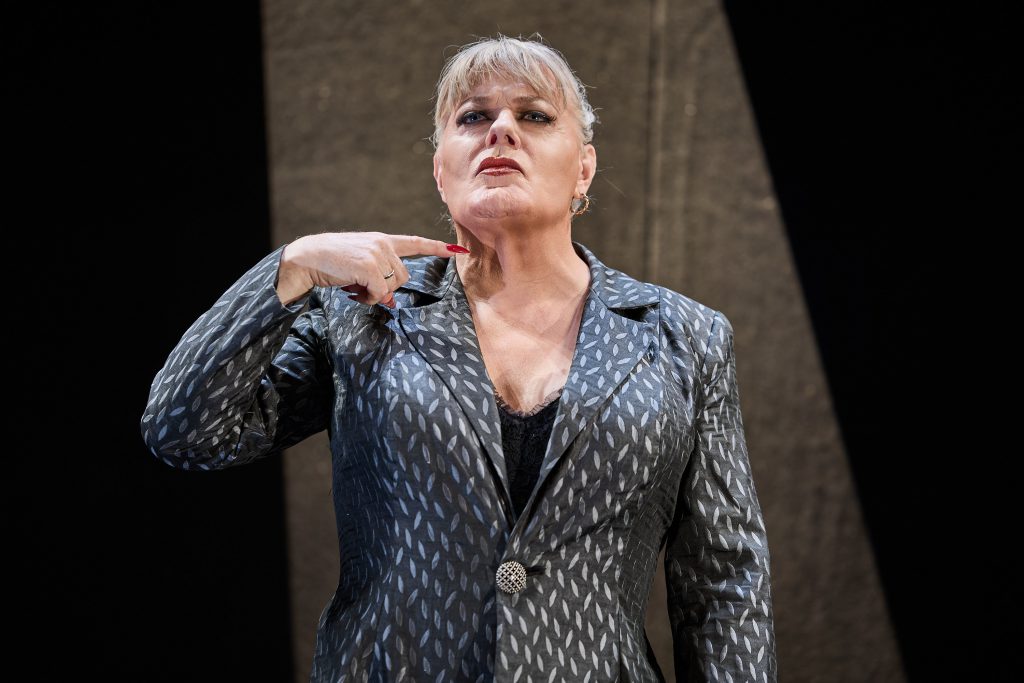
Yet, the reduction of Shakespeare to its text alone is costly. Having Izzard bear the burden of every character, scene change, and movement limits the clarity of the narrative. Without a reasonable understanding of Hamlet, and which character does what and when, it is easy to lose sense of the plot. At those times, you are watching Izzard instead of the character she is playing.
There are also pacing issues. Beyond the awkward pauses between character and scene changes, what occurs after the intermission moves at a much faster pace than what occurs before it. The time to ruminate on Shakespeare’s language is lost as Izzard rushes through the story. Such time is the show’s greatest asset, and is unfortunately expended cheaply.
Finally, and most notably, the action in Hamlet is reduced. The supernatural elements which torment Hamlet to the confusion of other characters (and the delight of the audience) is sacrificed, because Izzard needs to jump between playing Hamlet, a ghost, and a third character immediately. The climactic sword fight between Hamlet and Laertes, which should crackle with energy and tension, is minimised to a comical pantomime. Shakespeare’s text is displayed in its rawest form, but the idea which gives it life – vibrant, buzzing, pulsating performance – is missing. And as good as Izzard is, she alone cannot supply that.
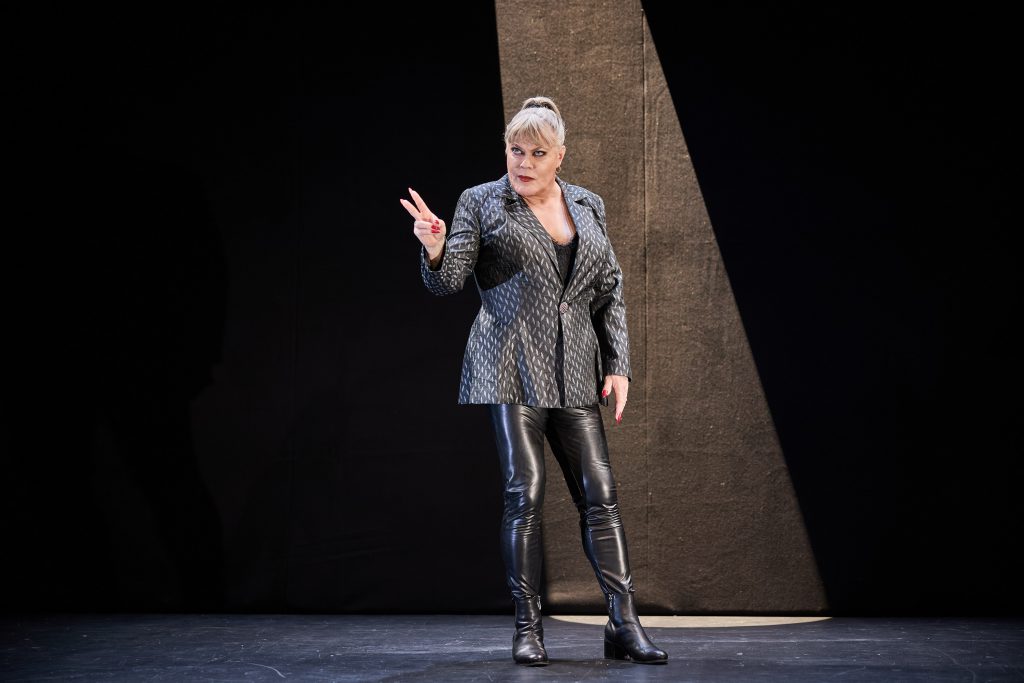
Ultimately, Izzard: The Tragedy of Hamlet gives Shakespeare’s word the utmost importance. And Izzard commendably distils her performance to let that happen. But without the visual lushness befitting the script, this show presents only one part of the full experience.