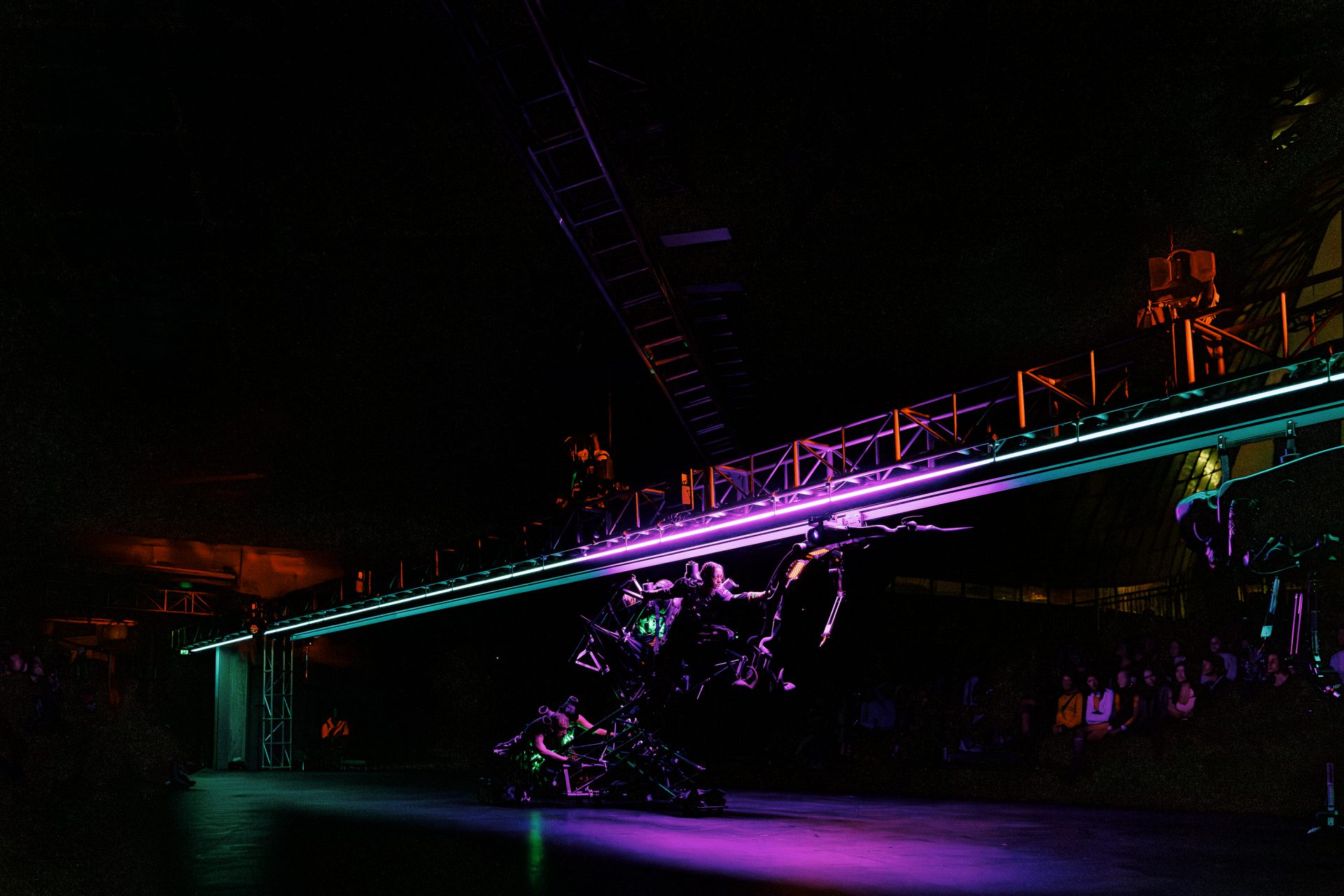
U>N>I>T>E>D is a futuristic work by Chunky Move presented as part of the Vivid Sydney Festival with artistic direction by Antony Hamilton. It is a collaboration with Gabber Modus Operandi (Balinese experimental music duo), featuring costume design by Future Loundry and exoskeletons by Creature Technology Co.
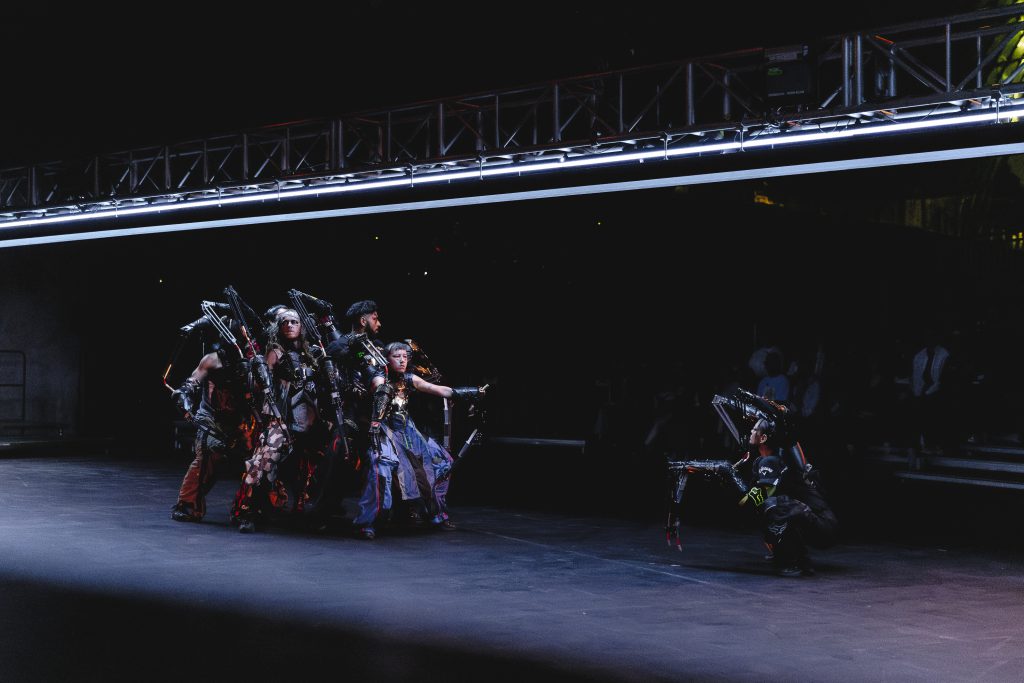
U>N>I>T>E>D aims to delve into the “persistence of spirituality in a post-industrial age”. The choreography blends contemporary movement with various intricate hip-hop styles, which add to the work’s futuristic physical language. Each performer has subtle differences in their execution of shared movement motifs, creating textural variation during unison. As a result, U>N>I>T>E>D presents choreography that feels inseparable from the dancers. And it isn’t – the dancers (Madeleine Bowman, Melissa Pham, David Prakash, Samakshi Sidhu, Joshua Faleatua, Jayden Wall) are credited for choreography alongside Hamilton, and their individual backgrounds inform the overall choreographic style.
Each dancer displays high technical proficiency and physicality, executing the demanding choreography with precision and power. A highlight is Jayden Wall’s solo, where he moves as if he were externally driven, invisible forces acting upon him, as he repeatedly ragdolls across the stage with seamless control. Wall’s skill is extraordinary and juxtaposes the rest of the rigid and imposing choreography.
The integration of Creature Technology Co.’s modular exoskeletons is the work’s most visually distinctive element, enabling dancers to connect, disconnect, and reconfigure into shifting robotic forms. When the dancers are physically connected to each other through the exoskeletons, the choreography is at its most novel and memorable. These layered interlocking patterns are deeply satisfying and highly effective.
However, such moments are fleeting. While initially visually compelling, eventually the exoskeletons dominate the choreography rather than support it, constraining movement and diluting the titular theme. Repeated sequences of connection followed by immediate disconnection felt pointless, and the limited evolution in how the apparatus is utilised contributes to a sense of stagnation, further exposing the undeveloped narrative. This issue is most evident when the dancers perform without the apparatus, and the choreography regains fluidity and complexity.
Lighting design by Benjamin Cisterne and Nick Moloney cleverly frame and saturate the large space, perfectly synchronised to the score. This further intensifies the hypnotic score and precise choreography. Ashley Buchanan and Hamilton’s set design is minimalistic and bold. A black metal truss cuts across the width of the room, just above head height, with a second truss upstage is angled diagonally upwards. LEDs span both trusses, reinforcing the technological aesthetic. The horizontal truss houses rail-mounted exoskeleton parts that the dancer can physically connect themselves to.
However, the flat-floor stage feels disproportionately large, with the vertical space under-utilised – particularly noticeable as the tiered audience seating towers over the trusses. As a result, audience immersion is uneven – only those in the first few rows could feel truly connected to the performance, while the majority of the audience remains distanced.
U>N>I>T>E>D succeeds as a visually and choreographically ambitious work, driven by exceptional performers and strong integration with costuming, set and technology. The moments of full sensory immersion are deeply exciting but the technical excellence does not consistently translate to a strong theme or story. The overall intent is incoherent, despite impressive execution, leaving audiences both fascinated and unsatisfied. The highly polished production pushes the boundary of dance and technology, but fails to resonate emotionally and conceptually.