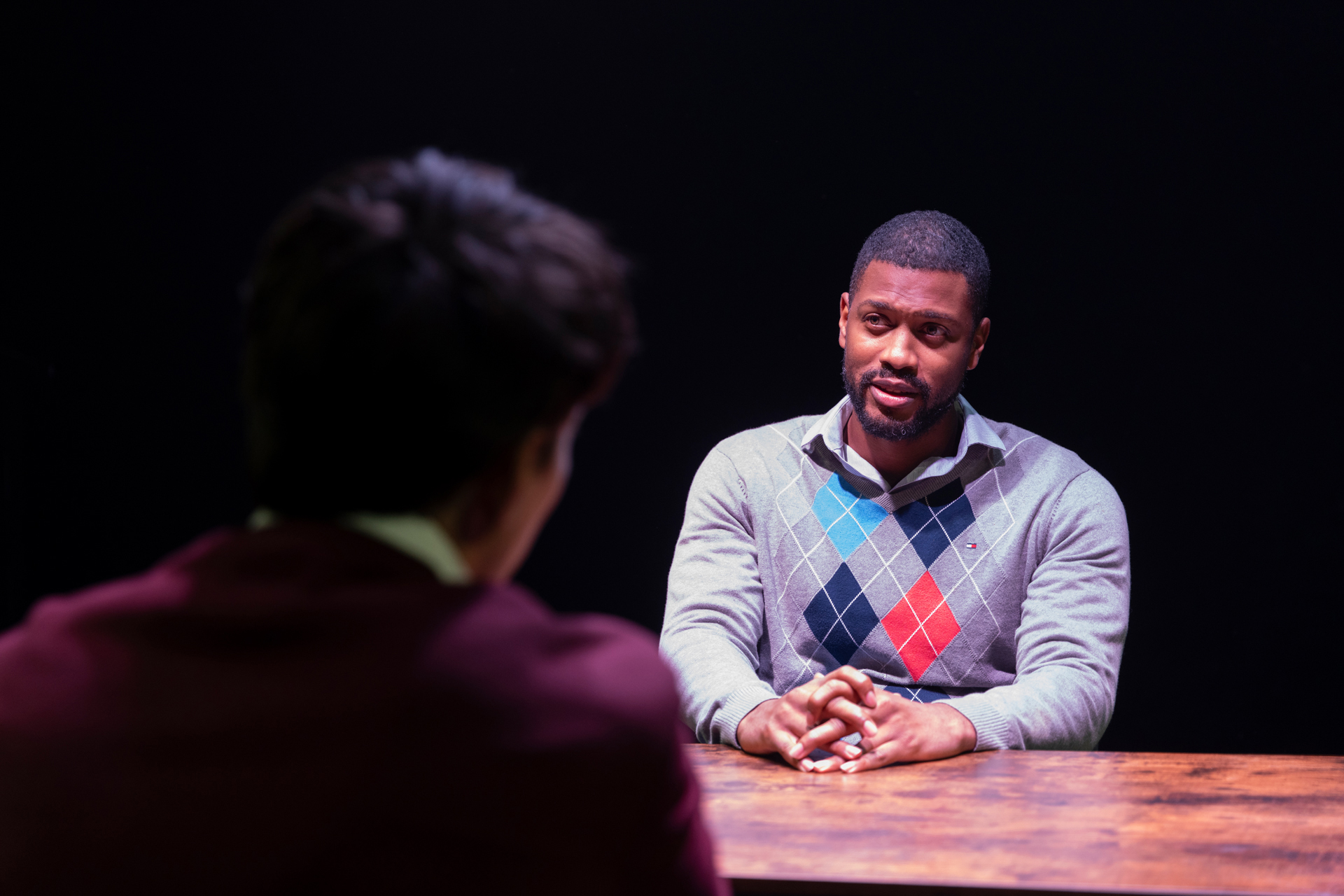
Written by English playwright Duncan Macmillan (known for gritty works such as People, Places and Things), Monster probes the question: what responsibility do we bear for the violence of our boys and men, and how far can empathy truly reach?
Directed by Kim Hardwick who never shies away from the hard-hitting dramas, Tiny Dog Productions presents KXT audiences with a thought-provoking, stripped-back show.
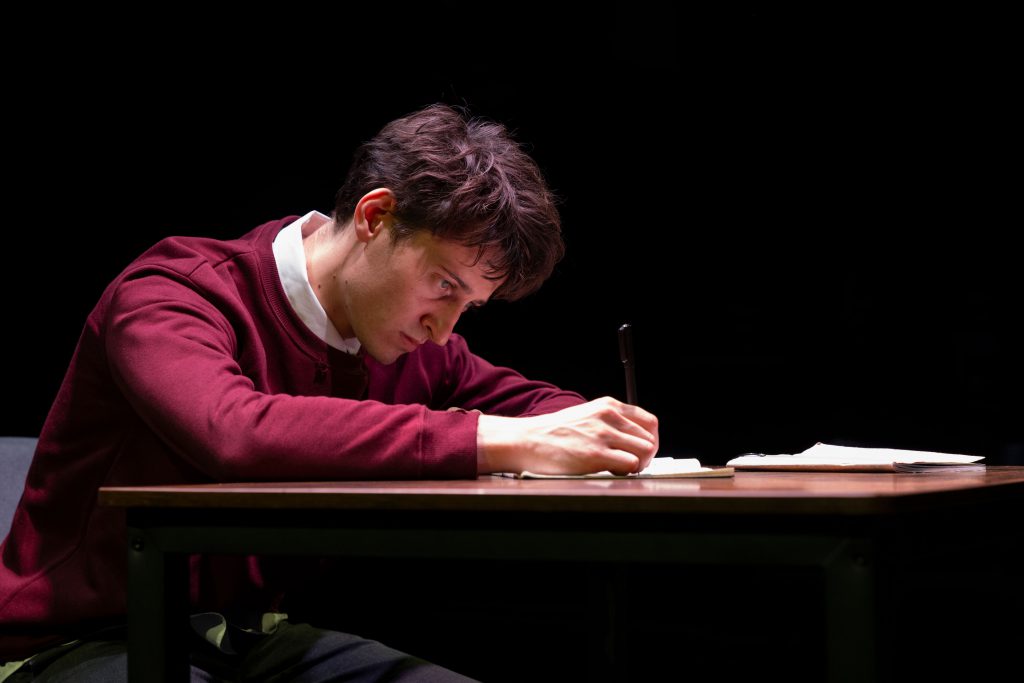
Trainee teacher Tom (played by Tony J Black) is tasked with helping Darryl (Campbell Parsons), a troubled 14 year old boy, with his disruptive behaviour. Through a series of two handers between Tom and Darryl, Tom and Darryl’s grandmother Rita (Linda Nicholls-Gidley), and Tom and his wife Jodi (Romney Hamilton), audiences are forced to consider whether monsters are born, shaped, or perhaps created by the systems meant to contain them.
Black stepped into the lead role of Tom just days before opening night. Performing with script in hand, Black deserves considerable credit for his efforts, navigating the dialogue with clarity and composure. Unfortunately, the limited rehearsal time inevitably affects the rhythm of his exchanges, but no doubt this will not be an issue by the end of the season.
Parsons was excellent as the misfit teenage Darryl. Frequently funny in his mannerisms, Parsons brings a volatile, chaotic energy to the role that feels very familiar and yet deeply unsettling. Throughout his scenes, there is always an underlying unpredictability to his behaviour which keeps the audience on their toes. A particularly effective directorial touch lies in Darryl’s physicality; he never quite sits properly in his chair, instead swivelling it onto its legs, perching on the backrest or flipping it around in defiance of classroom etiquette.
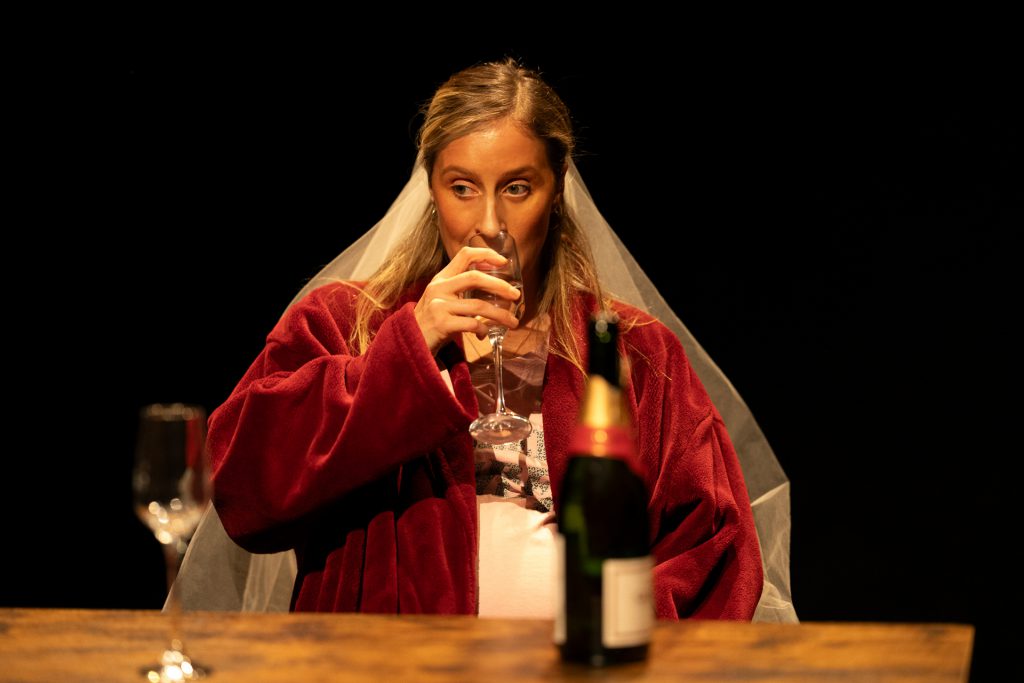
Hamilton delivers an affecting performance as Jodi, despite the character being rather perplexing. Jodi longs for stability and a big family, yet is repeatedly shown drinking throughout her pregnancy. Hamilton balances the character’s simmering frustration and desperation admirably, particularly in moments where Jodi pleads for Tom’s attention as he becomes increasingly consumed by his attempts to “save” Darryl. By the end of the play, Hamilton reveals a harsher side to Jodi, which was savage and engrossing.
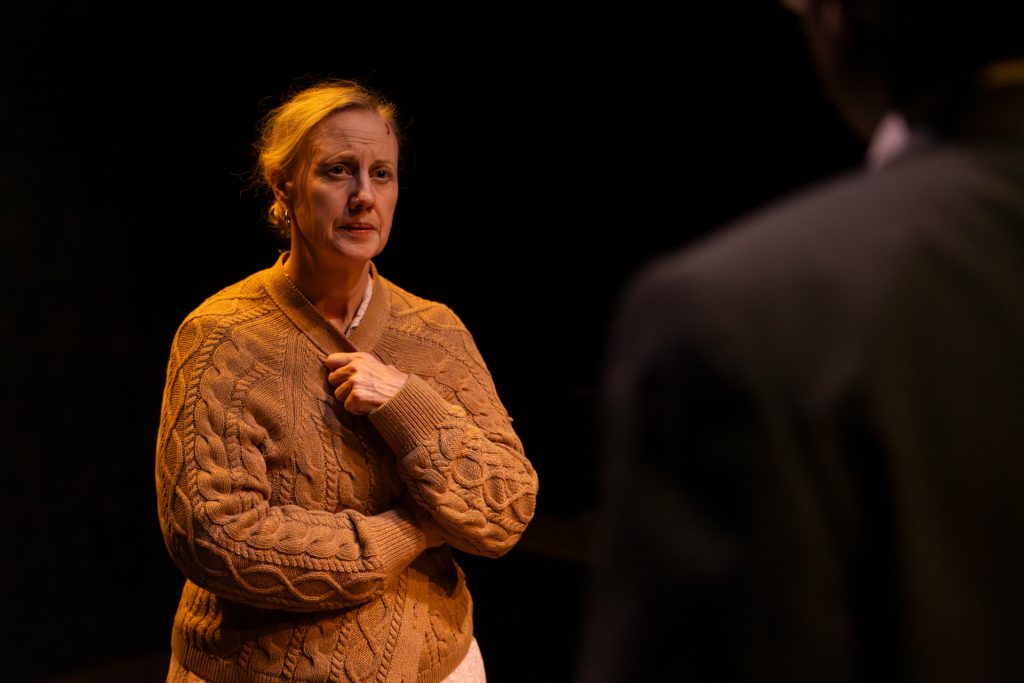
As Rita, Nicholls-Gidley hits the mark. Protective to a fault, she perfectly captures the stubborn defensiveness of a guardian who believes she is fighting for her child, even as the audience begins to question whether that very refusal to acknowledge fault might be part of the problem.
One of the most gripping scenes arrives late in the play in a confrontation between Darryl and Jodi. Hamilton and Parsons generate a nerve-wracking sense of unpredictability, and the atmosphere in the theatre tightens as the stakes become frighteningly real. I found myself genuinely unsure how the exchange would resolve, making it one of the most effective moments of the evening.
The set by Victor Kalka is minimal and simplistic: grey carpet, a table and two chairs, which although a touch drab, allows for the performances to take centre-stage. Sound design by Charlotte Leamon, supported by atmospheric lighting from Topaz Marley-Cole, maintains the play’s sense of unease, where black-out transitions are accompanied by the disturbing echoing soundscape of harmonised voices, distant screams and low grumbling tones.
At times, however, the pacing is slow, which dampens the psychological momentum that the play seems to demand. Still, Macmillan’s writing remains provocative and the show is successful in confronting difficult conversations of mental health and moral ambiguity.