The Brandenburg has staged its Baroque before, but rarely like this. Here the music shares the platform with an actor and a script, and remarkably it is the better for it.
The subject is Anna Maria della Pietà, to whom the concert is dedicated. She arrived at the Ospedale della Pietà in Venice as an abandoned infant, was trained there as a musician. Antonio Vivaldi taught her the violin, and he went on writing for the Pietà for years after he had stopped working there. That her name now survives mostly as an attachment to his is precisely the imbalance this programme sets out to correct.
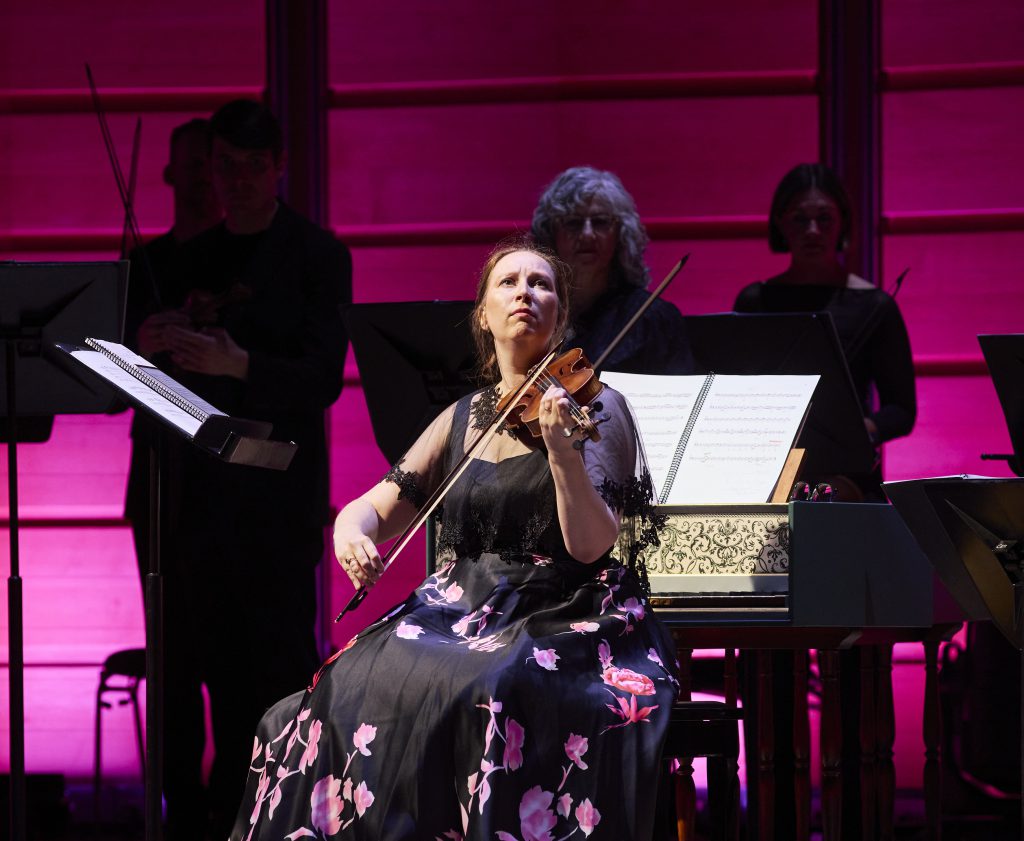
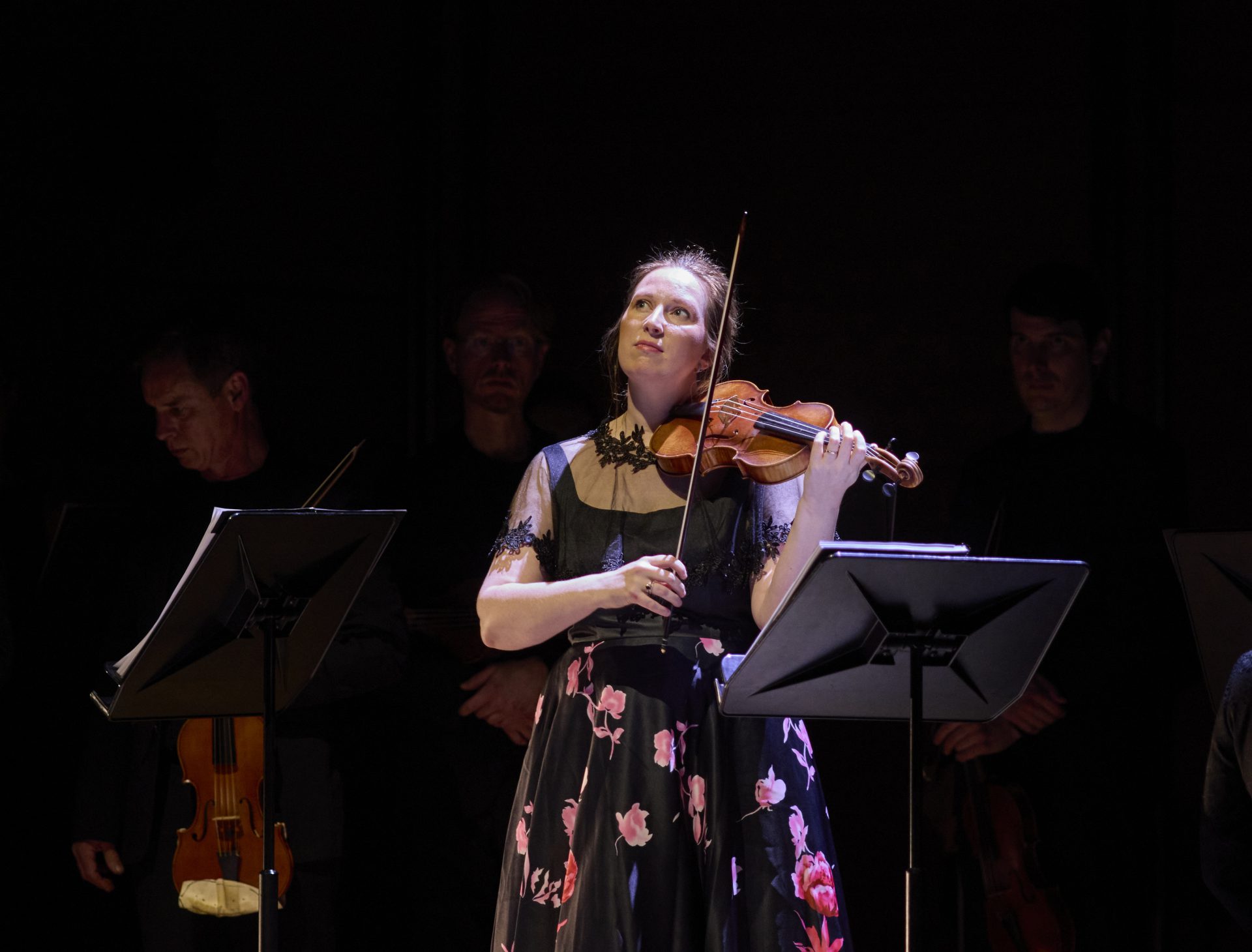
Making her Australian debut as Guest Director and soloist is the American violinist Augusta McKay Lodge, and the parallel the concert quietly draws between a young virtuoso on the platform this afternoon and a young virtuoso in Venice three hundred years ago melds into one beautifully. She leads from the violin rather than from a podium, which means the ensemble takes its shape from the way she plays. Her playing was incisive and exacting, artful in the best sense of that word, and as beautiful to watch as it was to hear. What I appreciated just as much, however, was her connection with the audience, which was authentic rather than performed. You could read off her face exactly what she was thinking in the moment, whether relish at a hard passage or delight at something the ensemble had just done, and that openness did as much for the afternoon as the playing did.
The dramatisation comes from playwright Alana Valentine, whose script, informed by Anna Maria’s recently discovered diaries, gives her an inner voice: the abandonment, the mother she invents for herself and keeps searching for in the audience, the enclosed and closely governed life of the Pietà. Lilian Alejandra Valverde was superb in the role, moving across the stage and in and out of the ensemble with real presence. If I have a reservation, it is that the character at times felt a little ghoulish, a haunting spirit rather than a person, though at others she was entirely alive and passionate in a way that matched Vivaldi’s own compositions. Perhaps that oscillation is the point. Either way, it is a lovely script, and it holds her artistry and her abandonment together without letting either swallow the other.
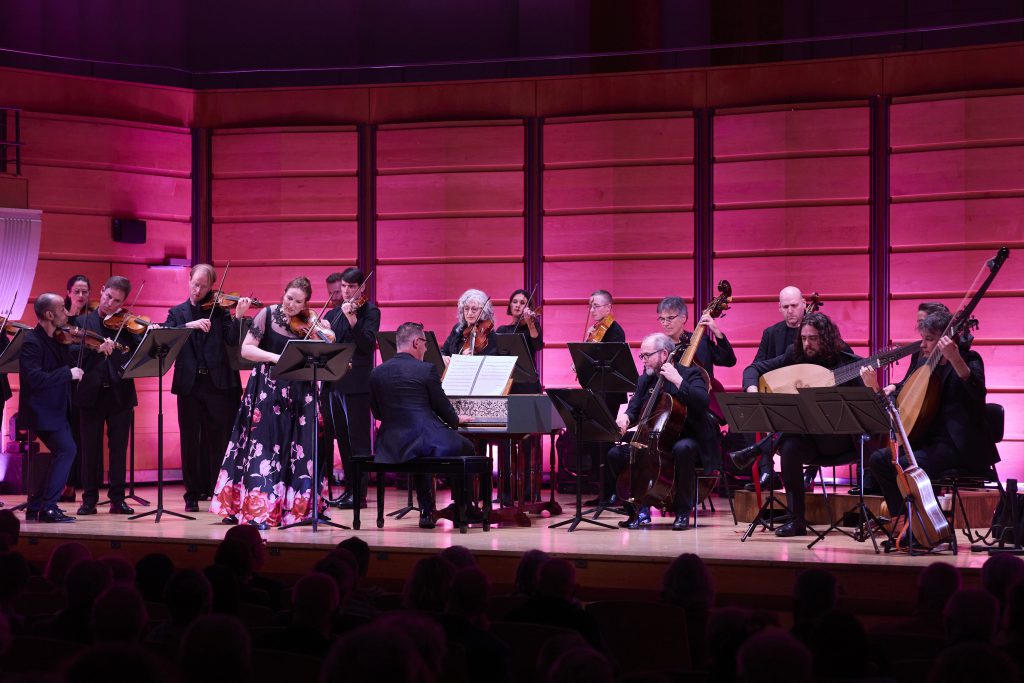
Musically the afternoon was simply sumptuous, and infectious with it. Paul Dyer AO presided from the harpsichord, moving across to the organ for the Concerto for violin and organ in C major, RV 774, and was alert throughout to the give and take this music runs on: the full orchestra, led by Concertmaster Shaun Lee-Chen, drives hard at a returning theme, then falls back so that the soloist can step out alone, and so on in turn. Behind them the theorbos, long-necked lutes with a deep, resonant bottom end, gave the fuller passages their weight and warmth. As always with the Brandenburg, everybody on the platform appears to be having an enormous amount of fun, which is itself infectious for an audience. The result felt at once serious and playful, which is a difficult register to hold across a whole programme.
An honourable mention must go to Melissa Farrow, whose performance of Il Gardellino, the Concerto for flute in D major, RV 428, on the Baroque flute was superb. The title means the goldfinch, and the birdsong the piece is built around came through with real charm.
I very much enjoyed the lighting by Poppy Townsend, which had a rhythmic pattern of its own and integrated cleanly into what is a fairly novel concept: a script and an actor built around an orchestra rather than in front of one. Indeed, that is what makes this such an innovative and courageous piece of programming, conceived by Dyer and carried off by Lodge. The form works because the music is emboldened by the passions of the storytelling, and the storytelling in turn grounds the music in a life and a set of circumstances that we too rarely allow into the concert hall. There is real integrity in it.
When all is said and done, Vivaldi’s Legacy is the sort of thing an ensemble of the Brandenburg’s standing ought to be attempting more often, and I would gladly recommend it to others.