When my best friend Iris Simpson handed me Dolly Alderton’s memoir, Everything I Know About Love, across a table at Brighton the Corner Cafe, the space was already thick with my own history.
It was the Sydney cafe where I’d spent my high school years writing study notes, a place that has since closed on all those baby-chino days. At the time, I was writing a short film, and Iris gave me the book as a point of research.
She had underlined: “Nearly everything I know about love, I’ve learnt from my long-term friendships with women.”
At 22, this line shifted something in me. I never really thought of myself as someone who takes advice from any single person, but I took this book as law for my twenties. Alderton made me rethink what my friendships meant to me. She prompted me to hold my friends closer, dearer. Platonic love is where it’s at – a love I can lean on for support that’s just as important, if not more. Through every breakup and every period of distance from my family, my friends have been there to hold my hand. They were there for me, too, when I was diagnosed with OCD.
During the stage 4 Melbourne lockdowns, I relocated to Sydney to live with my mum. I spent six months at home learning a new normal. I was grieving. I missed my friends and the share-house room I’d built for myself, postcard by postcard. It was in my childhood bedroom that I finally read Alderton’s book. I was enamoured with her writing – her honesty, her mistakes, her flaws, and the rush of London’s noughties nightlife. I wanted that same rush. I wanted to be reckless and careless in my early twenties; I wanted to learn from my hangovers. Instead, I was trapped under the weight of pandemic fear. The fear of getting sick, or spreading the virus, or harming the people I loved. I always dreamed of a Dolly Alderton era of chaos, but instead I became a more controlled version of myself.
That book gave me intense, agonising fear of missing out (FOMO). I watched the idealised image of a messy youth pass me by while I was trapped in isolation. It made me feel like my life was passing by fast. So, I started writing a play.
When I finished Everything I Know About Love, the world felt completely out of my hand and my OCD was loud as hell. What started as an attempt to capture my early twenties, sparked by being back in my home city, spiraled into a full-blown existential query. It triggered a period of intense introspection, and I gravitated towards comedy as a lifeline. I began writing about my own life (something I never wanted to do before) and it took years before I finally let anyone read a draft.
I wanted the work to be a play by Big Dog Theatre, and I knew I had to collaborate with Maxine Palmerson, bringing her signature surreal, chaotic energy into the room. Max brings out the absolute best in me; she understands my brain like no one else, and I trust her completely with my work.
After asking myself a stream of questions about what the work actually meant, I realised that, at its heart, it’s about my experience with OCD. I had been diagnosed just a couple of months before lockdown – mild, they said. Mild.
But under the weight of a global pandemic, it became severe. This mental illness is demoralising. It feeds off your worst fears, and it spreads like a quiet contagion. People who didn’t even realise they had OCD found themselves triggered by the sudden upheaval, the hyper-vigilance, and the endless monitoring of symptoms. Ultimately, this play became about the sheer absurdity of that condition and the struggle to figure out who you are when your own brain turns on you. When the external world becomes hyper-vigilant (like during a global pandemic) a brain wired for OCD takes that as a green light to go into overdrive.
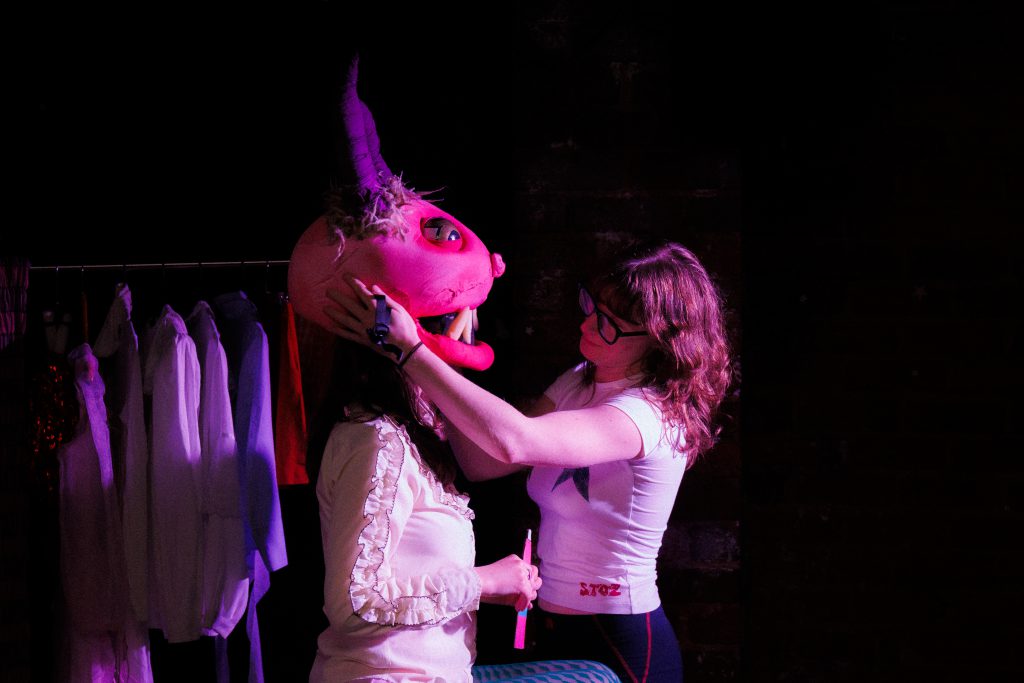
Through countless drafts, I realised that was the true heart of the show, and the Devil was my illness. The work draws heavily on themes of isolation and distance filtered through a hyper-connected social media lens, examining how that digital glare distorts our most vulnerable selves. I wanted to address the mental exhaustion of the constant double scrutiny of COVID monitoring and social media, a forced retreat to the digital landscape, where everyone else’s life looked better, warmer, and more alive than your own.
This play is a howl of recognition. It asks how we hold onto who we are in the face of online pressure, trolls, fear, anxiety, and societal expectations, and what it means to grow up inside and around it. The “Devil” in the title isn’t evil, malicious, or malevolent; she is overwhelmed, overexposed, and desperately trying to hold herself together through the absurdity of it all.
My hope is that someone else out there relates to this story, and that I can bring celebration, acceptance and joy to what is normally a deeply discomforting topic. You can laugh at this play. In fact, I want you to. Laughter was the only way I got through.
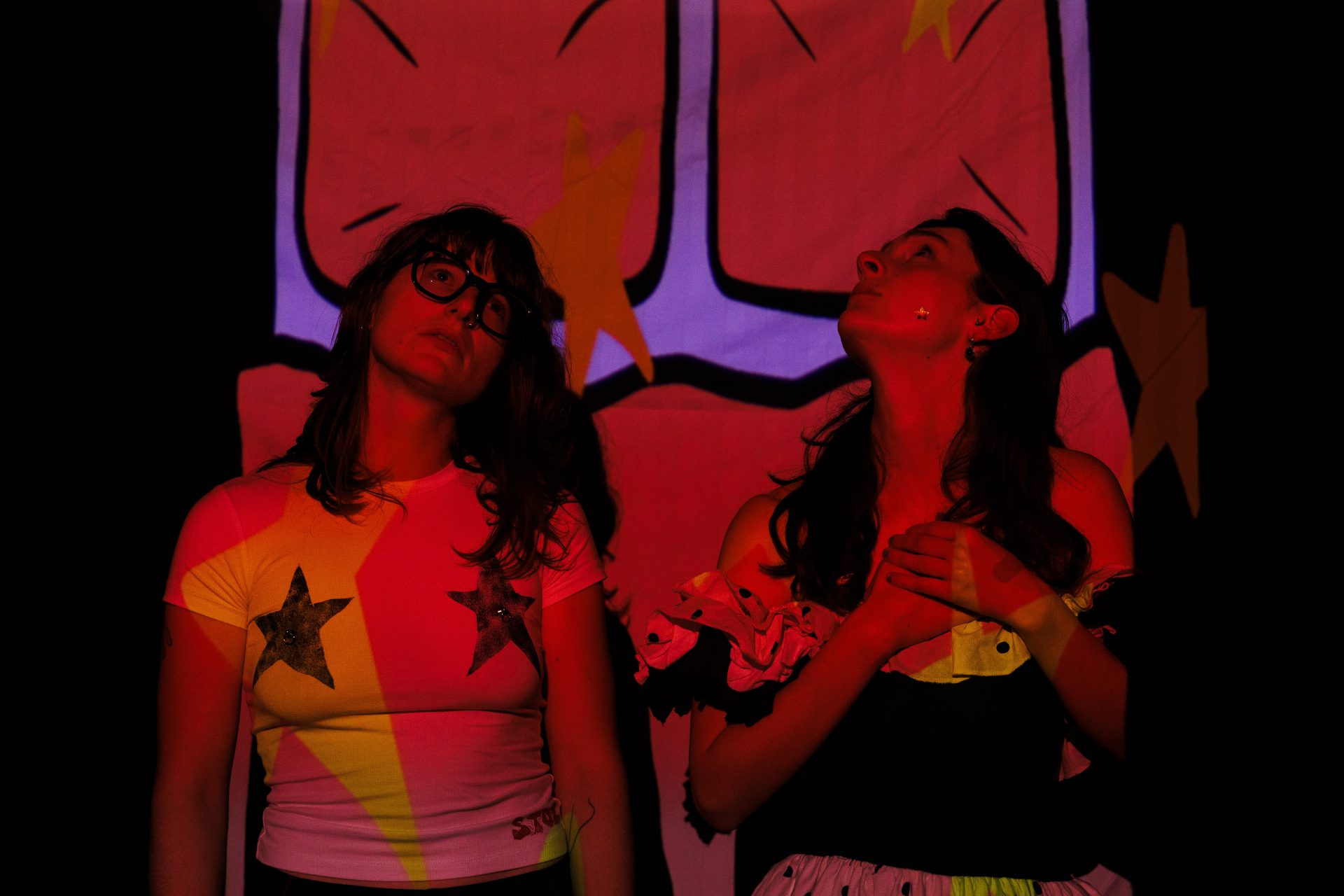
Ivy Crago is the playwright of The Devil in her Undies, produced by Big Dog Theatre and playing from September 1-5 as part of the Sydney Fringe Festival. Tickets are available here.