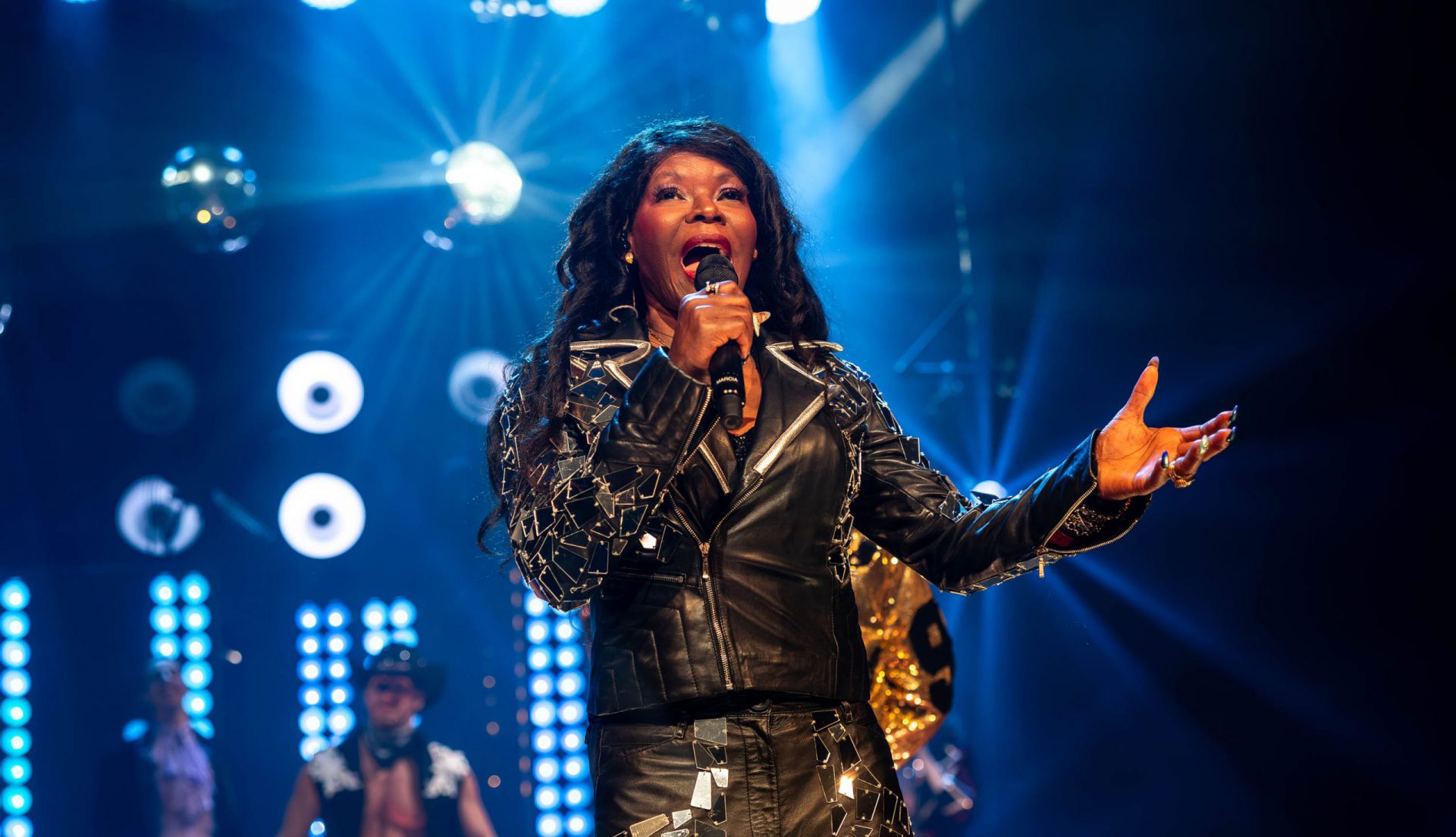
Created and directed by Craig Ilott, Velvet Inferno ignites audiences for a fiery evening at the Sydney Opera House’s Studio Theatre. Featuring an exceptionally talented cast, dazzling envy-inducing costumes and vibrant lights, it is a mirror ball-paved time machine that transports audiences to the decade of sequins, synths and spectacle.
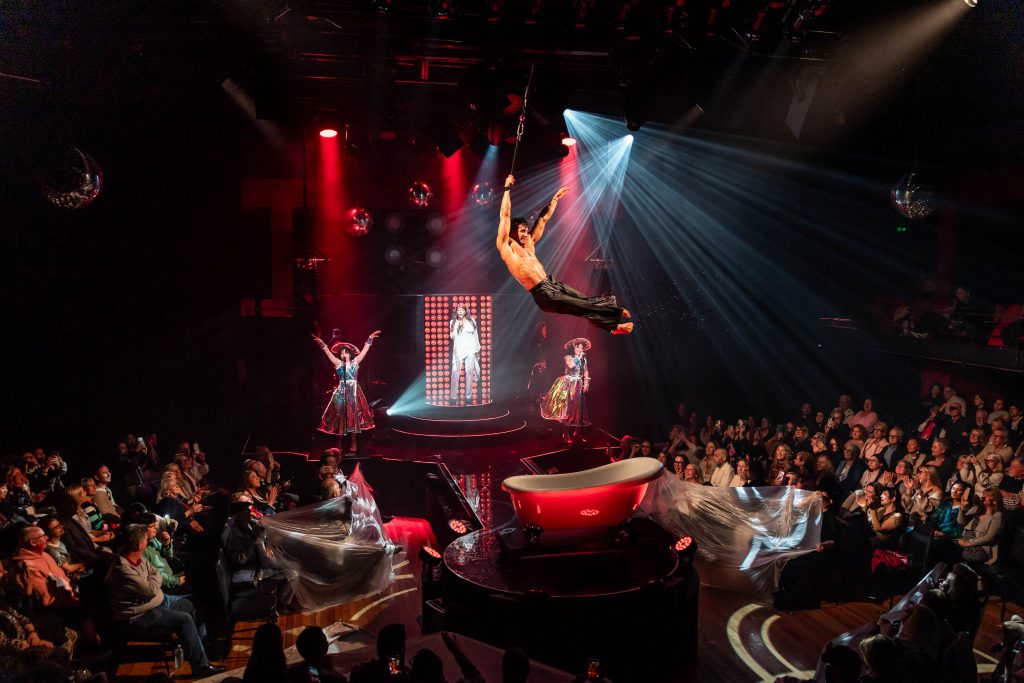
The show features a series of circus acts and disco tracks, as the Diva (Marcia Hines) and DJ Country Mike (Brendan Maclean) guide Gloria (KYE) through the glitz and glamour of an 80s nightclub. The identically dressed Sirens (Emma Feliciano, Mateja Sardelis) support almost every act as dancers and vocalists, providing a crucial thread of continuity.
The storyline is thinly woven through small moments throughout the show. It never reaches full maturity, with the plot’s shortcomings become most apparent towards the end of the night, when an unclimactic narrative arc alongside slower ballads sap the momentum that the high-energy first half built.
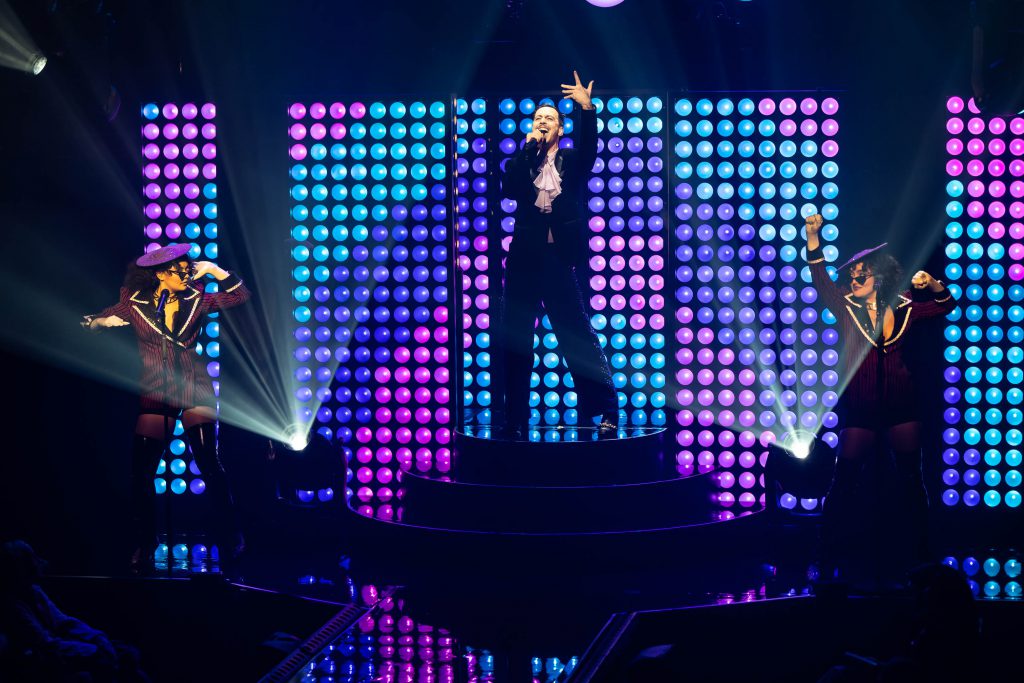
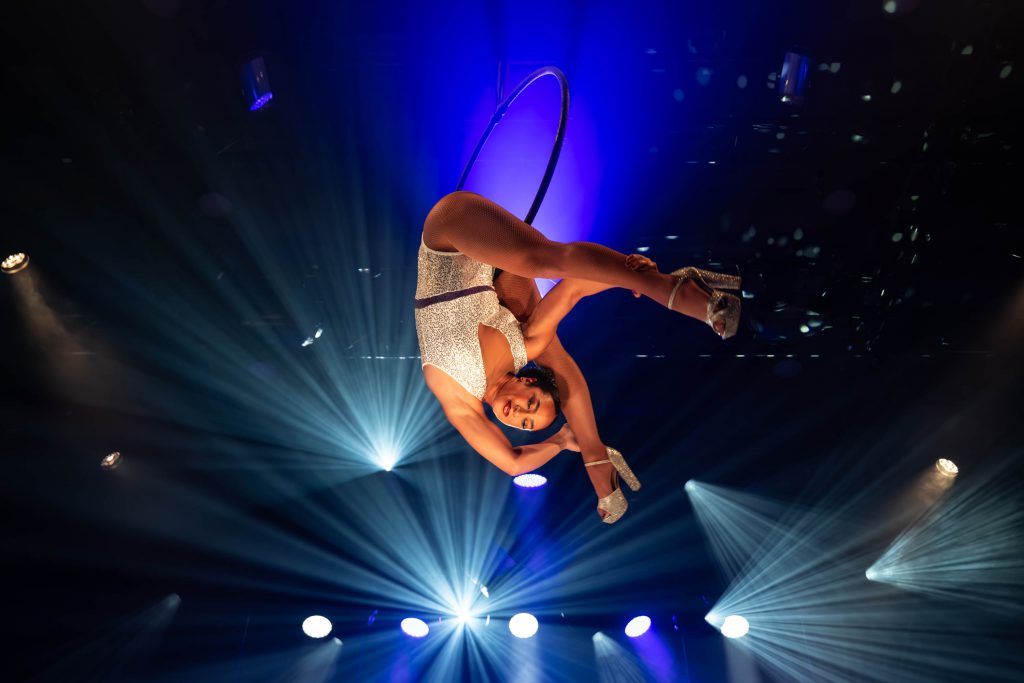
Fortunately, Velvet Inferno pushes through narrative weakness by delivering brilliant and novel acts and spectacular lighting and costuming. The glamourous array of costumes (James Browne) incite instant wardrobe envy, and the lights (Matt Marshall) immerse the audience in the vivacious atmosphere. Together, these elements curate a world of striking disco glamour.
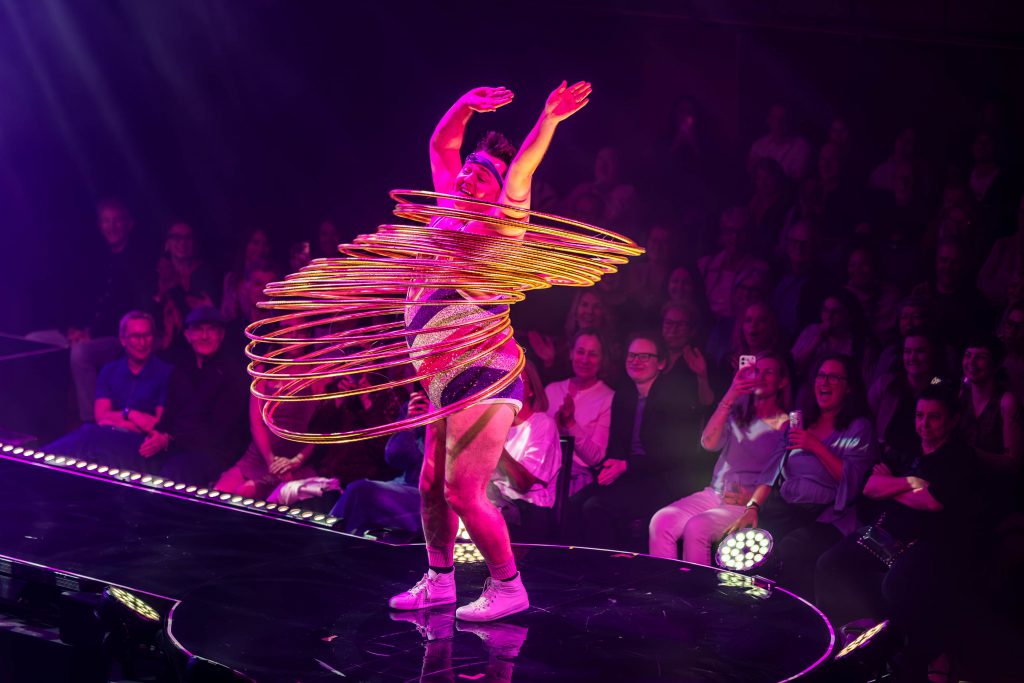
Velvet Inferno’s cast elevates the cabaret genre with ambitious and inventive performances. A perfect highlight are the Ukrainian roller skaters, Duo Stardust. Their roller-acrobatics leave audiences stunned as they support each other through increasingly complex and ambitious positions, all while spinning rapidly on their skates. It’s truly unlike any other act in any other show. From beginning to end, Feliciano and Sardelis as the Sirens infuse theatrical disco energy into every movement, bringing to life Amy Campbell’s sprightly, syncopated and showy choreography. Campbell’s playful theatricality is exuberant and augments the infectious disco-fever tracks. Although the dancers radiated confidence and encapsulated the spirit of the style, greater synchronisation would have strengthened the choreography’s precision and overall polish.
Despite many undeniable strengths, the production is let down by the sound mix. Throughout almost every musical number, the live vocals struggle to cut through the backing track, obscuring rich harmonies and making lyrics indiscernible. The imbalance diminishes powerhouse vocalists like Hines and KYE, whose biggest belting moments deserved clarity and presence. Audiences are left reliant on familiarity with tracks and the occasional audible vocal flourish. Despite this technical challenge, the captivating visuals ensure the night remains authentically fun.
Velvet Inferno is a radiant invitation for those seeking sheer spectacle and 80s excess. Despite its narrative and technical shortcomings, the production delivers an unforgettable disco cabaret with innovation and extravagance at its core. This mirror ball-paved time machine may not be perfect, but when it succeeds as a disco-fever fuelled escape, does perfection matter?