An eclectic program.
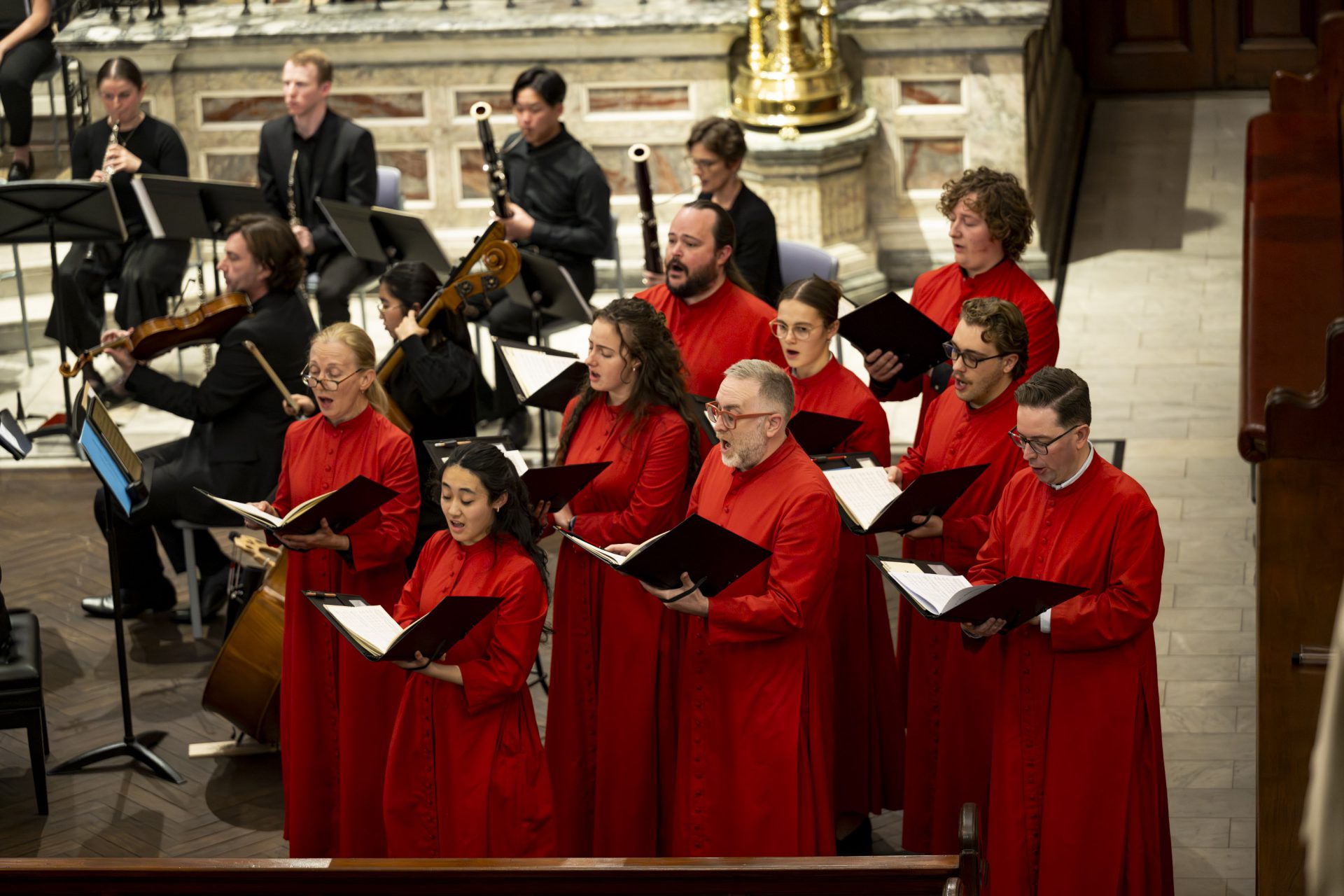
It is not often that you hear Bach’s Magnificat, Poulenc’s organ concerto and Vaughan Williams’ Serenade to Music in the one breath. St James’ King St accommodated all three in a concert featuring their resident choir joining forces with the Sydney Symphony Orchestra.
Bach’s omnivorous appetite for music meant that he did not let prejudice come in the way of a good tune. French or Italian. Protestant or Catholic. True it is that most of the Catholic devotional music he composed – especially for the court at Dresden – was recycled music, with noticeably awkward musical scansion. But his Magnificat was decidedly original.
The trumpets were refreshingly bright and precise, and the St James’ Choir was well synchronised in the busy opening. Anna Sandstrom sang the Et exultavit with admirable clarity and a mature, burnished, tone. Claire Burrell-McDonald lulled the audience into a trance in the Quia respexit, before the orchestra burst out into the riotous Omnes generationes. There were some slips in timing in that busy section, but this is no mean feat. It is heavily contrapuntal. Thomas Wilson has the orchestra and choir hang on a pregnant pause before the final declamation.
Gabriel Desiderio sang the Quia fecit mihi magna with robustness and confidence – including a particularly zealous closing – before Elinor Trevelyan-Jones and Luke Iredale sang Et misericordia as though in dialogue. The Deposuit is particularly meandering and is riddled with melismas, and Aaron Erdstein negotiated the twists and turns deftly although the articulation was not as clear.
By far the most heart-felt is the Suscepit Israel. With his typical well-concealed artistry, Bach hides the Magnificat plainchant beneath an intricate tapestry of rising and falling soprano and alto voices. That plainchant was similarly deployed in his earlier Lutheran Magnificat, and in his splendid Fuga sopra il Magnificat, BWV 733. The oboes played this cantus firmus well.
Marko Sever assumed centre-stage for Poulenc’s concerto for organ, timpani and strings in G minor. It was a strange piece to perform side-by-side with Bach’s Magnificat, but Poulenc was fascinated by his musical forebears. He even composed a harpsichord concerto.
The concerto begins with an exposition of the simple motif on organ. It is saturnine – at times understated but mostly violent. The Allegro giocoso features a rush of strings. There is immediately a sense of urgency, and Sever’s punchy articulation is on full display. Later we have a Lent, marked Tres calme, which has all the quiet lyricisim of an aria. Not for long. Again, we have a riotous cacophony of chords on the organ. And then the theme returns.
Vaughan Williams’ Serenade to Music was a wonderful way to end. This was pleasant music, not made to challenge or offend or provoke. Here the Choir was at its best. The lush string opening – rich with vibrato – smiled upon its audience. Vaughan Williams designed this piece to give a characteristic phrase for each of 16 singers to sing. Each of those singer shone here. Especially Veronica Vella, who ascended, on “Sweet harmony”, an octave to a high A and down again.