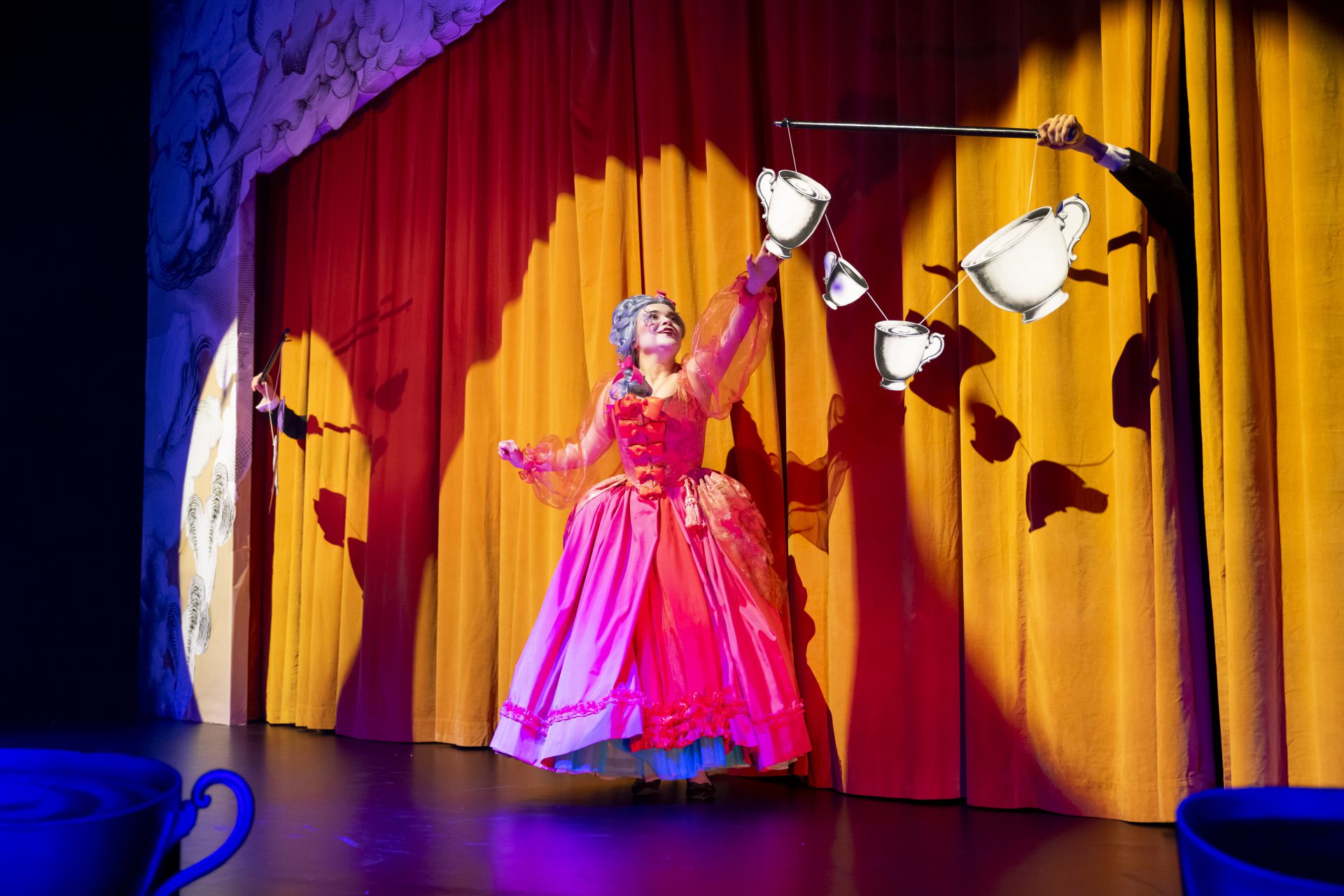
Baroque meets vaudeville.
The Battle of Vienna gave us coffee. Spanish sailors gave us the canary.
Each developed into intense fads across 18th century Europe. Each became the subject of humorous cantatas, presented in Pinchgut’s latest foray into the Baroque operetta.
Bach’s Coffee Cantata is well-known. Less well-known is Nicolas Bernier’s Le Caffe (1703). It was the perfect foil to Bach’s later coffee cantata – replete with classical references and idiomatic French melodies. Tenor Nicholas Jones sang with expressive clarity, all while managing a physically exacting choreography. Although the music itself was relatively unexceptional, Melissa Farrow on baroque flute gave it new life.
Of more interest was Buffardin’s Flute concerto in E minor. Actor Mitch Riley dances along, dressed as a canary. That is just as well. The music seems programmatic. It features a fluttering arpeggiated motif redolent of birdsong, which was delivered deftly by Farrow. After a stagnant Andante, Riley emerges again, with a thunderous Vivace. The effect was strangely comical.
In any event the characterisation set the scene well for the next piece, Telemann’s Funeral music for an artistically skilled canary. Bach apparently gave his wife, Anna Magdalena, a canary who turned out to be musically gifted. They were all the rage.
The conceit begins with the enamoured owner – baritone Morgan Pearse – lamenting the death of his canary. On full display was his mastery of dynamic variety. In each aria he managed to stretch the most poignant words across the entire dynamic range.
But the main fare was Bach’s Coffee Cantata. This timeless piece was performed only very recently in Sydney, by Bach Akademie Australia.
It begins – famously – with the imperious Schlendrian growling his way across the stage, the impudent Liesgen his teenaged gadfly. The dynamic worked well. Ariana Ricci as Liesgen balanced the difficult Ei wie schmekt aria with a demanding choreography. Pearse impressed the audience with a grumbling series of arias. He seemed to master the guttural Teutonic brusqueness that evidently comes with the character.
Erin Helyard directed the Madchen aria at a pace that was at once sprightly and strangely sinister. Anton Baba on cello stood out here – the aria consists of jagged jumping passages on cello.
That said, the closing trio felt less rousing than it should have been. It is in the style of a rustic German ‘coming-together’. It is not unlike the choruses in Bach’s wedding Quodlibet – another of the stolid old Thuringian’s rare forays into the frivolous. The acting, staging and music conspired to transport us back to Zimmerman’s coffeehouse, albeit with a touch of vaudeville and a touch of the Australian.